
Introduction
Offshore oil and gas facilities operate in some of the harshest environments in the world. Constant exposure to seawater, humidity, pressure fluctuations, vibration, and corrosive chemicals places significant stress on equipment. Components such as pipelines, valves, compressors, pumps, pressure vessels, and heat exchangers must perform reliably to ensure uninterrupted production and personnel safety.
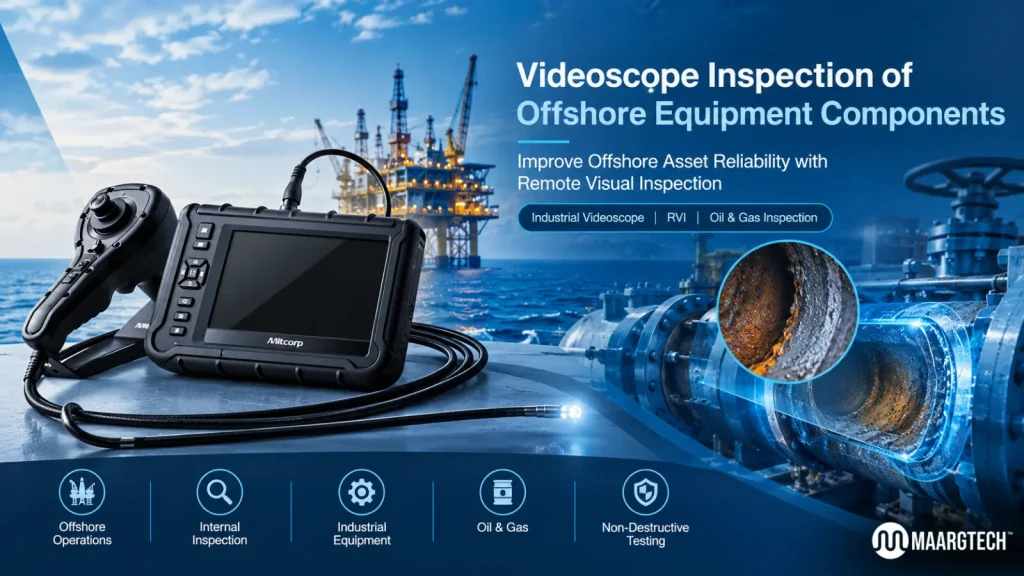
Traditional inspection methods often require dismantling large equipment, resulting in costly downtime and increased maintenance efforts. Modern industrial videoscopes have transformed the inspection process by enabling engineers to examine internal areas without disassembling critical assets. Offshore Equipment Videoscope Inspection has therefore become a preferred Remote Visual Inspection (RVI) method for preventive maintenance across offshore platforms and oil & gas facilities.
By detecting defects at an early stage, maintenance teams can plan repairs effectively, reduce unexpected shutdowns, and extend the operational life of valuable equipment.
Why Offshore Equipment Requires Regular Inspection
Offshore equipment operates continuously under demanding conditions where even a small defect can lead to operational disruptions or expensive repairs. Regular inspections help identify developing problems before they become critical, ensuring reliable performance and compliance with maintenance standards.
Some of the major reasons why inspections are essential include:
- Corrosive Marine Environment – Saltwater exposure accelerates corrosion and material degradation in metallic components.
- Continuous Operation – Offshore facilities often run around the clock, increasing mechanical wear and fatigue.
- High Operating Pressure – Pressure vessels, pipelines, and valves experience significant stress during normal operation.
- Difficult Accessibility – Many internal components cannot be inspected visually without specialized inspection equipment.
- Safety Requirements – Early detection of defects reduces the risk of leaks, failures, and safety incidents.
- Cost Optimization – Preventive maintenance minimizes expensive emergency shutdowns and unnecessary component replacement.
Routine inspections help maintenance engineers make informed decisions while improving equipment reliability and operational efficiency.
What is Offshore Equipment Videoscope Inspection?
Offshore Equipment Videoscope Inspection is a non-destructive inspection technique that uses a flexible industrial videoscope equipped with a high-definition camera and powerful LED illumination. The probe is inserted through existing access ports, allowing inspectors to observe internal surfaces that would otherwise remain inaccessible.
Unlike conventional inspection methods, industrial videoscopes eliminate the need for extensive dismantling while providing real-time images and video recordings. This approach significantly reduces inspection time and maintenance costs while maintaining high inspection accuracy.
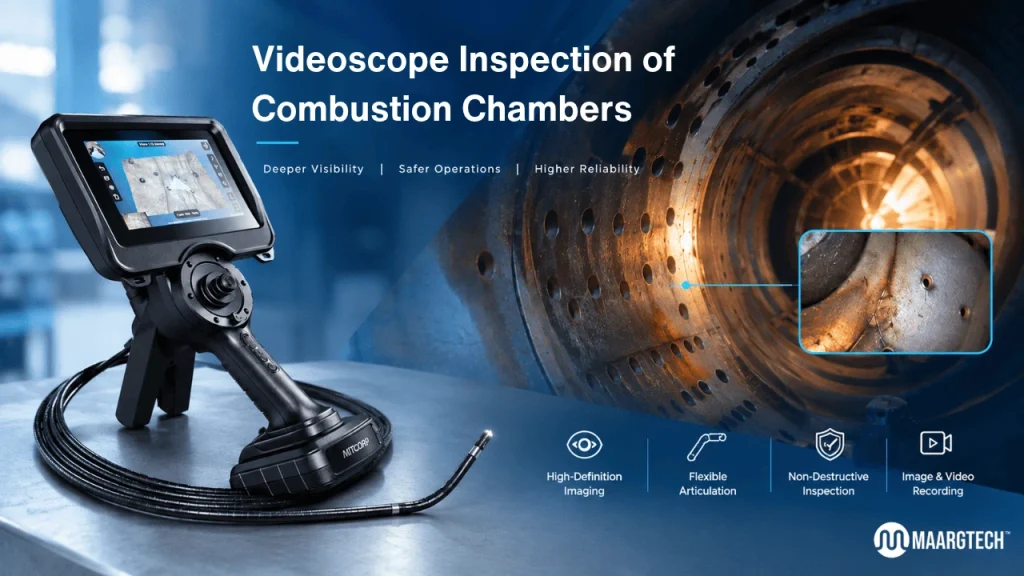
Modern videoscopes also support image capture, video recording, digital measurement, and documentation, making them valuable tools for maintenance reporting and future condition monitoring.
Offshore Components Commonly Inspected
Industrial videoscopes are widely used to inspect numerous offshore components where internal visibility is limited. These inspections help engineers evaluate equipment condition without interrupting normal operations for extended periods.
Some of the most commonly inspected components include:
- Pipelines – Inspect internal surfaces for corrosion, erosion, scaling, blockages, and weld defects that may restrict flow or reduce structural integrity.
- Pressure Vessels – Examine vessel interiors for corrosion, cracking, coating damage, and signs of material deterioration.
- Heat Exchangers – Detect fouling, tube corrosion, deposits, and internal obstructions that reduce thermal efficiency.
- Gate and Ball Valves – Check valve seats, sealing surfaces, corrosion, and wear that could affect sealing performance.
- Centrifugal Pumps – Inspect impellers, casings, and flow passages for cavitation damage, erosion, and mechanical wear.
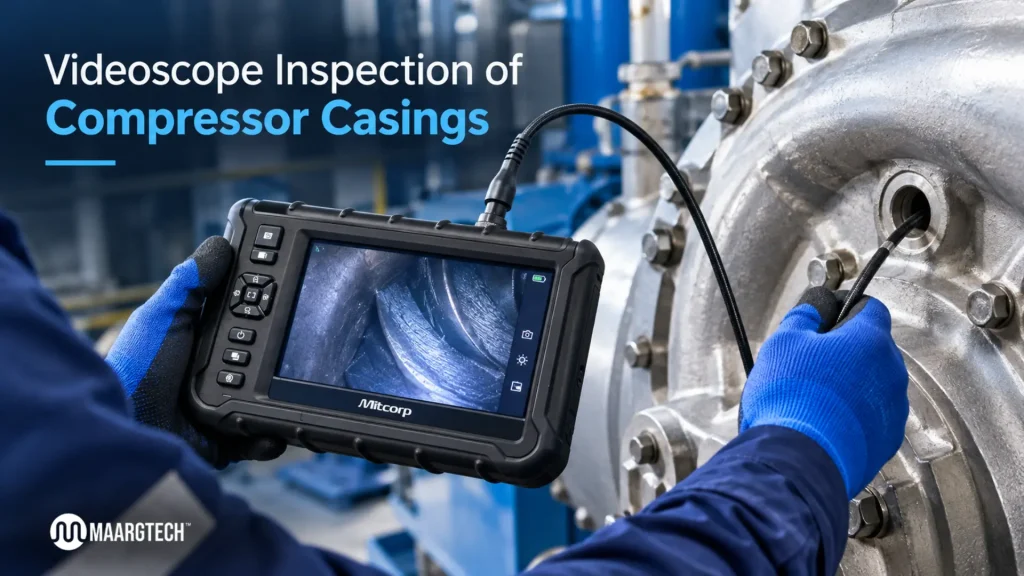
- Compressors – Evaluate compressor blades, chambers, and internal surfaces for deposits, cracks, and foreign object damage.
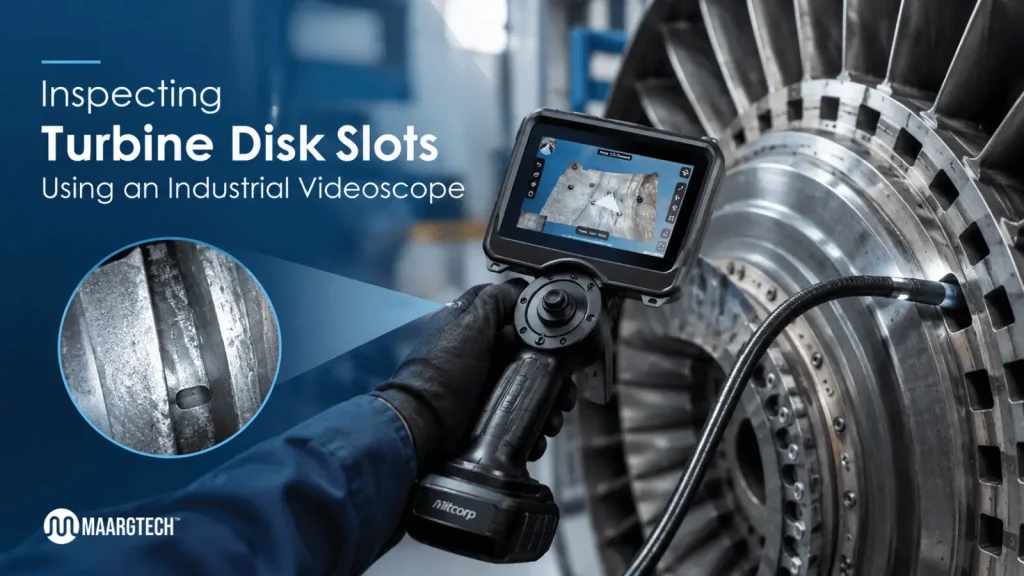
- Turbine Components – Inspect blades, vanes, and cooling passages for fatigue, erosion, and surface deterioration.
- Storage Tanks – Monitor internal corrosion, coating failures, sediment accumulation, and structural defects.
- Process Vessels – Assess internal walls for scaling, corrosion, and contamination that may affect production quality.
- Manifolds and Risers – Verify internal condition and detect corrosion or mechanical damage caused by harsh offshore environments.
Regular inspection of these components supports predictive maintenance programs and improves overall plant reliability.
Defects That Can Be Identified
One of the major advantages of Offshore Equipment Videoscope Inspection is its ability to detect early-stage defects before they develop into serious failures. High-resolution imaging allows inspectors to capture detailed visual evidence for maintenance planning and technical reporting.
Common defects that can be identified include:
- Corrosion – Internal corrosion caused by moisture, seawater, chemicals, or aggressive operating environments.
- Pitting – Small localized cavities that weaken metal surfaces over time.
- Surface Cracks – Fatigue cracks that may eventually lead to component failure.
- Weld Discontinuities – Inspect welded joints for incomplete fusion, porosity, or cracking.
- Foreign Object Debris (FOD) – Locate loose particles or contamination inside equipment.
- Scaling and Deposits – Identify mineral buildup or residue that affects equipment efficiency.
- Internal Wear – Monitor abrasion, erosion, and surface damage caused by continuous operation.
- Seal Damage – Inspect sealing areas for wear, deformation, or leakage.
- Misalignment – Detect abnormal positioning of internal components.
- Coating Deterioration – Examine protective coatings for peeling, blistering, or corrosion underneath.
Early detection of these defects enables maintenance teams to perform targeted repairs before equipment reliability is compromised.
Benefits of Using Industrial Videoscopes
Industrial videoscopes provide a fast, safe, and cost-effective inspection solution for offshore maintenance. Compared to traditional inspection methods, they significantly reduce downtime while delivering accurate visual information.
Key benefits include:
- Minimal Equipment Dismantling – Inspect internal areas without removing major components.
- Reduced Downtime – Complete inspections faster and return equipment to service sooner.
- Improved Safety – Reduce personnel exposure to hazardous or confined spaces.
- High-Definition Imaging – Capture clear images for accurate defect identification.
- Video Documentation – Record inspections for reporting, analysis, and future comparisons.
- Lower Maintenance Costs – Reduce labor and replacement expenses by identifying issues early.
- Access to Confined Areas – Flexible probes easily navigate complex internal geometries.
- Supports Preventive Maintenance – Helps maintenance teams schedule repairs before failures occur.
- Reliable Decision Making – Visual evidence improves maintenance planning and asset management.
These advantages have made industrial videoscopes an essential inspection tool across offshore oil and gas operations.
Why Choose Industrial Videoscopes for Offshore Applications?
Modern industrial videoscopes are designed to perform in demanding environments. Features such as high-definition imaging, articulated probes, LED illumination, and durable probe construction allow inspectors to examine difficult-to-access areas with confidence.
Solutions like the MITCORP industrial videoscope range offered by MAARGTECH provide reliable inspection capabilities for offshore maintenance teams across oil and gas, marine, power generation, and heavy industrial sectors.
Best Practices for Successful Inspection
To achieve accurate inspection results, consider the following practices:
- Clean access ports before inspection.
- Select the appropriate probe diameter.
- Maintain proper illumination.
- Record both images and videos.
- Document all observations.
- Compare findings with previous inspections.
- Schedule periodic inspections based on equipment condition.
Following these practices improves inspection consistency and supports predictive maintenance programs.
Conclusion
Maintaining offshore equipment requires accurate, reliable, and efficient inspection methods. Offshore Equipment Videoscope Inspection enables maintenance teams to examine critical internal components without unnecessary dismantling, helping reduce downtime while improving safety and equipment reliability.
As offshore operations continue to demand higher productivity and lower maintenance costs, industrial videoscopes remain an indispensable tool for proactive asset inspection and condition monitoring.
Need a Reliable Offshore Inspection Solution?
Explore MAARGTECH’s advanced industrial videoscopes for accurate, non-destructive inspection of critical offshore equipment.
📞 +91-97572 76307 | 📧 sales@maargtech.com
Frequently Asked Questions (FAQ'S )
What is offshore equipment videoscope inspection?
Offshore equipment videoscope inspection is a non-destructive inspection method that uses an industrial videoscope to examine the internal condition of offshore equipment without dismantling it. It helps identify defects such as corrosion, cracks, and wear while reducing inspection time and downtime.
Which offshore equipment can be inspected using an industrial videoscope?
Industrial videoscopes are commonly used to inspect pipelines, valves, pressure vessels, heat exchangers, pumps, compressors, turbines, storage tanks, manifolds, and other critical offshore components with limited internal access.
What are the benefits of using a videoscope for offshore inspections?
Videoscope inspections reduce equipment dismantling, minimize maintenance downtime, improve inspection accuracy, enhance worker safety, and provide high-quality images and videos for documentation and maintenance planning.
What defects can be detected during offshore equipment videoscope inspection?
An industrial videoscope can detect corrosion, pitting, surface cracks, weld defects, foreign object debris (FOD), scaling, deposits, coating damage, seal wear, and other internal defects before they lead to equipment failure.
Why is preventive videoscope inspection important for offshore oil and gas equipment?
Preventive videoscope inspections help identify potential problems early, allowing maintenance teams to schedule repairs before failures occur. This improves equipment reliability, extends asset life, reduces unplanned downtime, and supports safer offshore operations.