
Introduction
Compressor casings play a critical role in protecting the internal components of compressors used across industries such as power generation, aerospace, oil & gas, petrochemical plants, manufacturing, and heavy engineering. These casings are designed to withstand high pressure, vibration, and demanding operating conditions while maintaining structural integrity and ensuring smooth airflow.
Over time, continuous operation can lead to wear, corrosion, fatigue cracks, casting defects, or foreign object damage inside the casing. Detecting these issues early is essential to prevent unexpected breakdowns, costly repairs, and production downtime.
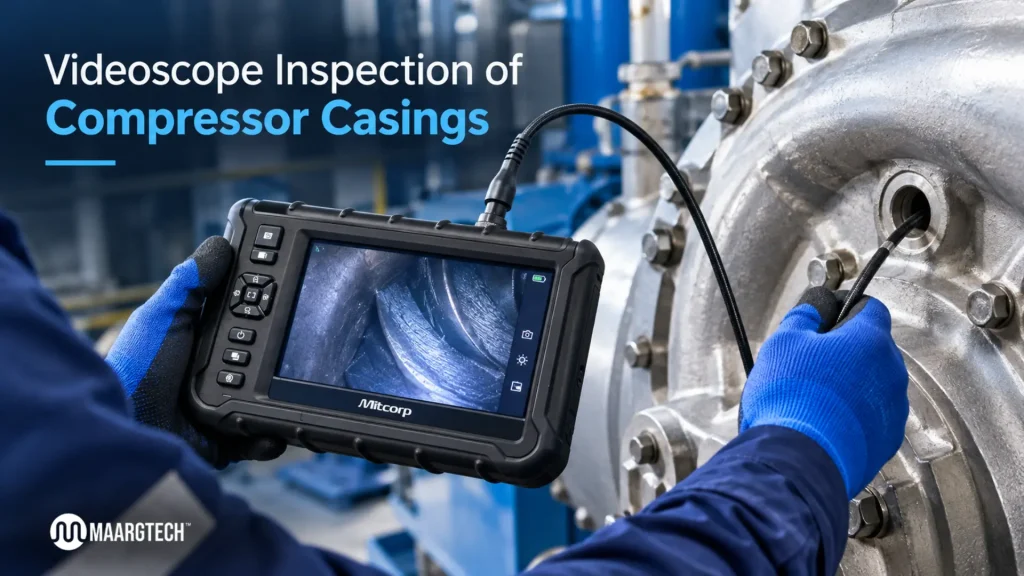
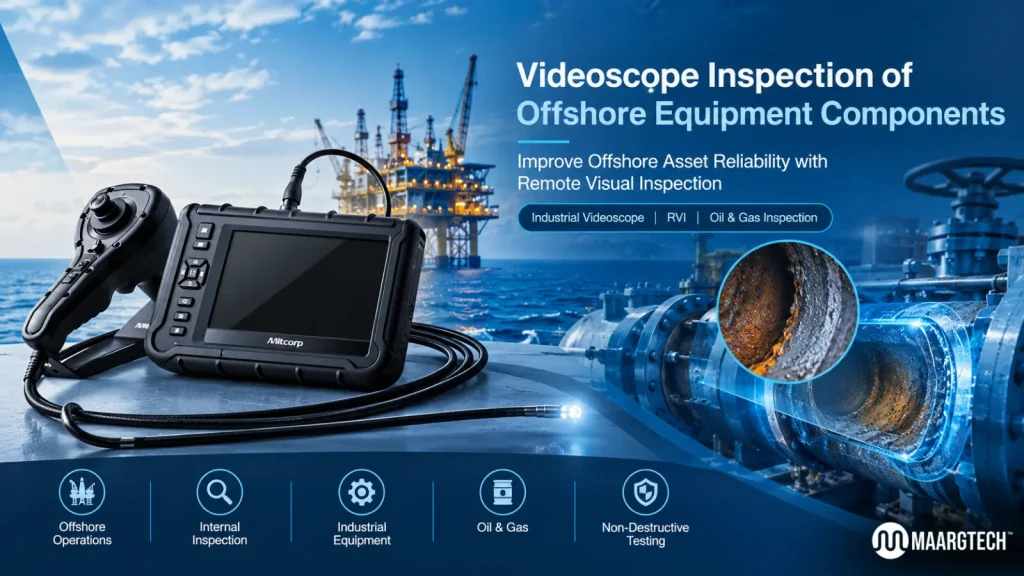
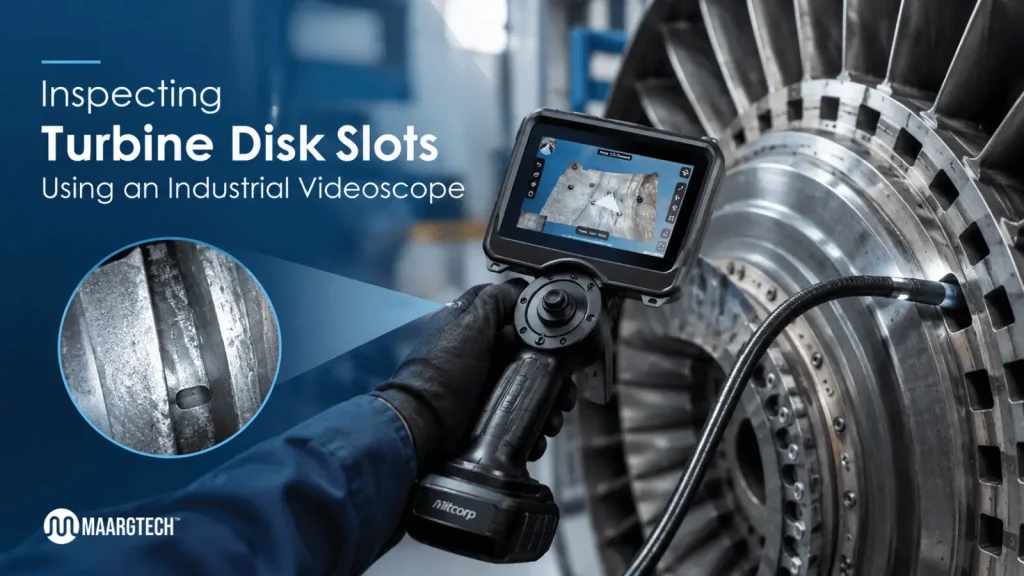
Traditional inspection methods often require partial or complete disassembly of the compressor, making maintenance both time-consuming and expensive. Industrial videoscopes provide a modern, non-destructive solution by allowing inspectors to examine internal surfaces through existing access ports without dismantling the equipment. This makes videoscope inspection of compressor casing an efficient and reliable method for preventive maintenance, quality assurance, and condition monitoring.
Understanding Compressor Casings
A compressor casing is the outer housing that supports and protects the compressor’s internal rotating components, seals, bearings, and airflow passages. Besides providing structural strength, it also ensures pressure containment and maintains the precise alignment required for efficient compressor operation.
Because compressor casings are exposed to constant mechanical stress and varying temperatures, they must be inspected periodically to ensure there are no hidden defects that could affect overall performance or safety.
Regular inspection helps maintenance teams identify small issues before they develop into major failures, ultimately extending equipment life and reducing maintenance costs.
Why Compressor Casings Require Regular Inspection
Compressor casings experience continuous pressure fluctuations, thermal expansion, vibration, and exposure to contaminants. These conditions gradually affect the internal surfaces and structural integrity of the component.
Common reasons for inspection include:
- Detecting manufacturing defects
- Monitoring wear after long operating hours
- Identifying corrosion caused by moisture or chemicals
- Checking for foreign object damage
- Verifying internal condition before scheduled overhauls
- Supporting preventive and predictive maintenance programs
Routine videoscope inspection of compressor casing enables maintenance engineers to detect abnormalities early, helping avoid unexpected equipment failures and improving operational reliability.
Common Defects Found During Inspection
Industrial videoscopes allow inspectors to visually examine areas that are otherwise impossible to access without dismantling the compressor.
1. Casting Porosity
Tiny voids or air pockets created during the casting process can reduce structural strength. Although some porosity may be acceptable within manufacturing limits, excessive porosity can lead to premature failure under pressure.
2. Surface Cracks
Hairline cracks often develop due to thermal cycling, vibration, fatigue, or manufacturing stress. Detecting them early prevents crack propagation and costly repairs.
3. Corrosion
Moisture, chemicals, and harsh operating environments gradually corrode internal surfaces. Corrosion weakens the material and may eventually affect compressor efficiency.
4. Foreign Object Damage (FOD)
Loose particles, broken components, or debris entering the compressor can damage internal passages and nearby rotating components.
5. Internal Wear and Erosion
Continuous airflow carrying dust or abrasive particles may gradually erode internal surfaces, reducing efficiency and affecting airflow characteristics.
During videoscope inspection of compressor casing, these defects can be documented with high-resolution images and videos for further technical evaluation.
How Videoscope Inspection Works
Industrial videoscopes consist of a flexible insertion tube with a miniature high-definition camera and adjustable LED illumination at the tip. The probe is inserted through available inspection openings while the operator observes live images on a display unit.
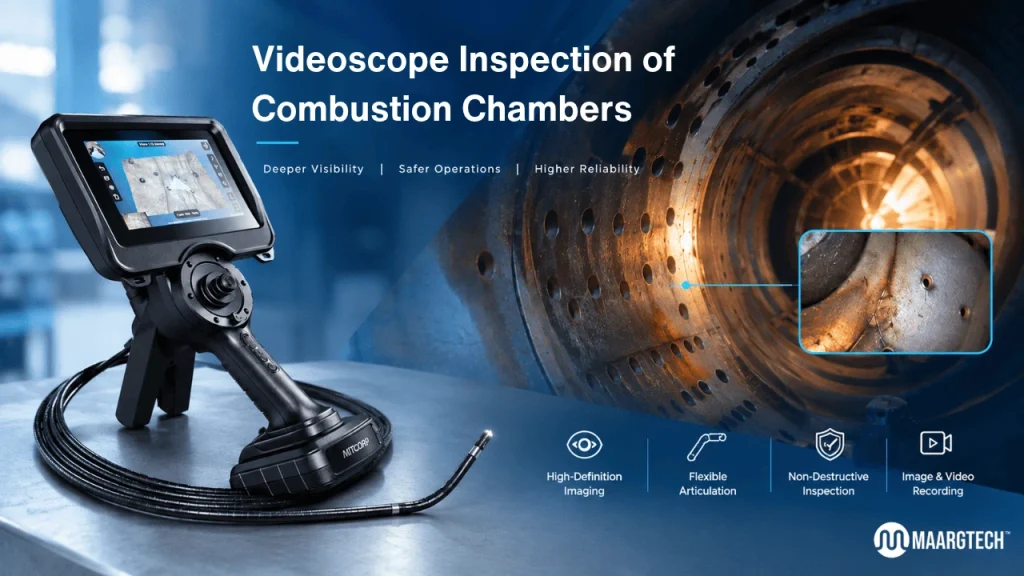
Modern industrial videoscopes also include advanced features such as:
- HD image quality
- High-intensity LED illumination
- 4-way probe articulation
- Image and video recording
- Digital zoom
- Measurement capabilities (available on selected models)
- Wi-Fi or application connectivity for easier report sharing
These features allow inspectors to examine difficult-to-reach areas with excellent clarity while minimizing equipment downtime.
Advantages of Videoscope Inspection
Faster Maintenance
Inspections can be completed quickly without dismantling large compressor assemblies. This significantly reduces maintenance time and allows equipment to return to service sooner.
Lower Maintenance Costs
Reduced labor requirements, fewer replacement parts, and shorter shutdown periods contribute to considerable cost savings over the equipment’s lifecycle.
Improved Equipment Reliability
Routine inspections help identify defects before they become major failures, improving the reliability of compressors operating in critical industrial environments.
Enhanced Safety
Technicians can inspect internal areas without unnecessary exposure to mechanical hazards associated with complete equipment disassembly.
Better Documentation
Captured images and videos create a permanent inspection record that supports maintenance planning, technical reporting, warranty documentation, and future condition comparisons.
These advantages make videoscope inspection of compressor casing an important part of modern predictive maintenance strategies.
Industries That Benefit
Industrial videoscopes are widely used wherever compressors operate under demanding conditions.
Some of the major industries include:
- Aerospace
- Power Generation
- Oil & Gas
- Petrochemical Plants
- Chemical Processing
- Refineries
- Manufacturing Industries
- Marine Engineering
- Mining
- Heavy Industrial Equipment
In these sectors, videoscope inspection of compressor casing helps reduce maintenance costs while improving operational efficiency and equipment reliability.
Choosing the Right Industrial Videoscope
Selecting the correct inspection equipment greatly influences inspection quality and efficiency.
Probe Diameter
The probe diameter should match the available inspection opening. Smaller probes easily access narrow passages, while larger probes may provide improved image quality where space allows.
Probe Length
Longer probes are suitable for inspecting deep compressor sections, whereas shorter probes offer better control in compact components.
Articulation
A 4-way articulating probe allows inspectors to navigate around corners and examine hidden surfaces from multiple viewing angles.
Image Resolution
High-definition cameras improve the visibility of fine cracks, corrosion, casting defects, and surface wear.
Lighting System
Adjustable LED illumination ensures clear visibility even in completely dark internal cavities.
Recording Capability
Image and video recording helps generate detailed inspection reports and maintain historical maintenance records for future comparison.
Best Practices for Successful Inspection
Achieving reliable inspection results depends not only on the equipment but also on following proper inspection procedures.
Before starting the inspection, ensure the compressor is safely isolated and cleaned where necessary. Confirm that the videoscope lens is clean and functioning correctly.
During inspection:
- Insert the probe carefully to avoid damaging the insertion tube.
- Adjust lighting according to the surface being inspected.
- Capture multiple images from different viewing angles.
- Inspect slowly to avoid overlooking small defects.
- Record all observations for maintenance documentation.
- Compare findings with previous inspection reports whenever available.
Following these practices improves inspection accuracy and supports informed maintenance decisions.
Why Industrial Videoscopes Are the Preferred Solution
Compared to conventional inspection methods, industrial videoscopes provide a safer, faster, and more cost-effective solution. Engineers can inspect internal compressor components without dismantling complex assemblies, reducing maintenance time while increasing inspection quality.
Advanced systems equipped with HD imaging, articulation, measurement technology, and digital documentation provide valuable insights that help maintenance teams make better repair decisions.
As industries continue moving toward predictive maintenance and asset reliability, videoscope inspection of compressor casing has become an essential inspection technique for ensuring uninterrupted operations.
Preventive Maintenance Through Videoscope Inspection
Rather than waiting for equipment failure, industries are increasingly adopting preventive maintenance programs that rely on regular internal inspections. Videoscope inspections enable maintenance teams to monitor component health over time and detect gradual deterioration before it affects compressor performance.
Periodic inspections also help maintenance planners schedule repairs during planned shutdowns instead of reacting to unexpected breakdowns. This proactive approach improves equipment availability, enhances workplace safety, and reduces overall maintenance expenditure.
By integrating videoscope inspection of compressor casing into routine maintenance schedules, organizations can maximize equipment life while maintaining consistent operational efficiency.
Conclusion
Compressor casings are vital components that directly influence compressor performance, efficiency, and reliability. Regular inspections are necessary to detect cracks, corrosion, casting defects, wear, and foreign object damage before they result in costly failures.
Industrial videoscopes provide a fast, accurate, and non-destructive method for examining inaccessible internal areas without dismantling equipment. Their advanced imaging capabilities, flexible probes, and digital documentation features make them an invaluable tool for modern industrial maintenance.
Implementing videoscope inspection of compressor casing as part of a preventive maintenance strategy helps industries reduce downtime, improve equipment reliability, extend service life, and optimize maintenance costs.
Optimize Your Compressor Inspections with MAARGTECH
Discover advanced industrial videoscope solutions for accurate compressor casing inspections. Contact MAARGTECH today.
Frequently Asked Questions (FAQ'S )
What is videoscope inspection of compressor casing?
Videoscope inspection of compressor casing is a non-destructive inspection method that uses a flexible camera probe to examine the internal surfaces of compressor casings. It helps detect cracks, corrosion, porosity, and other defects without dismantling the equipment.
Why is videoscope inspection important for compressor casings?
Videoscope inspection helps identify hidden defects before they lead to equipment failure. Regular inspections improve reliability, reduce maintenance costs, minimize downtime, and extend the service life of compressor components.
What types of defects can be detected during compressor casing inspection?
Industrial videoscopes can detect casing porosity, surface cracks, corrosion, erosion, foreign object damage (FOD), wear, and other internal defects that may affect compressor performance and safety.
Which industries use industrial videoscopes for compressor inspections?
Industrial videoscopes are widely used in aerospace, power generation, oil & gas, petrochemical, manufacturing, marine, mining, and heavy engineering industries for inspecting compressor casings and other critical components.
What features should an industrial videoscope have for compressor casing inspection?
An ideal industrial videoscope should include HD image quality, a flexible articulating probe, adjustable LED illumination, image and video recording capabilities, and measurement functions to ensure accurate and efficient inspections.