
Introduction
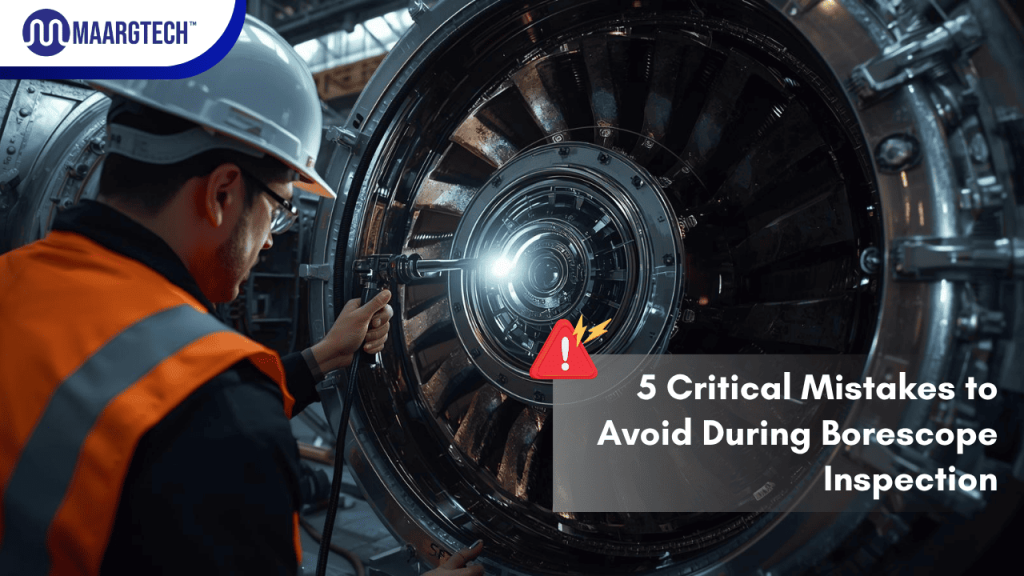
Borescopes are essential tools for inspecting hidden areas inside engines, turbines, cylinders, pipes, and other tight spaces—without expensive disassembly. Used correctly, they save time and catch problems early. Used poorly, they can damage your equipment, produce unreliable results, or let serious defects go unnoticed.
At MAARGTECH, we help professionals across industries get the most out of their inspection tools through practical guides and expert tips.
Here are the 5 critical borescope inspection mistakes technicians make—and exactly how to avoid them.
1. Forcing or Mishandling the Probe
The insertion tube and camera head are delicate. Forcing the probe, excessive twisting, yanking it while articulated, or using it to move debris is the fastest way to break articulation cables or crush the tip.
Why it hurts: Repairs often cost more than a new borescope.
How to avoid it:
- Never force the probe—if it doesn’t slide in smoothly, stop and find a better path.
- Move slowly and gently; use articulation controls carefully.
- Consider a rigid guide sleeve in complex areas.
- Treat your borescope like a precision instrument, not a pry bar.
2. Inspecting While the Component Is Too Hot or Covered in Oil/Debris
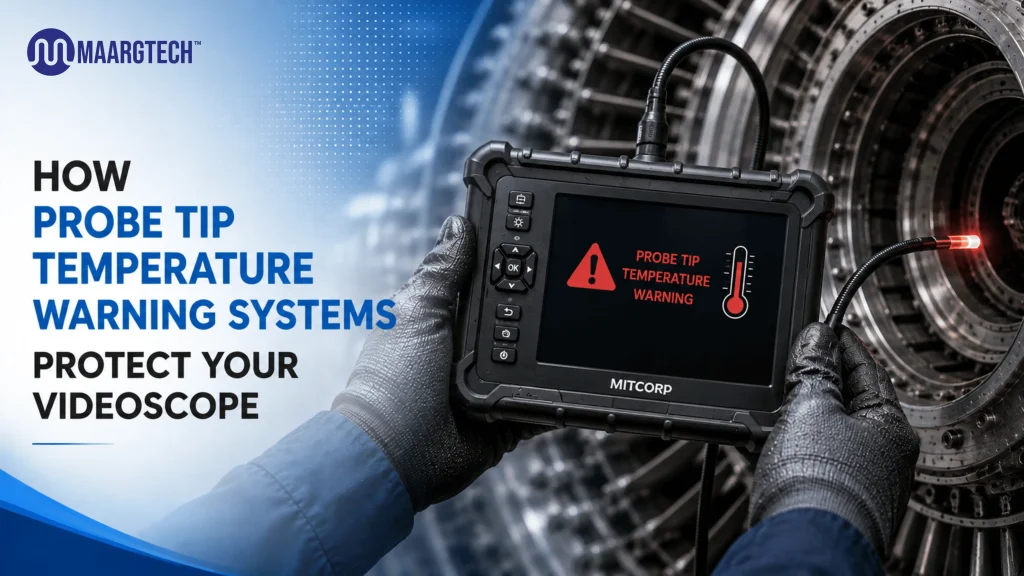
Inserting a borescope into a still-hot engine (above 80°C / 176°F) or through thick oil and carbon can permanently damage the camera and create glare or fog that hides defects.
Why it hurts: Heat ruins sensors; oil smudges cause you to miss cracks, scoring, or valve damage.
How to avoid it:
- Always let the engine cool below the manufacturer’s temperature limit (typically under 80°C).
- Blow out spark plug wells or access points to remove excess oil and debris first.
- Use oil-resistant optics and adjust lighting when some residue is unavoidable.
- Keep lens wipes or an air blower in your kit.
3. Poor Lighting and Incorrect Camera Positioning
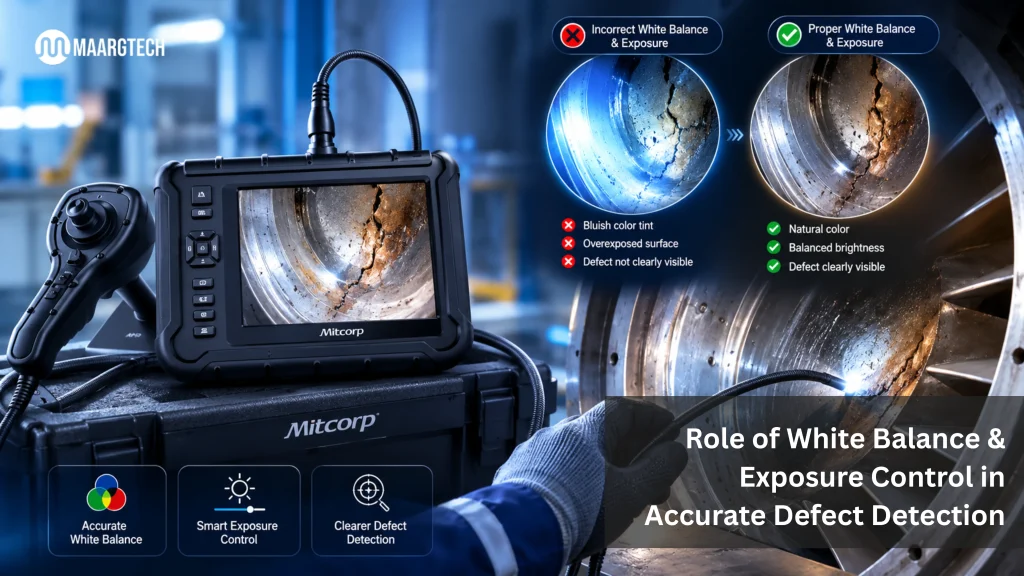
Too much light creates glare; too little hides shadows. Rushing through angles means you only see part of the surface and easily misinterpret what you’re looking at.
Why it hurts: Subtle issues like hairline cracks, erosion, or burning go undetected.
How to avoid it:
- Start with low LED brightness and adjust gradually.
- View the same area from multiple angles (use a second access point for extra light when possible).
- Capture both high-quality still photos and short video clips.
- Reposition patiently—good images come from good positioning.
4. Using the Wrong Tool or Skipping Pre-Inspection Checks
A rigid scope in a curved area, a short probe for deep inspection, or a dirty/unchecked unit leads to frustration and incomplete results.
Why it hurts: You waste time, risk damage, and miss critical defects.
How to avoid it:
- Choose the right borescope: correct diameter, length, flexibility, and resolution for the job.
- Always perform a quick pre-check: battery level, lighting, focus, articulation, and tip condition.
- Clean optical tips regularly and test the unit before every use.
- Invest in interchangeable-tip videoscopes for varied applications.
5. Inadequate Documentation and No Systematic Approach
Taking random photos without noting cylinder number, piston position, or angle makes it impossible to track wear over time or share clear findings.
Why it hurts: You lose the ability to compare inspections, meet regulatory requirements, or spot developing trends.
How to avoid it:
- Follow a standard checklist for every inspection (valves, cylinder walls, piston crown, etc.).
- Label every image/video with date, asset ID, location, and notes.
- Use built-in annotation tools if available.
- Organize files in a proper maintenance database and review them immediately after the job.
Final Thoughts: Inspect Smarter, Not Harder
Avoid these five mistakes and your borescope inspections will become faster, more accurate, and far more valuable. Quality tools + preparation + patience = fewer surprises and longer equipment life.
Pro Tip: Make borescope checks routine—many aviation and industrial standards recommend them at every 100-hour or annual inspection, especially for high-stress engines.
At MAARGTECH, we believe better inspections lead to better maintenance outcomes. If you handle aviation, automotive, or industrial inspections and want tool recommendations or a customized checklist, drop a comment below. I’d be happy to help.
Is Your Digital NDT Data Truly Secure?
Protect your digital NDT images with secure storage and instant access. Upgrade today for safer, faster, and more reliable inspection data.
Frequently Asked Questions (FAQ'S )
What is a borescope inspection used for?
Borescope inspection is used to visually inspect internal areas of machinery or structures without disassembly, helping detect defects like cracks, corrosion, and blockages.
How do I choose the right borescope?
Select based on accessibility, environment, required image quality, and whether flexibility or rigidity is needed.
Why is lighting important in borescope inspection?
Proper lighting ensures clear visibility of defects and prevents misinterpretation caused by shadows or overexposure.
Can untrained operators perform borescope inspections?
No, lack of training can lead to inaccurate results. Proper training is essential for reliable inspections.
How should inspection data be stored?
Use secure digital systems with proper labeling, backups, and structured reporting for easy retrieval and compliance.