
Introduction
Borescope Inspection in Cryogenic Applications
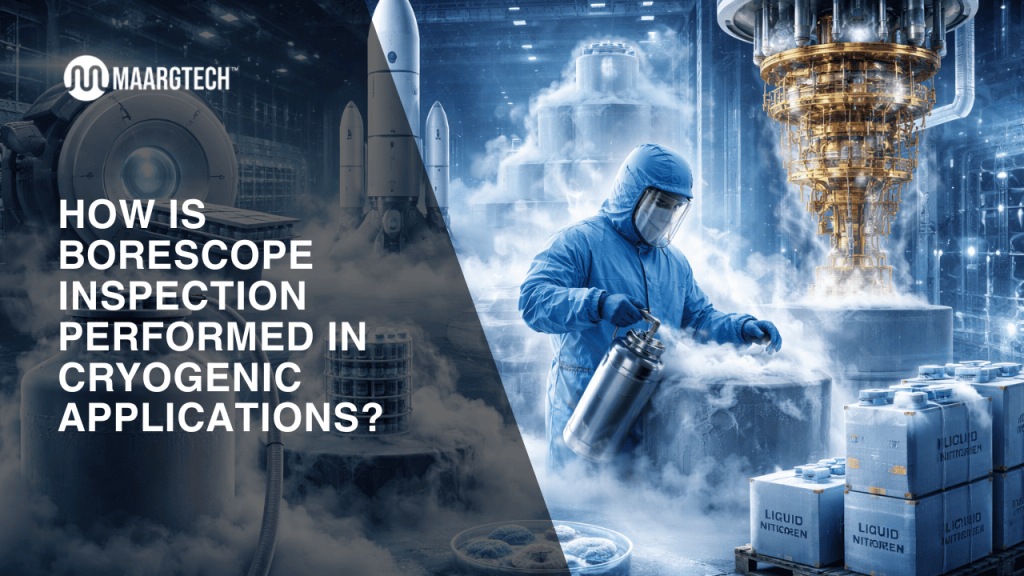
Cryogenic applications involve handling fluids at extremely low temperatures—typically below -150°C (-238°F)—such as liquid natural gas (LNG), liquid nitrogen (LN2), liquid oxygen (LOX), or liquid hydrogen (LH2). These are used in industries like energy (LNG storage/transport), aerospace (rocket propulsion), medical gas supply, and emerging hydrogen economy sectors.
Maintaining the integrity of cryogenic systems is critical due to risks like material embrittlement, thermal contraction stresses, ice formation, vacuum loss in insulated vessels, and potential leaks that could lead to safety hazards or operational failures.
Borescope inspection (also called remote visual inspection or RVI using videoscopes/fiberscopes) plays a key role in non-destructive evaluation, allowing inspectors to visually assess internal components without full disassembly or decommissioning.
Why Borescopes Are Essential in Cryogenic Environments
Standard borescopes face limitations in cryogenic settings because:
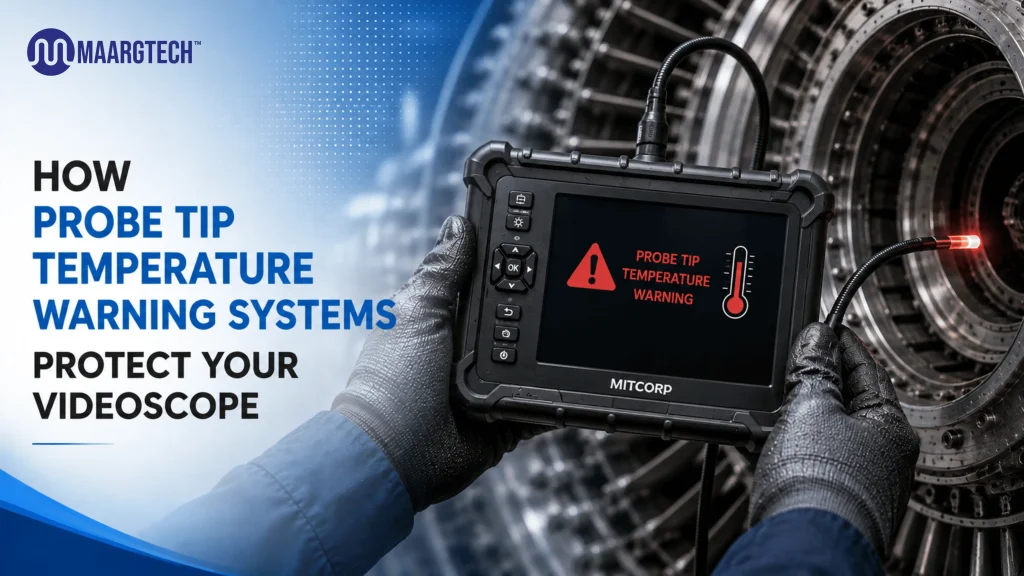
- Most insertion tubes handle only up to ~80°C (176°F) maximum, with some tolerating brief higher exposure.
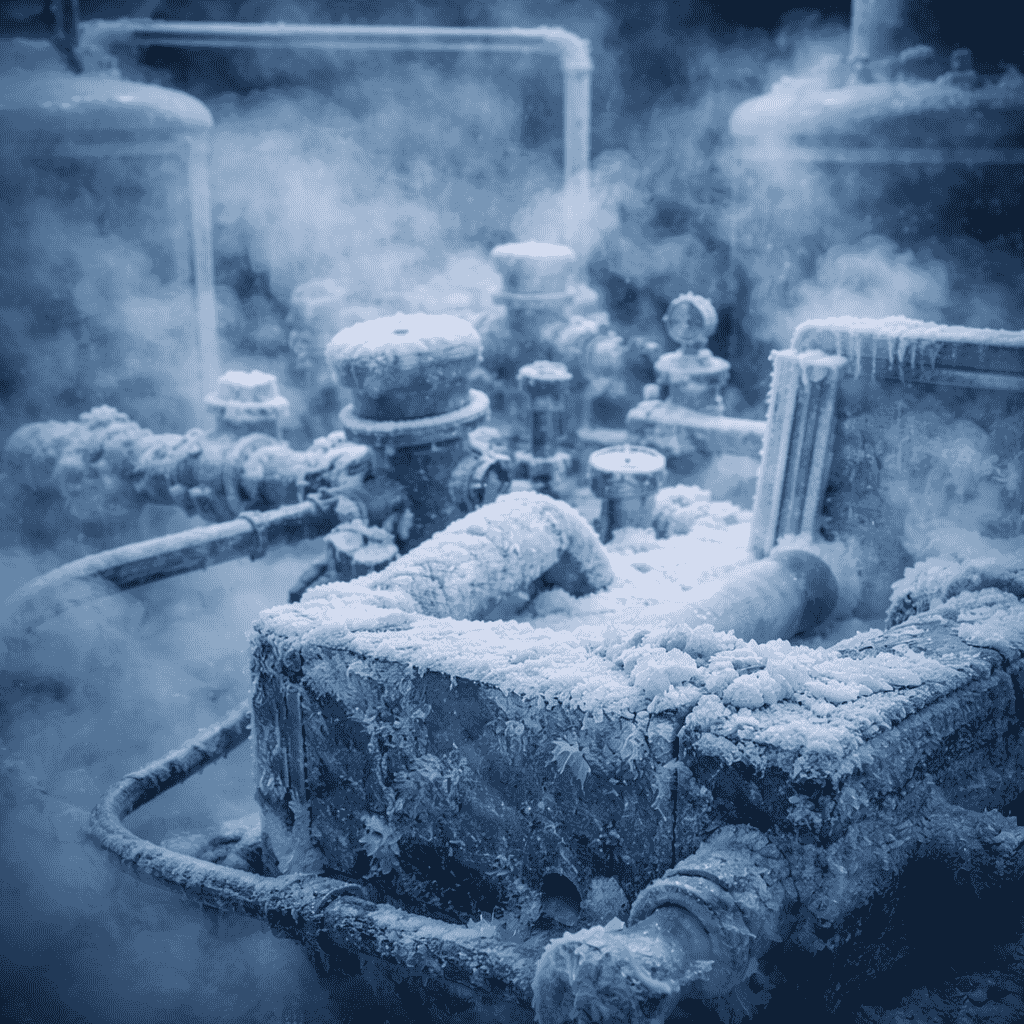
- Cryogenic inspections often occur during shutdowns/maintenance when systems are cold (or recently warmed), but residual low temperatures, ice buildup, condensation, or liquid residue pose challenges.
- Direct immersion in cryogenic liquids requires specialized equipment to avoid damage to optics, electronics, cables, or seals.
Key challenges include:
- Extreme cold causing material brittleness or differential contraction.
- Ice/frost obscuring views or blocking access.
- Hazardous atmospheres (e.g., oxygen enrichment or flammable hydrogen vapors).
- Confined/hard-to-reach spaces like tank internals, pump columns, suction valves, piping, heat exchangers, or turbopump bearings.
Recommended Solution: MITCORP X2000 HD Videoscope
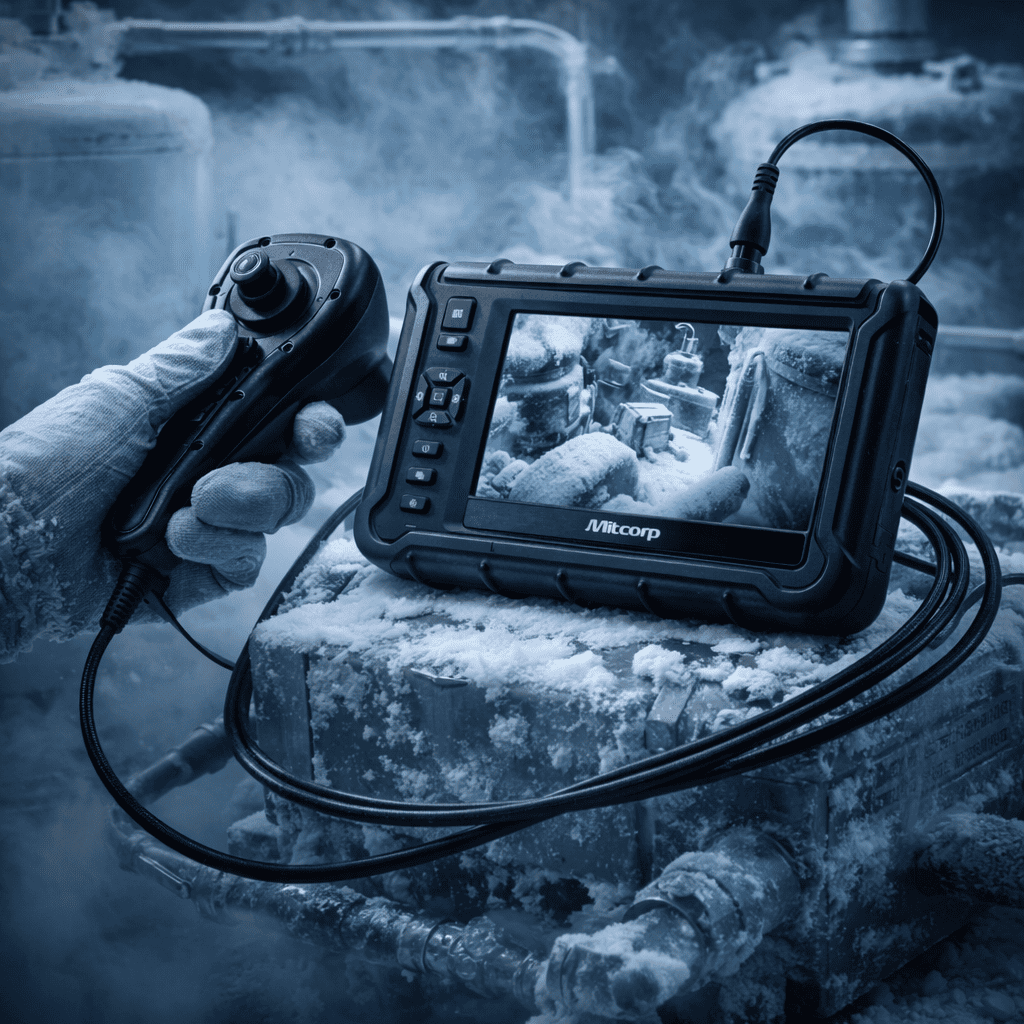
MAARGTECH brings you the MITCORP X2000 HD — perfect for cryogenic inspections.
Highlights:
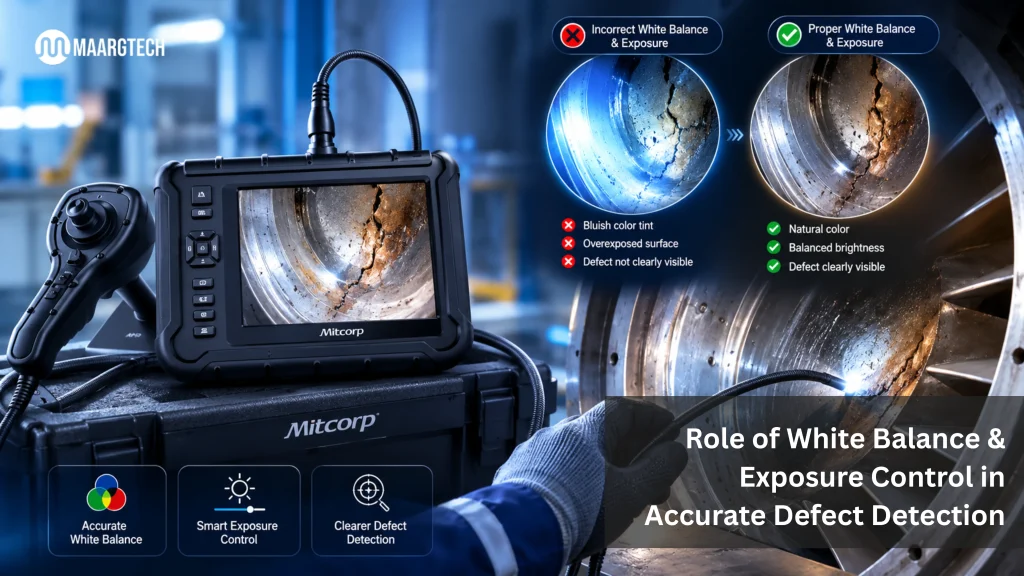
- HD imaging (2560×1440 stills / video) — crystal-clear views
- 6 mm dual-view probe — front + side in one pass
- Up to 7 m length — reaches deep into lines & tanks
- 360° articulation — smooth control in tight bends
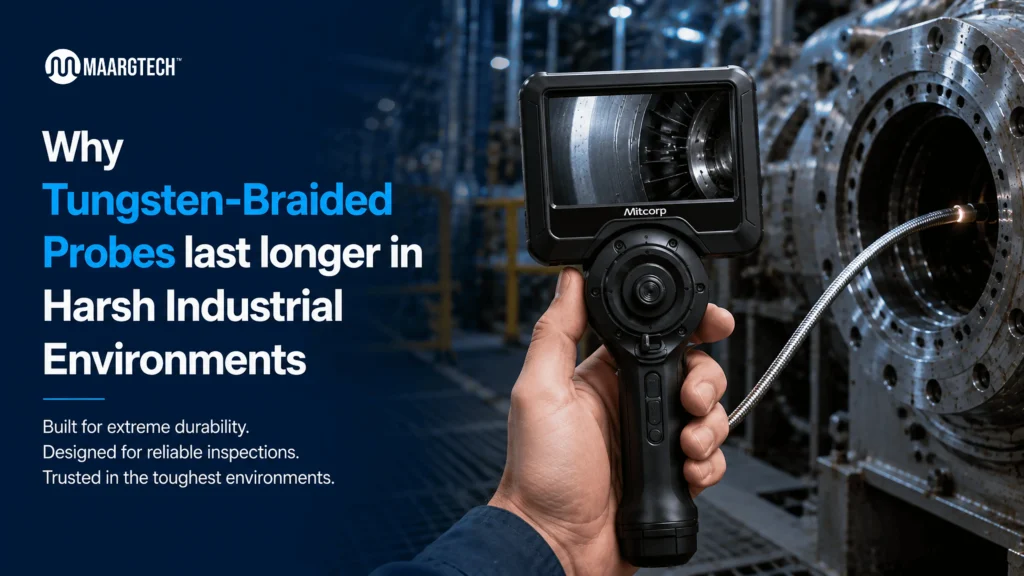
- Tough build: IP67 waterproof, scratch-resistant, heat-tolerant
- Easy 7″ touchscreen + Wi-Fi/app + reporting tools
The 6 mm dual-camera 7 m probe excels at debris, ice, and integrity checks in LNG/LH2 systems after purging or via ports.
Reliable, cost-effective choice for oil & gas, power, aerospace & industrial gases.
Specialized Cryogenic Solutions
True cryogenic service demands purpose-built cameras or adapted systems capable of -196°C operation, often with 4K resolution and low-light sensors. These excel at quick inspections (under 1 hour) of tanks, pump columns, suction valves, and debris checks—extending MTBF by catching issues early.
In aerospace (e.g., NASA turbopump testing), borescopes reveal anomalies like “river marks” on bearings. Cryogenic-rated ports (to -120°C/-185°F) enable safe access to insulated vessels. For LH2 hydrogen infrastructure, videoscopes detect embrittlement, fatigue, and weld defects remotely.
MAARGTECH, a leading provider of advanced RVI and NDT solutions in India, supplies high-performance videoscopes (e.g., Mitcorp HD/4K models) with robust, low-temperature-tolerant designs—ideal for demanding inspections approaching cryogenic conditions.
Key Applications
- LNG/LPG Systems — Tank internals, suction valve seats, post-maintenance debris checks
- Cryogenic Pumps/Columns — Immediate internal assessment after pump removal
- Aerospace Propulsion — Turbopump bearings and flow paths in LOX/LH2 systems
- Insulated Vessels — Port-based checks for corrosion or perlite settling
- Hydrogen Infrastructure — LH2 tanks, pipes, and valves for damage detection
- Piping/Hoses — Contaminant inspection before leak testing
Key Guidelines
- Preparation — Safely warm/purge; use cryogenic ports to prevent ice
- Equipment Selection — Choose immersion-capable, ATEX-certified units; MAARGTECH offers expert advice on high-res imaging and flexible articulation
- Safety — Follow cryogenic burn, asphyxiation, and pressure protocols with PPE and gas monitoring
- Complementary Methods — Combine with thermography, ultrasonics, or dye penetrant
- Documentation — Record high-res images/videos for trend tracking and compliance (ASME, EIGA/AIGA)
Conclusion
Borescope inspection delivers powerful, non-intrusive safety and reliability in cryogenic environments. While standard tools suit milder conditions, extreme immersion requires specialized systems. As hydrogen and space sectors grow, RVI technology continues evolving.
MAARGTECH provides advanced, cost-effective remote visual inspection solutions with reliable videoscopes and expert support for Indian industries and beyond.
Ready to inspect beyond the visible?
Prevent gearbox failures with MAARGTECH borescope inspection solutions.
Detect issues early and reduce costly downtime.
Frequently Asked Questions (FAQ'S )
Can I insert a borescope directly into active cryogenic systems (e.g., LN2/LNG at -196°C)?
No — extreme cold risks fogging, ice buildup, probe damage, or lens cracking. Always purge with dry nitrogen first to remove moisture and warm slightly, or use dedicated access ports. Tools like the X2000 handle post-purge conditions reliably.
What probe size and length are best for cryogenic tanks, pipes, and valves?
6 mm diameter for tight ports and bends; up to 7 m length for deep reach into lines/vessels. The X2000’s 6 mm dual-view (front + side) 7 m probe is ideal for full coverage without repositioning.
Why is borescope inspection important?
Purge thoroughly with dry inert gas before insertion; avoid sudden temp changes; use anti-fog features and adjustable lighting. The X2000’s HD imaging and manual controls help maintain clear views even with minor residual cold.
Is it safe to use a videoscope in oxygen (LOX) or hydrogen (LH2) environments?
Yes — when following strict protocols (purge, no sparks, compatible materials). The X2000 is non-sparking in normal use, IP67-rated, and trusted in aerospace/industrial gas sectors — but confirm site-specific safety rules.
What defects can borescope inspections detect in cryogenic equipment?
Cracks from thermal cycling, weld flaws, ice/blockages, debris (e.g., after pump issues), valve seat wear, contamination, or insulation problems. X2000 HD (2560×1440) + dual-view + reporting tools make early detection and documentation easy.