
Introduction
Unexpected equipment failures can significantly impact productivity, safety, and maintenance budgets. In industries such as power generation, aerospace, oil & gas, petrochemicals, and manufacturing, a single component failure can lead to costly downtime and unplanned repairs.
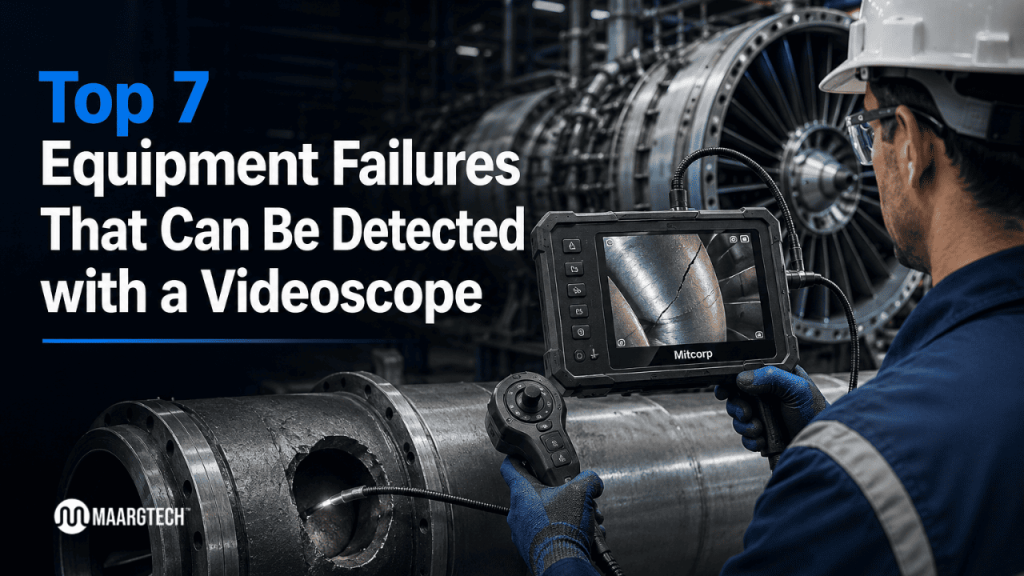
This is where videoscope inspection for equipment failures plays a crucial role. By allowing maintenance teams to inspect internal components without extensive disassembly, videoscope inspection helps identify hidden defects before they develop into serious operational issues.
By detecting defects early, organizations can improve equipment reliability, reduce maintenance costs, and support predictive maintenance strategies.
Why Early Failure Detection Matters
Many equipment failures develop gradually over time. Small cracks, corrosion, wear, and blockages often remain unnoticed until they affect performance or cause a breakdown.
Early detection through videoscope inspections helps organizations:
- Reduce unplanned downtime
- Prevent costly emergency repairs
- Improve workplace safety
- Extend equipment lifespan
- Support predictive maintenance programs
- Increase operational efficiency
Regular maintenance programs that include videoscope inspection for equipment failures provide valuable insights into equipment condition and help organizations prevent unexpected breakdowns.
Common Equipment Failures Detected by Videoscope Inspection
| Equipment Failure | What a Videoscope Detects | Potential Impact |
|---|---|---|
| Cracks | Surface fractures and fatigue cracks | Structural failure |
| Corrosion | Rust, pitting, and scaling | Reduced equipment life |
| Foreign Object Damage | Dents and impact marks | Performance loss |
| Blade Damage | Chipping, erosion, deformation | Reduced efficiency |
| Weld Defects | Cracks and porosity | Safety concerns |
| Blockages | Deposits and restrictions | Reduced productivity |
| Wear & Erosion | Material loss and scoring | Increased maintenance costs |
1. Cracks in Turbine Blades, Welds, and Structural Components
Cracks are among the most critical defects found in industrial equipment. Continuous exposure to stress, vibration, pressure, and temperature fluctuations can cause small cracks to develop and grow over time. If not detected early, these cracks can compromise equipment integrity and result in costly repairs.
Videoscope inspections provide clear visual access to internal surfaces, allowing maintenance teams to identify cracks before they lead to component failure.
Common Areas Inspected
- Turbine blades
- Compressor components
- Welded joints
- Engine parts
- Castings
- Pressure vessels
Defects Identified
- Fatigue cracks
- Thermal stress cracks
- Surface fractures
- Weld cracking
- Material separation
2. Corrosion and Internal Material Degradation
Corrosion is one of the leading causes of equipment deterioration across industrial environments. Exposure to moisture, chemicals, and harsh operating conditions can gradually weaken internal surfaces and compromise overall equipment performance.
Videoscope technology helps inspectors assess internal conditions without dismantling equipment, making corrosion detection faster and more efficient.
Common Inspection Locations
- Pipelines
- Boilers
- Heat exchangers
- Storage tanks
- Process vessels
Signs of Corrosion
- Pitting corrosion
- Rust formation
- Surface scaling
- Coating damage
- Chemical attack
3. Foreign Object Damage (FOD)
Foreign object damage occurs when debris, loose hardware, or contaminants enter machinery and strike internal components. This issue is especially common in turbines, compressors, and aircraft engines where even minor damage can affect performance.
Videoscope inspections help technicians locate and evaluate damage quickly without taking equipment apart.
Common Sources of FOD
- Loose bolts and fasteners
- Metal fragments
- Dirt and debris
- Broken components
- Maintenance-related contamination
Visible Damage Indicators
- Impact marks
- Dents
- Scratches
- Chipped surfaces
- Embedded debris
4. Turbine Blade and Rotor Damage
Turbine blades and rotors operate under extreme temperatures and high rotational speeds. Over time, wear, erosion, and mechanical stress can lead to damage that affects efficiency and reliability.
Using a videoscope allows inspectors to evaluate blade conditions and identify defects before they escalate into major failures.
Common Defects Found
- Blade cracking
- Chipping
- Surface erosion
- Tip damage
- Deformation
Benefits of Early Detection
- Prevents unexpected shutdowns
- Improves equipment efficiency
- Extends component lifespan
- Reduces repair costs
5. Weld Defects and Joint Failures
Welded joints are critical to the structural integrity of many industrial systems. Over time, welds may develop defects due to stress, corrosion, or manufacturing issues.
Videoscopes provide detailed visual access to weld areas, helping maintenance teams assess their condition without extensive disassembly.
Common Weld Issues
- Cracks
- Porosity
- Incomplete fusion
- Corrosion around welds
- Joint separation
Equipment Commonly Inspected
- Pressure vessels
- Pipelines
- Boilers
- Heat exchangers
- Structural assemblies
6. Internal Blockages and Deposit Build-Up
Deposits and blockages can reduce equipment efficiency, increase energy consumption, and negatively impact production processes. Scale, sediment, and process residues often accumulate over time in hard-to-access areas.
Videoscope inspections allow maintenance personnel to visually confirm internal conditions and determine when cleaning or corrective action is required.
Areas Prone to Blockages
- Heat exchanger tubes
- Condenser tubes
- Process piping
- Cooling systems
- Ventilation ducts
Problems Caused by Build-Up
- Reduced heat transfer
- Increased energy consumption
- Restricted flow rates
- Lower process efficiency
- Equipment overheating
7. Wear, Erosion, and Surface Damage
Mechanical wear is inevitable in equipment subjected to continuous operation. Monitoring wear patterns is essential for preventing unexpected failures and extending equipment service life.
Videoscopes provide high-definition images that help maintenance teams evaluate internal surfaces and assess the severity of wear-related defects.
Common Wear Indicators
- Scoring
- Grooving
- Material loss
- Abrasive wear
- Surface erosion
Frequently Inspected Components
- Pumps
- Valves
- Bearings
- Turbine components
- Compressor housings
Industries That Benefit from Videoscope Inspections
Videoscope technology is widely used across industries that require accurate internal equipment inspections and proactive maintenance programs.
Power Generation
- Gas turbine inspections
- Steam turbine inspections
- Boiler evaluations
Aerospace
- Jet engine borescope inspections
- Compressor inspections
- Turbine assessments
Oil & Gas
- Pipeline inspections
- Pressure vessel inspections
- Refinery equipment assessments
Manufacturing
- Machinery inspections
- Casting inspections
- Quality control applications
Petrochemical
- Reactor inspections
- Corrosion monitoring
- Heat exchanger inspections.
How MAARGTECH Supports Videoscope Inspection for Equipment Failures
MAARGTECH provides advanced solutions for videoscope inspection for equipment failures, helping maintenance and reliability teams identify defects quickly and accurately across a wide range of industrial applications.
Our inspection solutions offer:
- High-definition image quality
- Flexible articulation for difficult-to-reach areas
- Long insertion tube options
- Image and video recording capabilities
- Inspection reporting support
- Solutions for industrial and aerospace applications
By enabling non-destructive visual inspections, MAARGTECH helps organizations improve defect detection, reduce downtime, and make more informed maintenance decisions.
Benefits of Videoscope Inspection for Equipment Failures
The growing adoption of videoscope inspection is driven by its ability to provide accurate internal assessments while minimizing downtime and maintenance costs.
Key Benefits
- Faster inspections
- Reduced downtime
- Lower maintenance costs
- Improved defect detection
- Better equipment reliability
- Support for predictive maintenance
- Enhanced safety and operational efficiency
Conclusion
Many equipment failures begin as small defects that remain hidden until they cause significant operational problems. Cracks, corrosion, foreign object damage, blade deterioration, weld defects, blockages, and wear can all be identified early through videoscope inspections.
Implementing regular videoscope inspection for equipment failures helps organizations improve reliability, reduce maintenance costs, and extend equipment lifespan. As part of a proactive maintenance strategy, videoscope inspection enables teams to detect defects early and make informed maintenance decisions before failures occur.
For industries focused on asset integrity and operational excellence, videoscope inspection remains one of the most effective tools for preventive and predictive maintenance.
Detect Equipment Failures Before They Cause Downtime
Improve maintenance efficiency with advanced videoscope inspection solutions from MAARGTECH. Identify hidden defects early and keep critical equipment operating reliably.
📞 +91-97572 76307 | 📧 sales@maargtech.com
Frequently Asked Questions (FAQ'S )
What types of equipment failures can be detected with a videoscope?
A videoscope can detect various equipment failures, including cracks, corrosion, foreign object damage (FOD), blade damage, weld defects, internal blockages, and wear or erosion. These inspections help maintenance teams identify issues before they lead to costly breakdowns.
How does videoscope inspection help prevent equipment downtime?
Videoscope inspection for equipment failures allows technicians to identify internal defects without dismantling machinery. Early detection enables planned maintenance, reducing unexpected downtime and minimizing production disruptions.
Which industries commonly use videoscope inspections?
Videoscope inspections are widely used in power generation, aerospace, oil & gas, petrochemical, manufacturing, and automotive industries. They are particularly useful for inspecting turbines, pipelines, heat exchangers, compressors, and engines.
Can a videoscope detect cracks and corrosion inside equipment?
Yes, modern industrial videoscopes provide high-resolution images that help inspectors identify cracks, corrosion, pitting, rust, and other forms of material degradation in hard-to-reach internal areas.
Why is videoscope inspection important for preventive maintenance?
Videoscope inspection for equipment failures helps maintenance teams monitor equipment condition, detect hidden defects early, and schedule repairs before failures occur. This improves equipment reliability, extends asset lifespan, and reduces maintenance costs.