Introduction
Separator vessel Inspection are the workhorses of oil & gas processing facilities. They separate multiphase well streams—gas, oil/condensate, water, and sometimes solids—into distinct phases for further processing, storage, or disposal. Operating under high pressure, varying temperatures, and corrosive environments, these pressure vessels are prone to degradation. Regular inspection is not just good practice; it is a critical safeguard for safety, operational efficiency, regulatory compliance, and asset longevity.
The Critical Role of Separator Vessels
In upstream and midstream operations, separators handle raw production fluids straight from the wellhead. Any compromise in their performance or integrity can cascade through the entire plant:
- Liquid carryover into gas streams damages compressors and downstream equipment.
- Gas entrainment in liquids affects product quality and metering accuracy.
- Solids buildup (sand, scale) reduces capacity and promotes erosion/corrosion.
Without proactive inspection, these issues lead to unplanned shutdowns, lost production, increased maintenance costs, and heightened safety risks.
Key Reasons Why Regular Inspection Is Non-Negotiable
1. Safety and Risk Mitigation Separator vessels are pressurized equipment containing flammable hydrocarbons. Failures due to corrosion, cracking, or erosion can result in leaks, fires, explosions, or environmental incidents. Early detection of damage mechanisms like thinning, pitting, or weld defects prevents catastrophic events and protects personnel and surrounding assets.
2. Ensuring Operational Efficiency and Performance Degraded internals (baffles, demisters, weirs, or vortex breakers), fouling, or level control issues directly impair separation efficiency. Inspections help identify blockages, carryover causes, or maldistribution, allowing operators to optimize throughput and meet export specifications for BS&W (Basic Sediment and Water) and produced water quality.
3. Asset Integrity and Life Extension Corrosion (internal from H₂S, CO₂, or chlorides; external from atmospheric conditions) and erosion from high-velocity flows or sand are common. Regular thickness measurements, visual assessments, and non-destructive testing (NDT) enable calculation of remaining life and informed decisions on repairs or replacements.
4. Regulatory Compliance Inspections align with standards such as API 510 (Pressure Vessel Inspection Code), ASME Section VIII, and local regulations. Proper documentation demonstrates due diligence during audits and helps avoid penalties.
5. Cost Control Preventive inspections minimize downtime. Addressing minor issues during planned turnarounds is far cheaper than emergency repairs or production losses.
Common Challenges and Damage Mechanisms in Separator Vessels
- Corrosion and erosion (especially at inlet impingement areas and phase interfaces)
- Cracking (stress corrosion, fatigue)
- Internal fouling and sediment accumulation
- Damage to internals (demisters, coalescers)
- Wall thinning and pitting
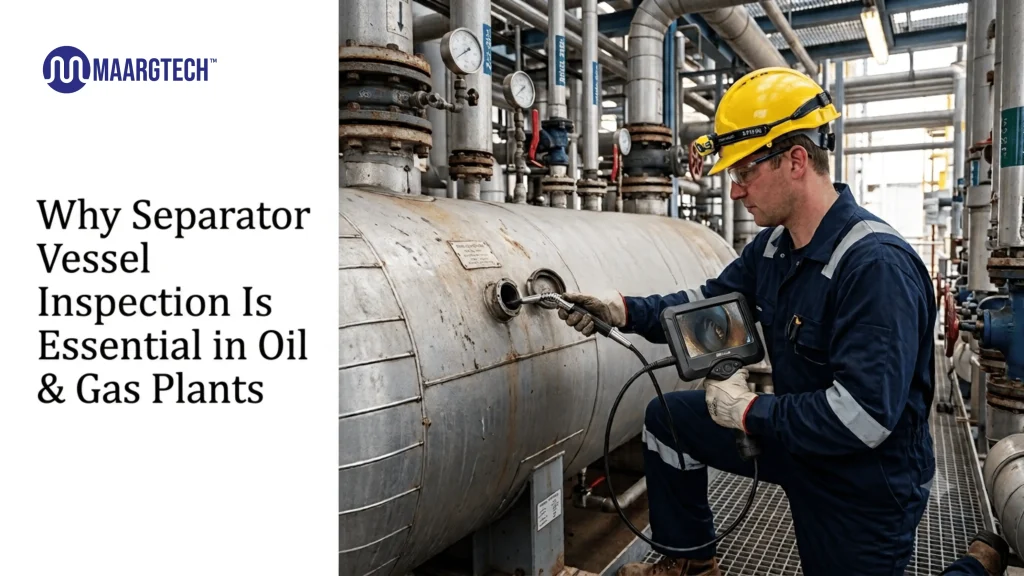
Traditional internal inspections often require vessel entry, which involves confined space hazards, purging, and extended shutdowns. This is where advanced Remote Visual Inspection (RVI) tools shine.
How Videoborescopes and RVI Solutions Revolutionize Separator Inspections
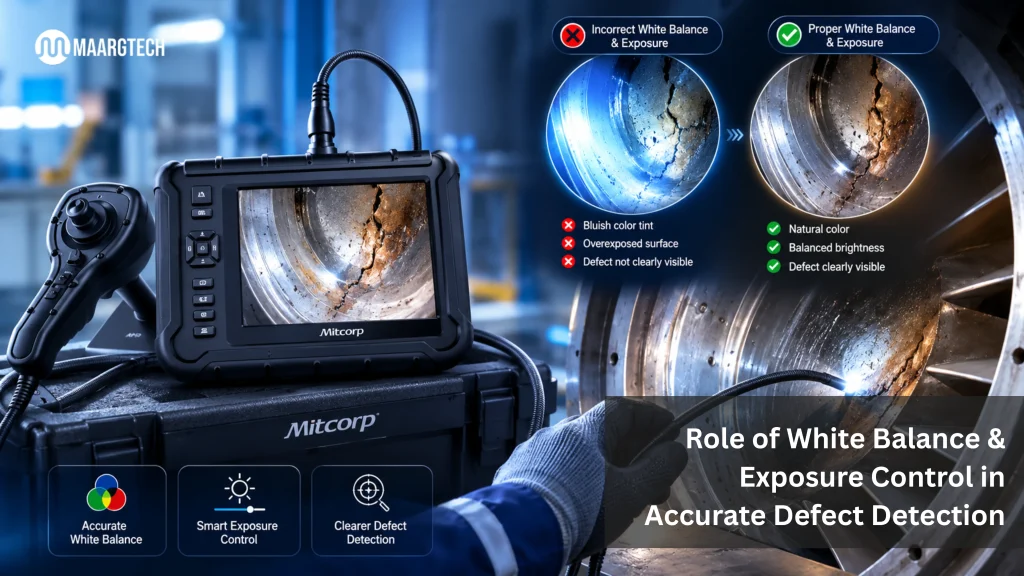
MAARGTECH specializes in providing advanced, economical Remote Visual Inspection technologies tailored for demanding oil & gas applications. High-quality video borescopes (such as Mitcorp models with HD imaging, 360° articulation, and measurement capabilities) allow inspectors to:
- Access internal surfaces through small ports or nozzles without full vessel entry.
- Capture clear, high-resolution images and videos of hard-to-reach areas like vessel heads, baffles, welds, and demister pads.
- Perform real-time 3D measurements for defect sizing and corrosion assessment.
- Document findings for RBI (Risk-Based Inspection) programs and compliance records.
These tools reduce inspection time, enhance safety by minimizing human entry into confined spaces, and deliver actionable insights quickly. Whether inspecting elbows, narrow piping connected to separators, or the vessels themselves, RVI solutions from MaargTech enable precise, non-intrusive evaluations.
Best Practices for Separator Vessel Inspection
- On-stream inspections: External visual, UT thickness gauging, and vibration monitoring.
- Off-stream/internal inspections: Comprehensive RVI, UT, MPI, and cleaning as needed.
- Frequency: Guided by risk assessment—typically more frequent for high-risk vessels handling corrosive fluids.
- Documentation: Maintain detailed records of findings, repairs, and remaining life calculations.
- Integrate with RBI: Prioritize inspections based on probability and consequence of failure.
Conclusion
In the high-stakes oil & gas industry, separator vessel inspection is essential for safeguarding people, protecting the environment, and ensuring profitable operations. Neglecting it invites unnecessary risks and costs.
At MAARGTECH, we empower inspection and maintenance teams with reliable, cost-effective RVI solutions that make thorough assessments faster and safer. Our videoborescopes and NDT tools are trusted across petrochemical, oil & gas, and other critical industries for delivering clarity where it matters most
Protect Your Critical Assets with MAARGTECH Inspection Solutions
Discover advanced industrial videoborescopes that help detect defects early, reduce downtime, and improve inspection efficiency.
Frequently Asked Questions (FAQ'S )
Why is regular inspection of separator vessels so important in oil & gas plants?
Separator vessels operate under high pressure and handle corrosive, multiphase fluids (oil, gas, water, and solids). Regular inspections help detect issues like corrosion, erosion, wall thinning, and damage to internals early. This prevents leaks, fires, explosions, unplanned shutdowns, and ensures safety, regulatory compliance, and operational efficiency.
What are the common problems or damage mechanisms found during separator vessel inspections?
Common issues include internal and external corrosion, erosion (especially at inlets), pitting, cracking, fouling/sediment buildup, and damage to internal components like demisters, baffles, and weirs. These can lead to reduced separation efficiency, liquid carryover, or vessel failure if left unaddressed.
How can Remote Visual Inspection (RVI) tools like videoborescopes help in inspecting separator vessels?
Videoborescopes allow inspectors to visually examine internal surfaces, welds, and hard-to-reach areas through small access ports without full vessel entry. This reduces downtime, minimizes confined space risks, provides high-resolution images/videos, and enables precise defect measurement — making inspections safer, faster, and more cost-effective.
How often should separator vessels be inspected in oil & gas facilities?
Inspection frequency depends on risk-based assessments, the vessel’s operating conditions, fluid properties, and the plant’s maintenance strategy. High-risk vessels handling corrosive or erosive fluids generally require more frequent internal inspections, while external checks can be done more often. On-stream monitoring is recommended on an ongoing basis, with detailed inspections aligned to planned turnarounds.
What are the benefits of using MAARGTECH’S videoborescope solutions for separator inspections?
MAARGTECH’S advanced Mitcorp videoborescopes offer HD imaging, 360° articulation, and measurement capabilities tailored for oil & gas applications. They help reduce inspection time and costs, improve safety by limiting vessel entry, deliver clear documentation, and support proactive maintenance to extend asset life.