
Introduction
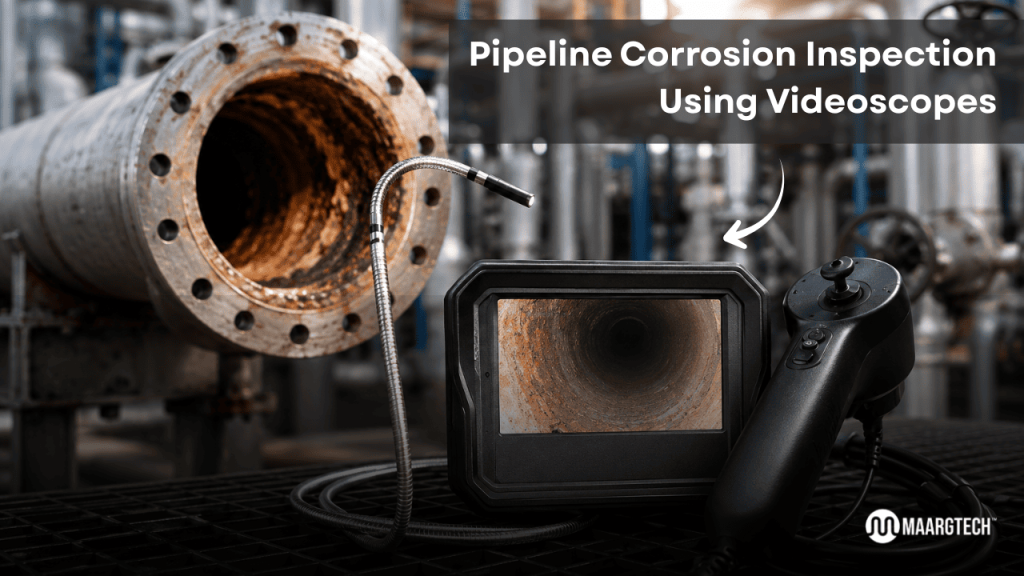
Pipeline Corrosion Inspection Using Videoscopes has become one of the most effective and reliable methods for detecting internal damage in industrial pipelines. In sectors like oil & gas, petrochemicals, refineries, and power plants, early detection of corrosion is critical to prevent leaks, failures, and expensive shutdowns. With advanced videoscopes (video borescopes), companies can now perform safe, non-destructive internal inspections without dismantling pipelines.
At MAARGTECH, we help industries across India implement efficient Pipeline Corrosion Inspection Using Videoscopes with high-performance tools like Mitcorp videoscopes and pipe inspection systems.
Why Pipeline Corrosion Inspection Using Videoscopes is Essential
Internal corrosion silently weakens pipelines over time due to moisture, aggressive chemicals (H₂S, CO₂, chlorides), temperature changes, and microbiologically influenced corrosion. Traditional methods can be disruptive, making Pipeline Corrosion Inspection Using Videoscopes a smart and preferred solution.
Key Benefits:
- Real-time high-definition visuals of internal surfaces
- Access through small entry points with minimal downtime
- Accurate documentation with photos, videos, and measurements
- Enhanced safety by reducing confined space entry
How to Perform Pipeline Corrosion Inspection Using Videoscopes
Here’s a step-by-step guide to conducting effective Pipeline Corrosion Inspection Using Videoscopes:
1. Planning and Preparation
Identify critical zones such as bends, welds, low points, and turbulent areas. Review pipeline history and select the right videoscope based on diameter and length.
2. Equipment Setup
Use industrial videoscopes with HD resolution, powerful LED lighting, and 360° articulation. Maarg Tech’s Mitcorp X2000 HD and X750 series are ideal for demanding inspections.
3. Execution of Inspection
Insert the probe carefully, navigate bends with joystick controls, and scan all internal surfaces — especially the bottom (6 o’clock position) where corrosion commonly occurs. Look for pitting, rust, scaling, wall thinning, and cracks.
4. Analysis and Measurement
Measure defect size and depth using advanced tools to assess severity and recommend actions.
5. Reporting and Follow-up
Create detailed reports with visuals for maintenance planning and compliance.
Best Practices for Successful Pipeline Corrosion Inspection Using Videoscopes
To achieve reliable results, follow these best practices:
- Clean entry points thoroughly before inserting the probe to avoid contamination.
- Select and calibrate the correct probe diameter and length for your pipeline.
- Scan slowly and systematically using full articulation to inspect all angles.
- Use guide tubes and centering devices for better control in long or complex runs.
- Follow strict safety protocols including LOTO and ATEX-rated equipment in hazardous areas.
- Ensure technicians are well-trained in both equipment operation and corrosion identification.
- Perform inspections under low-flow or drained conditions for better visibility.
- Maintain detailed documentation with timestamped images and defect measurements.
- Clean and service the videoscope regularly to ensure long-term performance.
Limitations of Pipeline Corrosion Inspection Using Videoscopes
While Pipeline Corrosion Inspection Using Videoscopes is highly effective for visual assessment, it has certain limitations:
- Surface-level inspection only: Videoscopes can only detect visible surface corrosion. They cannot identify subsurface defects, material fatigue, or hidden wall thinning without combining with other techniques.
- Restricted by pipeline geometry: Very long pipelines (>50–100 meters), complex multiple bends, or extremely small diameters may limit probe reach and maneuverability.
- Visibility challenges: Heavy scaling, sludge, debris, or oily residues inside pipelines can reduce image clarity and hide corrosion underneath.
- Operator dependency: Accurate interpretation of corrosion severity requires experienced technicians. Poor image quality or incorrect probe positioning can lead to missed defects.
- Not suitable for all operating conditions: Inspections are difficult in pipelines under high pressure or full flow. Temporary shutdown or draining may be required.
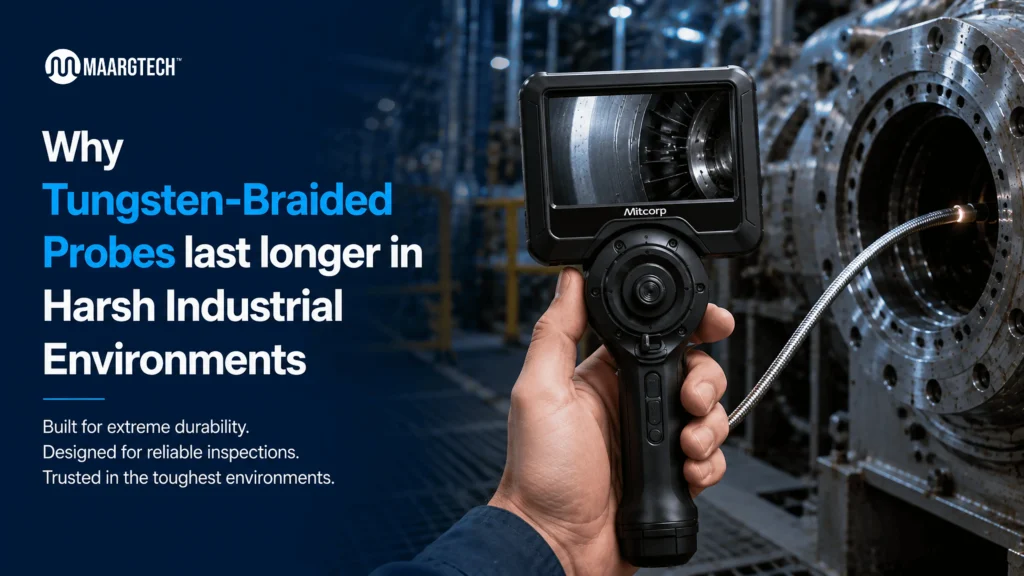
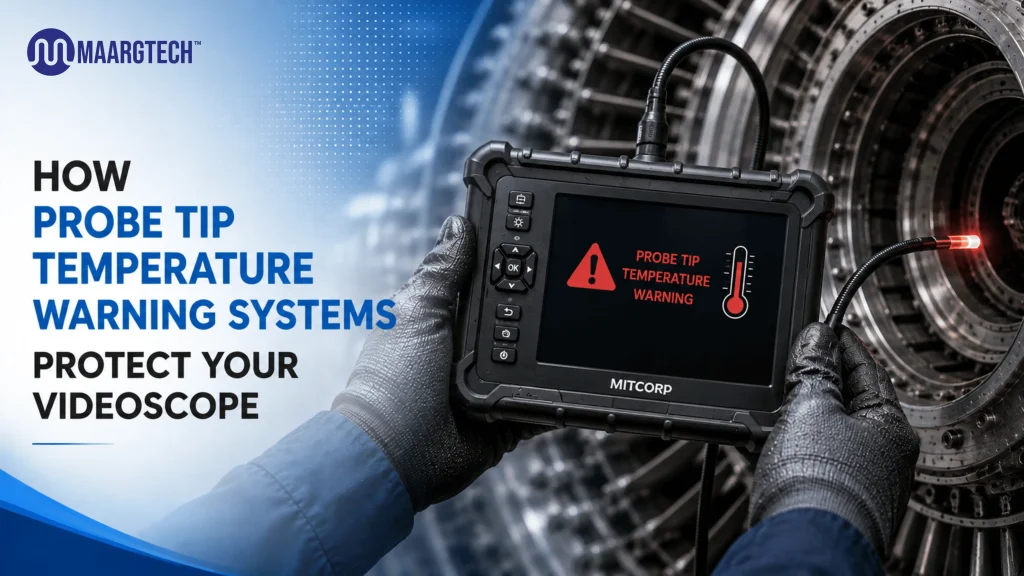
- Equipment constraints: Probe durability can be affected in highly corrosive or high-temperature environments, and high-end videoscopes involve significant initial investment.
Because of these limitations, Pipeline Corrosion Inspection Using Videoscopes works best when combined with other NDT methods like ultrasonic thickness testing, radiography, magnetic flux leakage, or intelligent pigging for a complete pipeline integrity assessment.
Conclusion
Investing in Pipeline Corrosion Inspection Using Videoscopes is one of the best ways to protect your assets, ensure operational safety, and extend pipeline life. Regular inspections help catch problems early and avoid costly emergencies.
At MAARGTECH, we provide premium videoscopes, pipe inspection cameras, and expert technical support tailored for Indian industries. Whether you need equipment supply, training, or inspection services, we are here to help.
Ready to Improve Your Pipeline Inspection Process?
Detect internal corrosion early with MAARGTECH videoscope inspection solutions. Improve safety, accuracy, and pipeline reliability.
📞 +91-97572 76307 | 📧 sales@maargtech.com
Frequently Asked Questions (FAQ'S )
What is Pipeline Corrosion Inspection Using Videoscopes?
Pipeline Corrosion Inspection Using Videoscopes is a non-destructive testing method that uses flexible video borescopes (videoscopes) to visually examine the internal condition of pipelines. It helps detect corrosion, pitting, scaling, cracks, and wall thinning without dismantling the pipeline, making it safer and more cost-effective than traditional methods.
How effective is Pipeline Corrosion Inspection Using Videoscopes for detecting corrosion?
It is highly effective for identifying visible surface corrosion, rust, pitting, and deposits in real-time with high-definition images. However, it is surface-level only and works best when combined with other NDT methods like ultrasonic thickness testing for measuring actual wall loss.
What are the main limitations of using videoscopes for pipeline inspection?
Key limitations include limited probe reach in very long or complex pipelines, reduced visibility due to heavy debris or scaling, operator dependency, and inability to detect subsurface defects. Inspections are also difficult in high-pressure or full-flow conditions.
How often should Pipeline Corrosion Inspection Using Videoscopes be performed?
The frequency depends on the pipeline material, fluid type, age, and operating conditions. Critical pipelines in oil & gas or petrochemical industries are typically inspected every 6 to 12 months, while less aggressive environments may require annual or bi-annual checks. Regular inspection helps catch corrosion early.
Which videoscope is best for Pipeline Corrosion Inspection?
High-performance industrial videoscopes like the Mitcorp X2000 HD and X750 series are excellent choices due to their HD resolution, 360° articulation, powerful lighting, and long probe lengths. Maarg Tech recommends selecting the probe diameter and features based on your specific pipeline size and application.