
Introduction
Internal valve inspection is a critical maintenance practice in industries like oil & gas, power generation, petrochemicals, manufacturing, and automotive. Valves are vital components that control flow, pressure, and safety. Over time, internal issues such as corrosion, erosion, deposits, cracks, seat wear, or foreign object debris can compromise performance, leading to leaks, inefficiencies, or even catastrophic failures.
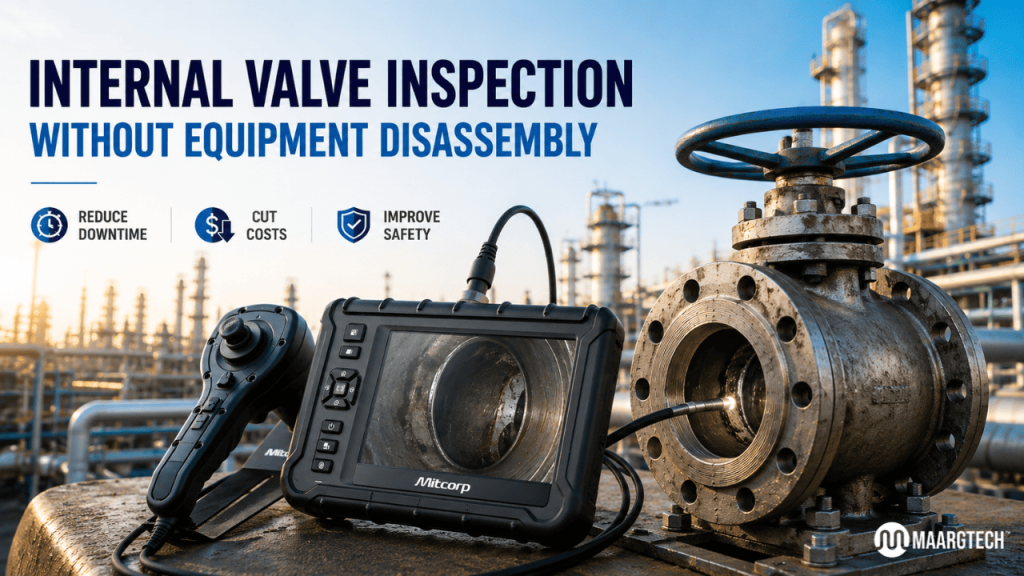
Traditionally, internal valve inspection meant full disassembly — a time-consuming, costly, and risky process that increases downtime, requires specialized labor, and can potentially damage components during reassembly. But what if you could perform a thorough internal valve inspection without equipment disassembly?
Enter Remote Visual Inspection (RVI) using advanced video borescopes. At MAARGTECH, we help industries achieve precise, non-invasive internal valve inspections that save time, reduce costs, and enhance safety.
Why Non-Destructive Internal Valve Inspection Matters
- Minimized Downtime: Inspect valves in-situ during planned shutdowns or even while partially operational in some cases.
- Cost Savings: Avoid labor-intensive disassembly, reassembly, and potential replacement of gaskets/seals.
- Improved Safety: Reduce exposure to hazardous fluids, high-pressure systems, or confined spaces.
- Better Decision Making: Real-time visuals and recorded evidence help maintenance teams prioritize repairs accurately.
- Extended Equipment Life: Early detection of minor issues prevents major failures.
Common valve types benefiting from borescope inspection include:
- Gate valves
- Globe valves
- Ball valves
- Butterfly valves
- Check valves
- Control valves
- Safety relief valves (PSVs)
How Video Borescopes Enable Internal Valve Inspection
Modern industrial video borescopes (also called videoscopes or inspection cameras) are flexible, high-definition tools designed specifically for tight, dark, and hard-to-reach spaces.
Key Features of MAARGTECH’s Mitcorp Video Borescopes (ideal for valve inspections):
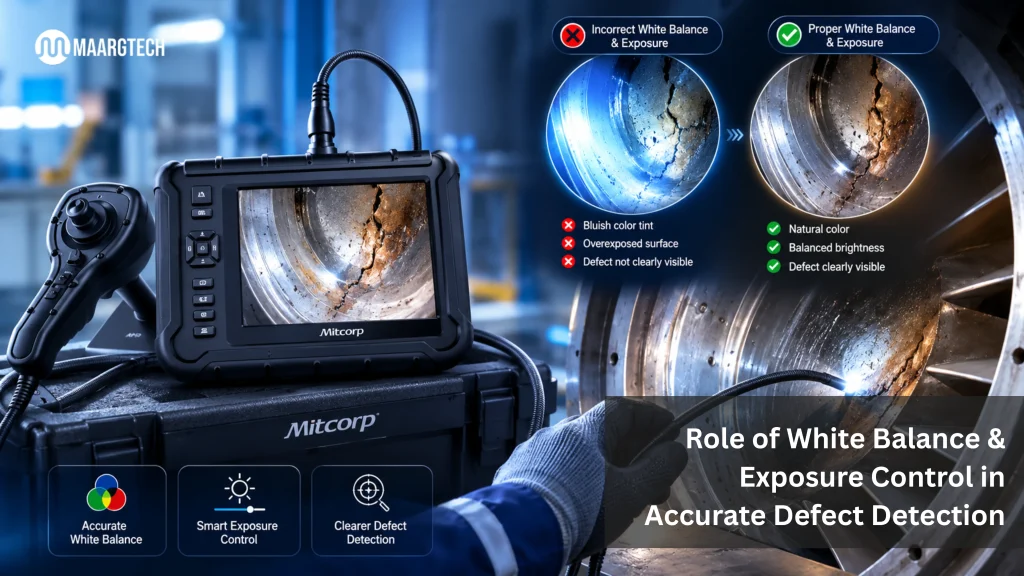
- High-Resolution Imaging: Crystal-clear 1080p or higher HD images and video with powerful LED illumination to reveal fine details like pitting, cracking, or seat wear.
- Articulating Probes: 2-way or 4-way tip articulation (up to 360°) allows precise navigation around valve internals, stems, seats, and bonnets.
- Flexible Insertion Tubes: Diameters as small as 2.8mm–6mm and lengths up to 10m+ to reach deep into valves without disassembly.
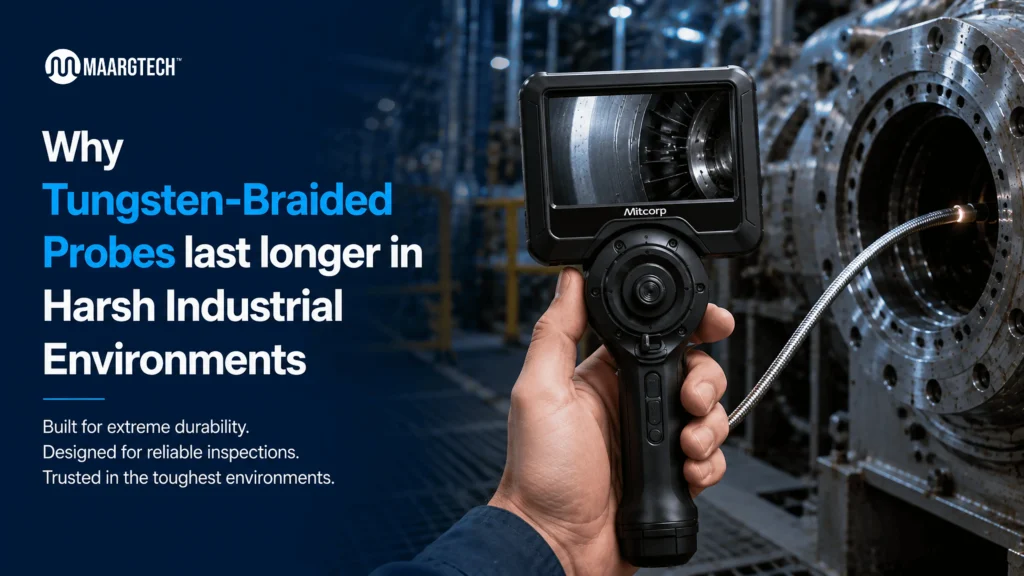
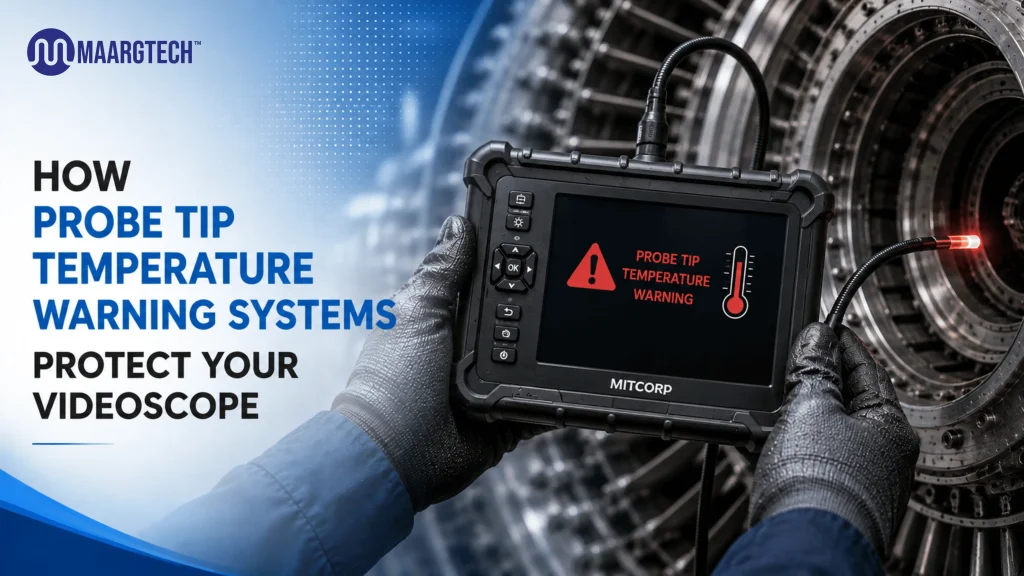
- Advanced Features: Image capture, video recording, measurement capabilities (for defect sizing), Wi-Fi/USB data transfer, and rugged, IP-rated designs built for industrial environments.
- Specialized Probes: Options for casting inspection or longer reaches suited to large industrial valves.
Typical Inspection Process:
- Identify suitable access points (e.g., through flange openings, drain ports, or bonnet vents when safe).
- Insert the borescope probe carefully into the valve.
- Maneuver the articulating tip to inspect critical areas: seating surfaces, disc/gate, stem, body walls, and internal passages.
- Capture high-quality images and videos for documentation and reporting.
- Analyze findings to determine if maintenance is required or if the valve can remain in service.
Real-World Applications
- Power Plants: Inspect steam turbine control valves or boiler feedwater valves for erosion without full system shutdown.
- Oil & Gas: Check pipeline valves for corrosion and buildup in remote or offshore locations.
- Petrochemical: Examine process control valves for polymerization or chemical attack.
- Automotive & Manufacturing: Quick inspection of engine valves or hydraulic/pneumatic valves during maintenance.
One of our clients in the casting and manufacturing sector used a Mitcorp X-series videoscope to inspect internal valve conditions during routine audits. They identified early seat wear that would have gone unnoticed until failure, avoiding unplanned downtime worth several lakhs.
Best Practices for Effective Borescope Valve Inspection
- Always follow safety protocols and isolate the valve when necessary.
- Choose the right probe diameter and articulation for the valve size and geometry.
- Use measurement tools on the borescope for quantifying defects (e.g., crack length or pit depth).
- Maintain proper documentation: timestamped images, videos, and inspection reports for compliance (API, ASME, ISO standards).
- Combine with other NDT methods like ultrasonic thickness gauging for a complete picture.
Why Choose MAARGTECH for Your RVI Needs?
At MAARGTECH, we don’t just sell equipment — we provide reliable RVI-NDT solutions tailored to Indian industries. As authorized representatives of Mitcorp (Taiwan) and other premium brands, we offer:
- Advanced yet economical video borescopes suited for Indian operating conditions.
- Expert technical support and training.
- After-sales service and calibration.
- Solutions for diverse sectors: Automotive, Casting, Process, Aerospace, Nuclear, Power, and more.
Optimize Your Valve Inspection Process Today
Reduce downtime, improve safety, and inspect internal valve components efficiently with MAARGTECH’s advanced Mitcorp videoscope solutions.
Frequently Asked Questions (FAQ'S )
What is internal valve inspection without equipment disassembly?
Internal valve inspection without disassembly is a non-invasive technique that uses advanced video borescopes to visually examine the internal condition of valves (such as seats, stems, discs, and body walls) without dismantling the valve. This method helps detect issues like corrosion, erosion, cracks, and wear while keeping the valve in place.
Which tools are used for internal valve inspection?
High-resolution industrial video borescopes (videoscopes) with flexible, articulating probes are primarily used. At MAARGTECH, we recommend Mitcorp video borescopes featuring HD cameras, powerful LED lighting, 2-way or 4-way articulation, and small probe diameters (as small as 2.8mm) ideal for tight valve spaces.
What are the main benefits of internal valve inspection without disassembly?
The biggest benefits include significant reduction in downtime, lower maintenance costs, improved safety, and prevention of unnecessary valve damage during reassembly. It also enables faster inspections, better documentation, and more accurate maintenance decisions.
Which types of valves can be inspected using this method?
Most common valve types can be inspected without disassembly, including gate valves, globe valves, ball valves, butterfly valves, check valves, control valves, and safety relief valves (PSVs). It is widely used in oil & gas, power plants, petrochemical, and manufacturing industries.
How accurate is internal valve inspection with video borescopes?
Modern video borescopes provide high-definition, real-time visuals with excellent clarity, allowing detection of even minor defects like pitting, cracks, and seat wear. Many models also include measurement tools for precise defect sizing, making the inspection highly reliable when performed by trained technicians.