
Introdcution
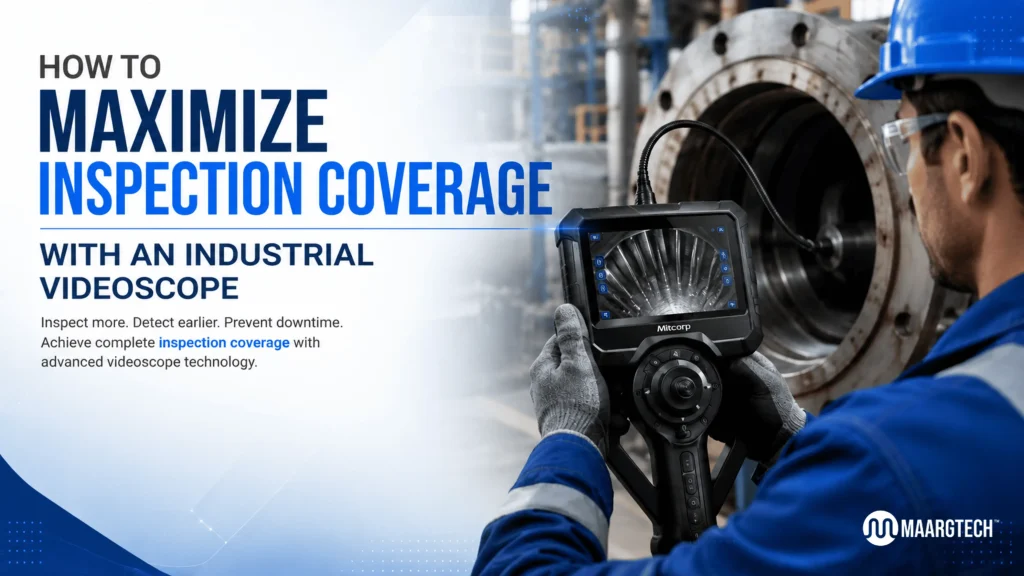
In today’s competitive industrial landscape, achieving inspection coverage is critical for maintaining asset integrity, ensuring safety, and minimizing costly downtime. Whether you’re inspecting turbines, engines, pipelines, heat exchangers, castings, or pressure vessels, an industrial videoscope (video borescope) serves as an indispensable tool for non-destructive remote visual inspection (RVI).
At MAARGTECH, we specialize in providing affordable, high-performance RVI solutions, including MITCORP videoboscopes, to help Indian and global industries achieve superior internal inspection results. This comprehensive guide explores proven strategies to maximize visibility inside equipment and extract maximum value from your videoscope investments.
Understanding Inspection Coverage in Industrial Applications
Inspection coverage refers to the extent and quality of internal surfaces you can visually assess during a single inspection session. Poor visibility often results in undetected defects such as cracks, corrosion, erosion, pitting, weld imperfections, or foreign object debris (FOD). These oversights can lead to equipment failures, production halts, and safety hazards.
Effective inspections deliver:
- Broader visibility of complex internal geometries
- Higher probability of defect detection
- Reduced need for repeated inspections or disassembly
- Better documentation for audits, compliance, and maintenance planning
Modern industrial videoscopes bridge the gap between accessibility and clarity, enabling inspectors to “see” inside assets without invasive procedures.
Choosing the Right Industrial Videoscope for Optimal Coverage
Selecting the appropriate equipment is the first and most important step toward maximizing inspection coverage. Key factors include:
Probe Diameter: Options like 4mm or 6mm probes strike an excellent balance between access to tight spaces and robust image quality. Smaller diameters are ideal for precision work in aerospace or automotive components.
Insertion Tube Length: Choose lengths based on application — 1-3 meters for engines and small machinery, up to 10+ meters for long pipelines or boiler tubes. Modular interchangeable probe systems provide flexibility across multiple jobs.
Articulation Technology: 4-way or full 360° articulation allows precise tip control, helping you navigate bends, elbows, and obstructions while maintaining visibility of all relevant surfaces.
Imaging Capabilities: Look for high-resolution sensors (HD or better), wide field of view (FOV 90°+), dual front-and-side camera options, and advanced lighting systems. Models like the MITCORP X3000 with 3D measurement further enhance inspection quality by allowing accurate defect sizing.
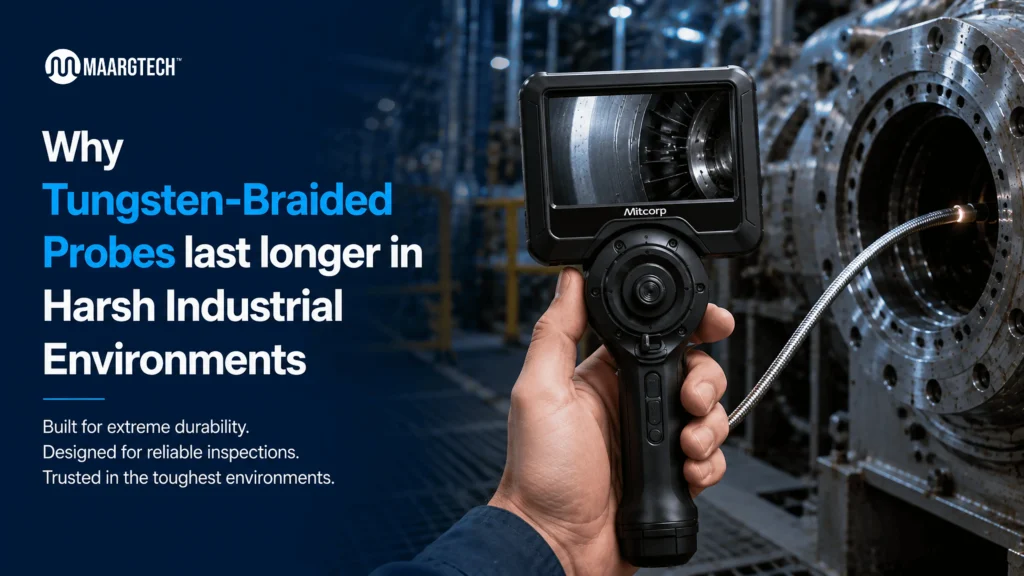
Additional Features: Sunlight-readable displays, robust tungsten-braided probes, IP-rated protection, and long battery life ensure reliable performance in field conditions.
MAARGTECH Recommendation: For most versatile inspection coverage, consider systems with dual-view cameras and quick-probe swapping capabilities.
Proven Techniques to Enhance Inspection Coverage
1. Strategic Planning and Path Mapping
Before insertion, map the inspection route, identify potential bottlenecks, and note critical inspection zones (welds, joints, high-stress areas). This preparation prevents getting stuck and ensures systematic coverage.
2. Mastering Articulation and Movement
- Use smooth, controlled joystick movements combined with gentle push-pull actions.
- Rotate the probe strategically to scan full 360° circumferences in pipes and vessels.
- Employ “pull-back” scanning: Advance the probe to the farthest point, then slowly withdraw while recording and articulating to capture overlapping views.
3. Optimizing Lighting and Image Settings
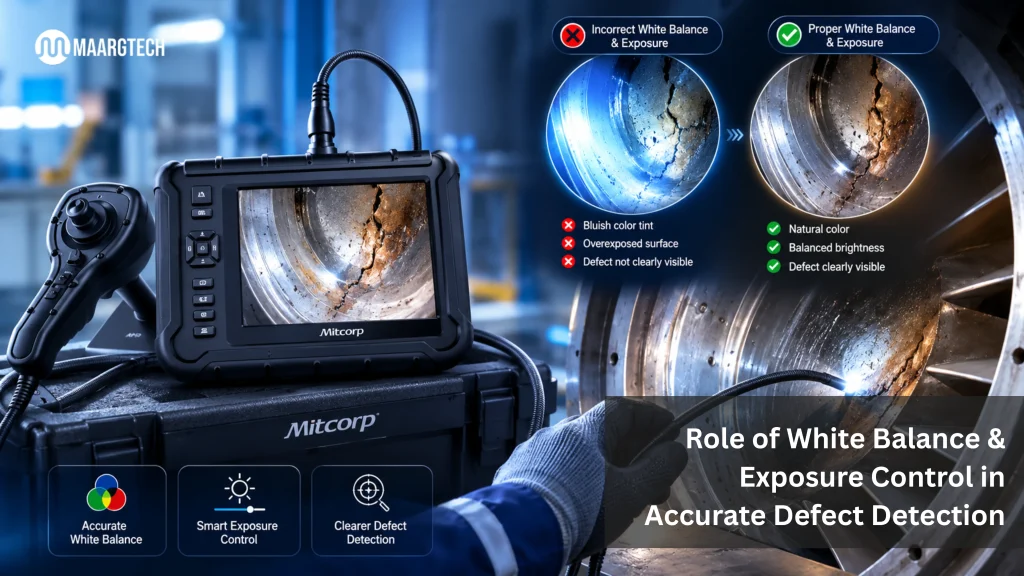
Lighting is crucial for quality inspection coverage. Start with high brightness to locate targets, then adjust downward to minimize glare on shiny metal surfaces. Advanced videoscopes with wide dynamic range processing maintain detail in both bright and shadowed areas.
4. Leveraging Advanced Features
- 3D Measurement & Modeling: Confirm defect dimensions and locations with confidence.
- Image Orientation Correction: Automatically keeps the view upright, reducing operator disorientation.
- High-Quality Recording: Capture still images and videos with annotations for comprehensive reporting.
- Optical Adapters or Dual Views: Switch between forward and side views instantly without removing the probe.
Best Practices for Consistent, High-Quality Results
- Team Training: Regular hands-on training improves operator skill in articulation, lighting adjustment, and defect recognition — directly boosting inspection coverage.
- Systematic Checklists: Follow standardized procedures covering entry-to-exit scans, high-risk zones, and multi-angle documentation.
- Maintenance Routine: Keep probes clean, store them properly, and perform regular functionality checks to maintain flexibility and image clarity.
- Documentation Discipline: Take multiple shots from different angles and distances. Use measurement tools when available to quantify findings.
- Safety First: Always follow confined space and hazardous area protocols, especially in petrochemical or power generation environments.
Industry Applications Where Maximum Coverage Delivers Results
- Aerospace & Automotive: Turbine blades, combustion chambers, cylinder heads, and gearboxes.
- Power Generation: Boiler tubes, heat exchangers, and steam turbines.
- Oil & Gas / Petrochemical: Pipelines, valves, tanks, and pressure vessels.
- Manufacturing: Castings, weld inspections, and complex machinery.
Customers using optimized videoscopes consistently report faster inspections, earlier defect detection, and significant reductions in downtime.
Conclusion
Maximizing inspection coverage with an industrial videoscope is achievable through the right combination of equipment, technique, and expertise. By implementing the strategies outlined above, you can enhance inspection quality, improve safety, and protect your valuable assets.
Maximize Your Inspection Coverage with MAARGTECH
Discover advanced industrial videoscope solutions from MAARGTECH to inspect hard-to-reach areas, detect defects early, and improve maintenance efficiency with confidence.
📞 +91-97572 76307 | 📧 sales@maargtech.com
Frequently Asked Questions (FAQ'S )
What is inspection coverage and why is it important in industrial inspections?
Inspection coverage refers to the extent and quality of internal surfaces that can be visually examined during a single session using a videoscope. It is crucial because poor coverage often leads to missed defects such as cracks, corrosion, or foreign objects, resulting in unexpected breakdowns, higher maintenance costs, and safety risks. Good coverage helps reduce downtime and supports better asset integrity management.
Why is equipment preparation important before an internal visual inspection?
Focus on key specifications like probe diameter (4mm or 6mm recommended for balance), insertion tube length suitable for your applications, 4-way or 360° articulation for navigating bends, wide field of view, dual camera options, and strong adjustable lighting. Modular systems with interchangeable probes, such as MITCORP models, offer greater flexibility across different jobs. Consider advanced features like 3D measurement for precise defect analysis.
What are the best techniques to improve inspection coverage with a videoscope?
Key techniques include proper pre-inspection path mapping, using smooth articulation with slow pull-back scanning, dynamically adjusting LED brightness to reduce glare, capturing images from multiple angles, and leveraging dual-view cameras or image orientation features. Regular operator training also significantly enhances coverage effectiveness.
Which industries benefit the most from using industrial videoscopes for better inspection coverage?
Industries such as aerospace, automotive, power generation, oil & gas, petrochemical, and heavy manufacturing benefit greatly. Applications include turbine inspections, engine components, pipeline and weld checks, heat exchangers, boilers, castings, and pressure vessels where disassembly is expensive or impractical.
How can industrial videoscopes improve inspection readiness?
MAARGTECH provides expert guidance in selecting the right MITCORP videoboscopes and RVI solutions tailored to your needs. We offer product demonstrations, operator training, competitive pricing, and strong after-sales support. With over 200 satisfied customers, we help industries implement cost-effective solutions that deliver reliable and comprehensive inspection outcomes.