
Introduction
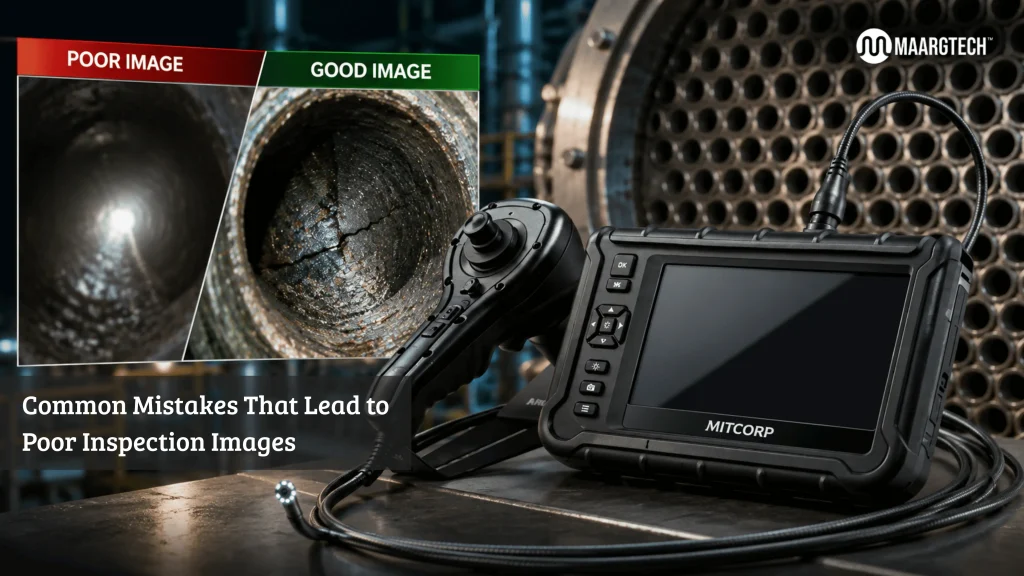
In industries like automotive, aerospace, power generation, casting, and petrochemicals, remote visual inspection (RVI) using video borescopes is essential for non-destructive testing (NDT). However, common inspection image mistakes can compromise image quality and reduce the effectiveness of an inspection. Clear, high-quality inspection images are crucial for accurate defect detection, informed maintenance decisions, and safety compliance. Blurry, dark, or distorted images can lead to missed flaws, unnecessary downtime, or costly errors.
At MAARGTECH, we provide advanced yet economical RVI solutions, including Mitcorp videoborescopes and IPEK sewer inspection systems, designed for crystal-clear imaging in even the most challenging environments. This guide highlights the common inspection image mistakes that result in poor inspection images and shares practical ways to avoid them for more reliable inspection results.
1. Inadequate Lighting Setup
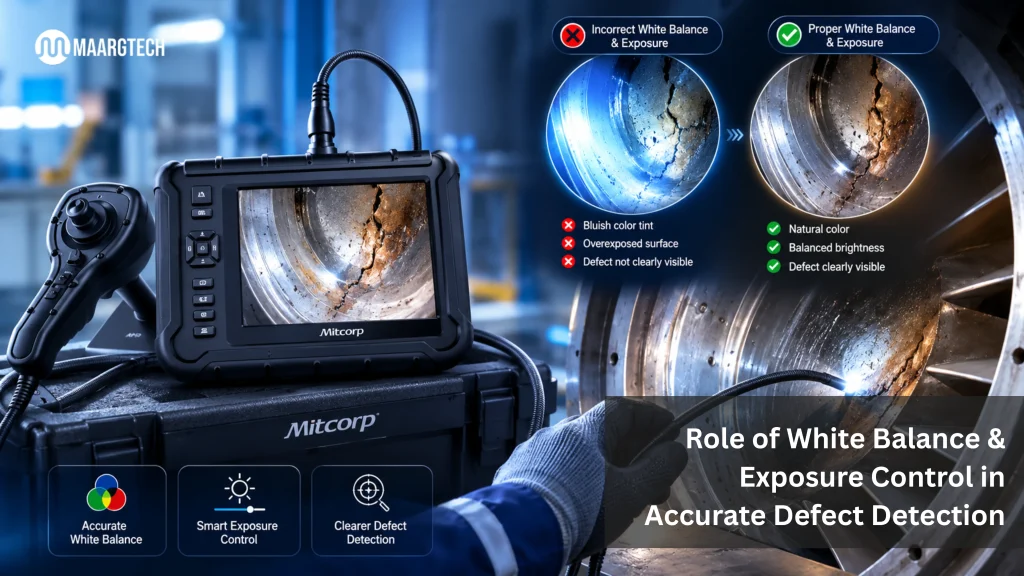
Poor lighting is one of the top culprits for dark, grainy, or washed-out images. Internal components like turbine blades, heat exchanger tubes, or engine cylinders often have limited ambient light.
Common Errors:
- Relying solely on the borescope’s default LED intensity without adjustment.
- Ignoring shadows in tight or reflective spaces.
- Using equipment with insufficient or uneven illumination.
How to Fix It:
- Choose videobscopes with adjustable, high-intensity LED lighting or dual-view cameras (like Maargtech-Mitcorp models).
- Test lighting levels before full insertion and use features like brightness control or auxiliary lighting where available.
- For sewer or large pipe inspections, opt for specialized systems like IPEK cameras optimized for long-distance visibility.
2. Wrong Probe or Camera Selection
Using a probe that doesn’t match the inspection environment leads to poor focus, limited articulation, or inadequate resolution.
Common Errors:
- Selecting a probe diameter too large or small for the access point.
- Choosing fixed-view instead of 360° articulation for complex geometries.
- Mismatched focal length or field of view (e.g., narrow angle in wide cavities).
How to Fix It:
- Assess the inspection area: diameter, depth, bends, and material reflectivity.
- Use versatile tools like the Mitcorp X2000HD or X600 series from MAARGTECH, which offer flexible probes, dual cameras, and various diameters (e.g., 4.9mm).
- Match viewing angles (e.g., wider for overview, narrower for detailed defect inspection).
3. Improper Technique and Positioning
Even the best equipment delivers subpar results with poor handling.
Common Errors:
- Moving the probe too quickly, causing motion blur.
- Incorrect distance from the target (too close = out of focus; too far = low detail).
- Ignoring probe articulation or failing to clean the lens between uses.
How to Fix It:
- Maintain steady, controlled movements and use slow articulation for precise positioning.
- Practice optimal working distance—many modern borescopes have excellent depth of field, but always verify.
- Clean lenses regularly and use anti-fog or protective tips in humid or dirty environments.
4. Ignoring Environmental Factors
Dust, moisture, oil, or extreme temperatures degrade image quality rapidly.
Common Errors:
- Not accounting for condensation or debris on the lens.
- Using non-ruggedized equipment in harsh industrial settings.
- Skipping pre-inspection calibration.
How to Fix It:
- Select industrial-grade, IP-rated videoborescopes built for tough conditions (Maargtech solutions are designed for this).
- Use protective sleeves, lens cleaners, or models with built-in anti-fog technology.
- Perform quick calibration checks and consider AI-enhanced systems for better defect highlighting in challenging visuals.
5. Poor Image Capture, Storage, and Review Practices
The inspection doesn’t end with viewing — documentation matters.
Common Errors:
- Low-resolution capture or compressed files that lose detail.
- Inadequate annotations or missing context (location, orientation).
- Relying on memory instead of systematic recording.
How to Fix It:
- Capture high-definition stills and videos with metadata.
- Use borescopes with robust storage, annotation tools, and reporting software.
- Review images on a high-quality monitor immediately and archive properly for trend analysis.
6. Lack of Training and Experience
Technology alone isn’t enough — operator skill is critical.
Common Errors:
- Assuming “point and shoot” suffices for professional results.
- Misinterpreting artifacts (e.g., reflections as defects).
- Infrequent use leading to skill fade.
How to Fix It:
- Invest in proper training on your RVI equipment.
- Partner with experts like Maargtech for demos, support, and best practices.
- Leverage AI-assisted borescopes that help highlight potential issues automatically.
Avoid Common Inspection Image Mistakes: Why Image Quality Matters
Poor inspection images don’t just waste time — they can compromise safety, increase costs, and lead to regulatory issues. High-quality RVI delivers faster inspections, better documentation, reduced downtime, and confident decision-making.
MAARGTECH specializes in reliable, high-performance video borescopes and RVI systems tailored to Indian and international industries. Whether you need compact portable units, long-reach probes for heat exchangers, or sewer inspection cameras, our solutions — backed by strong after-sales support — ensure sharp, actionable images every time.
Improve Your Inspection Image Quality Today
Capture clearer inspection images, detect defects with confidence, and enhance inspection efficiency with Maargtech’s advanced videoscope and RVI solutions.
Frequently Asked Questions (FAQ'S )
Why are my borescope inspection images blurry?
Blurry inspection images are often caused by improper focus, excessive probe movement, dirty lenses, or incorrect working distance. Ensuring proper focus and stable probe positioning can significantly improve image quality.
How can I improve the quality of inspection images during remote visual inspections?
You can improve inspection image quality by adjusting lighting levels, maintaining a clean lens, using the correct viewing angle, and capturing images at the recommended inspection distance.
Why is lighting important in industrial inspections?
Proper lighting helps reveal surface defects such as cracks, corrosion, pitting, and wear. Insufficient or excessive illumination can hide critical defects and reduce inspection accuracy.
What are the most common mistakes during borescope inspections?
Common mistakes include incorrect probe positioning, poor lighting, lack of focus, dirty optical components, low image resolution settings, and excessive camera movement during image capture.
How do modern videoscopes improve inspection image quality?
Modern videoscopes feature high-definition cameras, adjustable LED illumination, advanced image processing, and articulation capabilities that help inspectors capture clearer, more detailed images for accurate defect detection.