
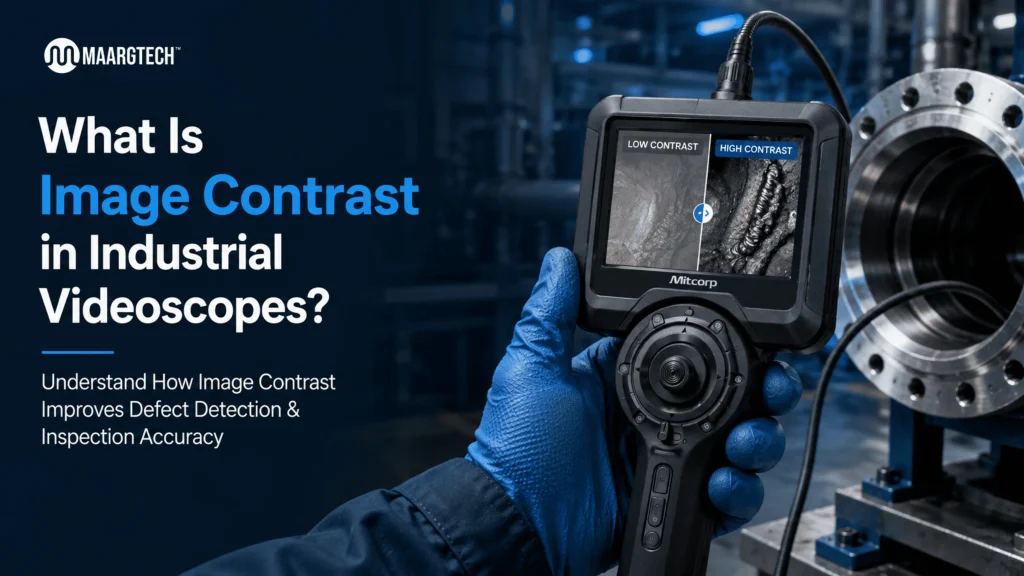
Introduction
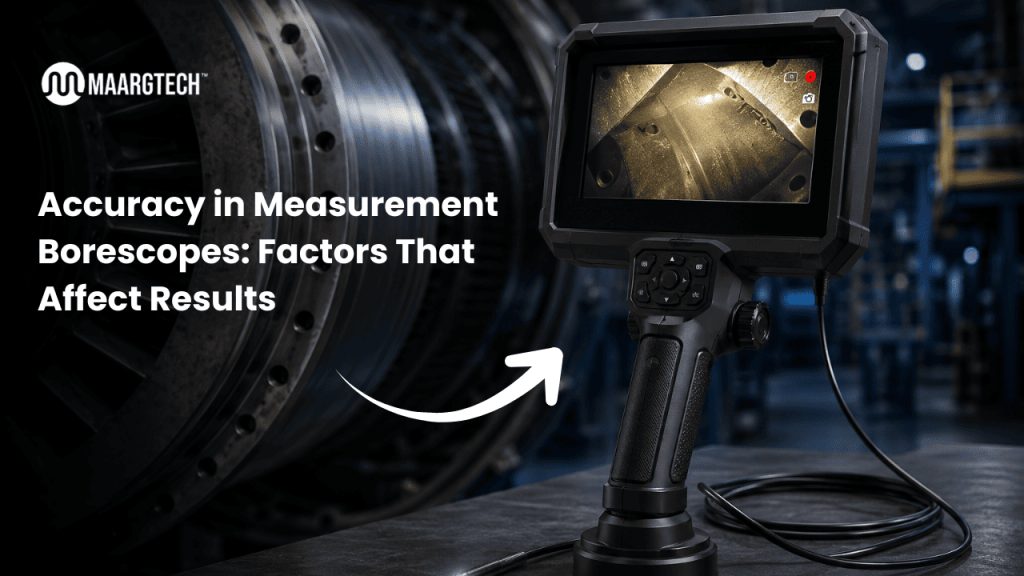
In industries where precision inspection is critical, measurement borescopes have become indispensable tools. From aerospace and automotive to power generation and manufacturing, these advanced Remote Visual Inspection (RVI) systems help engineers inspect hard-to-reach areas without dismantling expensive machinery.
At MAARGTECH, we understand that achieving accurate inspection results is not just about owning a high-end borescope — it also depends on several operational and environmental factors. Even the most advanced video borescope can produce misleading measurements if not used correctly.
This article explores the key factors that affect measurement accuracy in borescopes and how industries can optimize inspection reliability.
Understanding Measurement Borescopes
Measurement borescopes are advanced inspection devices equipped with high-resolution cameras, image processing software, and measurement capabilities. Unlike standard visual inspection tools, these systems can calculate dimensions such as:
- Crack length
- Pit depth
- Corrosion area
- Gap measurements
- Weld defects
- Foreign object dimensions
Modern systems such as the 3D measurement videoscopes available through MAARGTECH’s inspection solutions are widely used in turbine inspections, casting inspections, pipe evaluations, and engine maintenance applications.
Key Factors That Affect Borescope Measurement Accuracy
1. Camera Resolution and Image Quality
The accuracy of any borescope measurement begins with image clarity. A low-resolution image can make defect boundaries unclear, leading to incorrect readings.
High-definition borescopes with advanced sensors provide:
- Sharper edge detection
- Better zoom capabilities
- Improved defect visibility
- Enhanced measurement precision
Industrial HD borescopes and videoscopes are increasingly preferred because they reduce interpretation errors during inspections.
2. Probe Diameter and Flexibility
The diameter of the insertion tube significantly impacts inspection capability. Smaller probes can access tighter spaces, but they may compromise illumination or image stability if not properly designed.
Factors to consider:
- Accessibility of inspection area
- Required articulation angle
- Stability during measurement
- Working distance from target surface
Flexible articulated probes allow inspectors to position the camera correctly, which is essential for accurate dimensional analysis.
3. Distance from the Target Surface
Measurement accuracy changes depending on the distance between the borescope tip and the inspected object.
If the probe is:
- Too close → image distortion may occur
- Too far → measurement scaling becomes unreliable
Most modern industrial borescopes define an optimal measurement range where calibration remains accurate. Maintaining this recommended working distance is critical during inspections.
4. Lighting Conditions
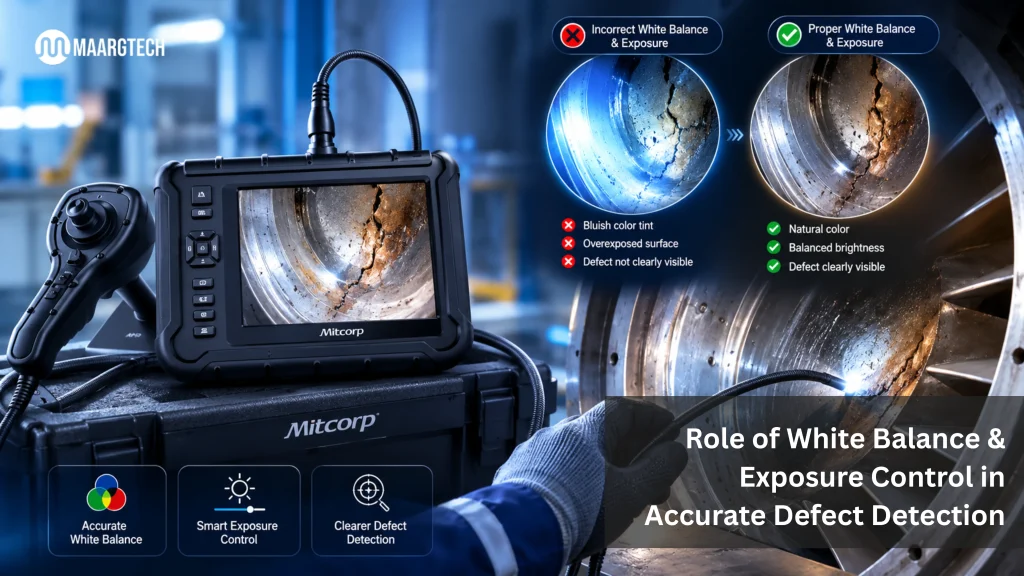
Improper lighting is one of the most common causes of inaccurate borescope measurements.
Excessive illumination can create:
- Reflection
- Glare
- Washed-out images
Insufficient lighting may result in:
- Poor edge visibility
- Shadow formation
- Hidden defects
Advanced borescopes now include adjustable LED lighting systems to optimize visibility in metallic, reflective, or dark inspection environments.
5. Calibration Accuracy
Calibration ensures that the measurement software correctly interprets distances and dimensions within the inspection image.
Incorrect calibration may lead to:
- Measurement drift
- Scale mismatch
- Inconsistent inspection reports
Routine calibration checks are especially important in industries such as aerospace, nuclear, and power generation where tolerances are extremely strict.
6. Operator Skill and Technique
Even with advanced technology, operator expertise remains a major factor.
An experienced inspector understands:
- Proper probe positioning
- Correct focus adjustment
- Ideal measurement angle
- Surface interpretation
Human error can significantly impact measurement reliability, especially when inspecting reflective or irregular surfaces.
Research in borescope-based turbine inspections has shown that manual inspection interpretation can introduce variability, which is why systematic inspection procedures are increasingly important.
7. Surface Material and Reflectivity
Highly reflective surfaces such as polished metal components can create optical challenges during inspection.
Common issues include:
- Light scattering
- Reflection artifacts
- False edge detection
In applications involving turbine blades, engine parts, or polished castings, inspectors often adjust lighting intensity and viewing angles to improve measurement consistency.
8. Environmental Conditions
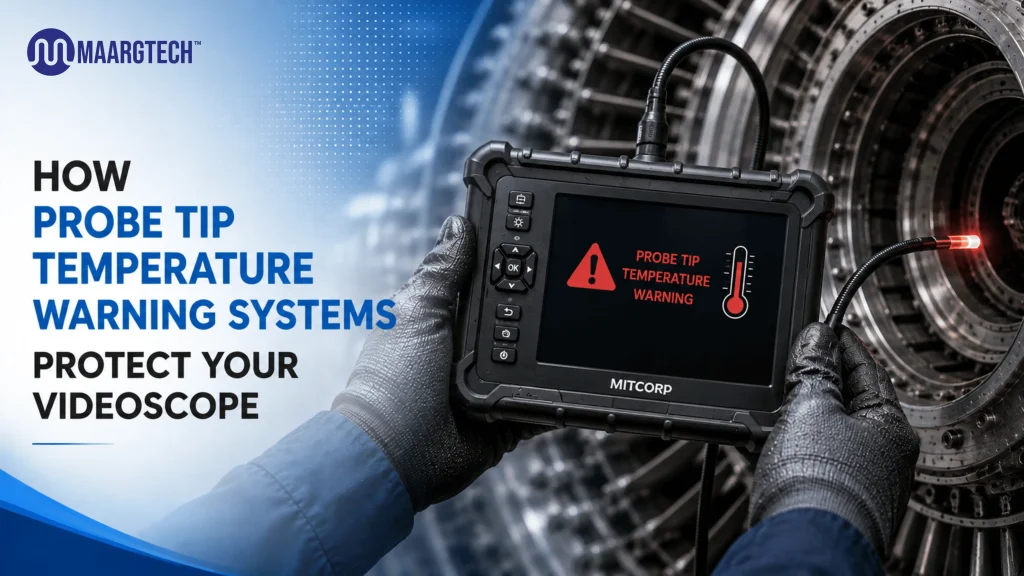
Industrial inspection environments are rarely ideal. Dust, vibration, moisture, heat, and oil contamination can all affect borescope performance.
For example:
- Vibrations may blur images
- Moisture can affect visibility
- Extreme temperatures may impact sensor performance
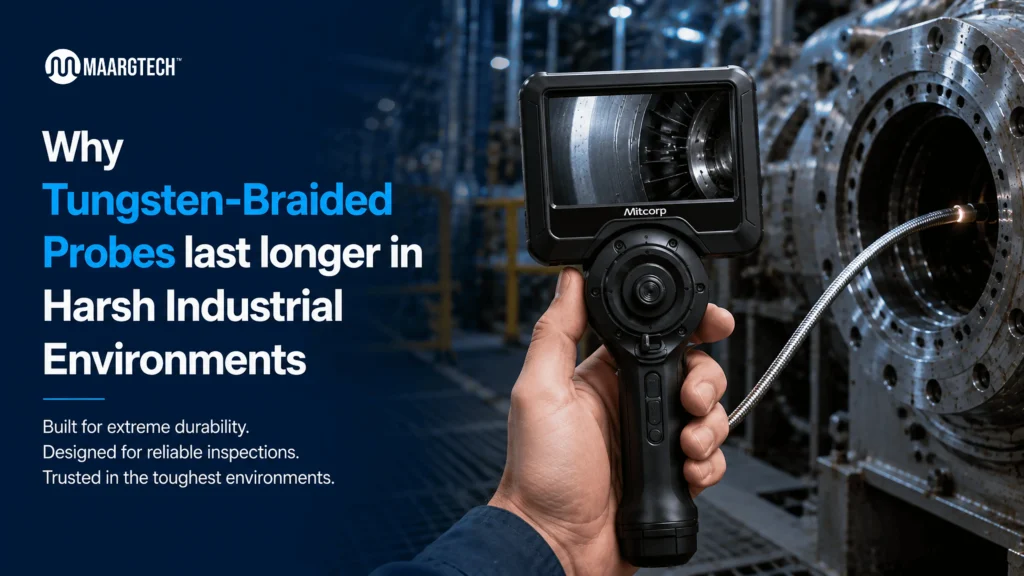
Industrial-grade borescopes with rugged IP-rated designs are therefore preferred for harsh operating environments. Many advanced systems today offer IP67-rated probes for reliable industrial usage.
Importance of Proper Measurement Practices
Accurate borescope measurements are essential because inspection data directly influences:
- Maintenance decisions
- Safety compliance
- Repair planning
- Downtime reduction
- Asset lifecycle management
Incorrect measurements can lead to:
- Unnecessary repairs
- Missed defects
- Increased operational costs
- Safety risks
That is why industries are increasingly investing in high-quality RVI systems and proper operator training.
Choosing the Right Measurement Borescope
Selecting the correct borescope depends on several application-specific requirements:
| Requirement | Recommended Feature |
|---|---|
| Tight access areas | Small diameter articulated probe |
| Precision defect sizing | 3D measurement capability |
| Long-distance inspection | Extended insertion tube |
| Harsh environments | IP-rated industrial borescope |
| Detailed documentation | HD image & video recording |
| Complex geometry inspection | Multi-direction articulation |
At MAARGTECH, industries can find advanced RVI and NDT inspection solutions designed for automotive, aerospace, power, casting, petrochemical, and industrial maintenance applications.
Future Trends in Borescope Measurement Technology
Measurement borescopes continue to evolve with technologies such as:
- AI-assisted defect detection
- 3D surface mapping
- Real-time measurement analytics
- Wireless data transfer
- Automated reporting software
Recent research also highlights the growing use of deep learning for automated damage assessment in borescope inspections, particularly in turbine maintenance applications.
As industries demand greater inspection accuracy and faster maintenance decisions, advanced borescope systems will play an even larger role in predictive maintenance strategies.
Conclusion
Measurement accuracy in borescopes depends on a combination of technology, inspection conditions, and operator expertise. Factors such as image quality, lighting, calibration, probe positioning, and environmental conditions all contribute to the final inspection result.
By understanding these factors and using advanced industrial inspection systems, companies can significantly improve defect detection accuracy, reduce downtime, and enhance operational safety.
For industries seeking reliable and economical Remote Visual Inspection solutions, MAARGTECH continues to provide advanced borescopes, videoscopes, and RVI technologies tailored for demanding industrial applications.
Improve Inspection Accuracy with Advanced Borescope Solutions
Enhance defect detection, inspection precision, and maintenance efficiency with reliable industrial borescope systems designed for demanding applications.
📞 +91-97572 76307 | 📧 sales@maargtech.com
Frequently Asked Questions (FAQ'S )
What is borescope measurement accuracy?
Borescope measurement accuracy refers to how precisely a borescope or videoscope can measure defects, cracks, corrosion, or internal component dimensions during industrial inspections.
What factors affect borescope measurement accuracy?
Several factors affect borescope measurement accuracy, including image quality, lighting conditions, calibration, probe positioning, operator skill, and distance from the inspection surface.
Why is calibration important in borescope inspections?
Calibration ensures that the borescope measurement system provides correct dimensional readings. Improper calibration can lead to inaccurate inspection results and maintenance decisions.
How does lighting impact borescope inspection results?
Poor lighting can create glare, shadows, or unclear images, making it difficult to identify defects accurately. Adjustable LED illumination improves visibility and measurement precision.
Which industries use measurement borescopes?
Measurement borescopes are widely used in aerospace, automotive, power generation, oil & gas, manufacturing, and petrochemical industries for non-destructive internal inspections.