
Introduction
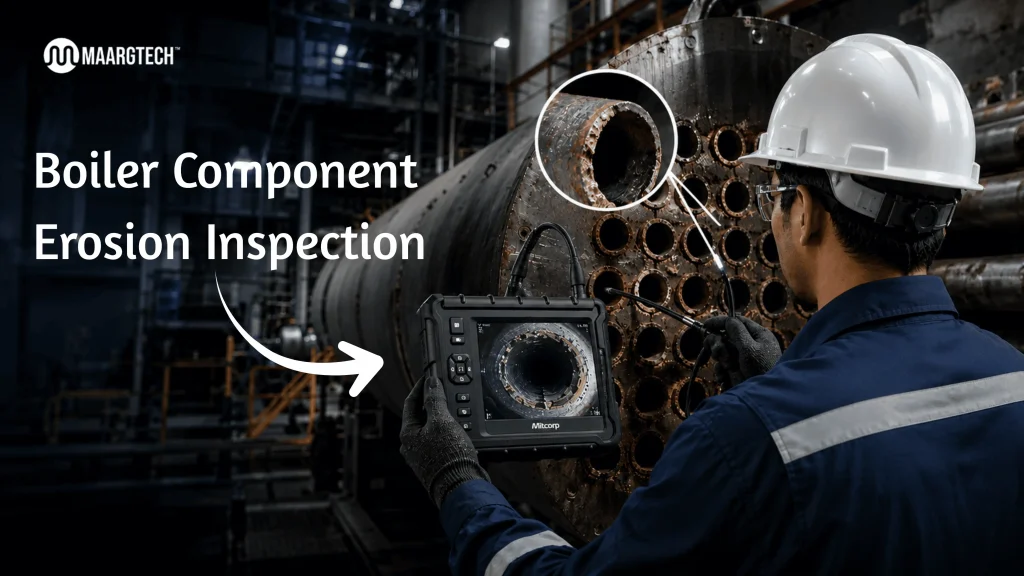
Boiler component erosion inspection is one of the most essential predictive maintenance practices in power plants, refineries, petrochemical facilities, and heavy manufacturing units. Erosion gradually removes material from critical boiler components such as waterwall tubes, superheater tubes, reheater tubes, economizers, and furnace walls. If left undetected, it leads to wall thinning, tube leaks, ruptures, forced outages, and major safety risks.
At MAARGTECH, we specialize in boiler component erosion inspection using cutting-edge industrial videoborescopes and Remote Visual Inspection (RVI) technology. Our solutions help plant operators detect erosion early, quantify damage accurately, and implement timely corrective actions — all while minimizing downtime and operational costs.
Understanding Erosion in Boiler Components
Erosion in boilers is primarily a mechanical wear process accelerated by high-velocity particles, fluids, or steam. Unlike corrosion, which involves chemical reactions, erosion physically abrades the metal surface. However, the two often combine into erosion-corrosion, making damage more severe.
Common Causes of Boiler Component Erosion:
- Fly ash and particulate impingement: Abrasive ash particles in flue gas strike tube surfaces, especially in coal-fired and biomass boilers.
- Sootblower erosion: High-pressure steam jets used for cleaning remove protective oxide layers and cause localized grooving.
- Flow-accelerated erosion: Turbulent water/steam mixtures in economizer hairpin bends create characteristic “reverse horseshoe” thinning patterns.
- Particle erosion in CFB boilers: Circulating fluidized bed boilers experience intense wear at refractory transitions, field welds, and cyclone inlets due to continuous bed material circulation.
- Steam cutting or secondary erosion: Leaking steam entrains ash particles, accelerating wear on adjacent tubes.
High-Risk Areas for Boiler Component Erosion Inspection:
- Leading edges of convective pass tubes
- Economizer bends and headers
- Areas near sootblowers
- Waterwall panels near refractory interfaces
- Superheater and reheater pendants
- Furnace bottom slope tubes
Early boiler component erosion inspection is vital because wear rates can vary significantly based on fuel type, operating conditions, and design factors.
Visible Signs of Erosion During Inspection
During boiler component erosion inspection, inspectors typically look for:
- Polished or shiny metal surfaces (loss of oxide layer)
- Grooves, gullies, or directional wear patterns
- Localized wall thinning and pitting
- “Horseshoe” or elliptical thinning in bends
- Material wastage on the impact side of tubes
These visual cues, combined with precise measurement, allow teams to assess remaining wall thickness and estimate component life.
Challenges with Traditional Boiler Inspection Methods
Conventional approaches to boiler component erosion inspection often involve:
- Extensive scaffolding and confined space entry
- Manual visual checks during shutdowns
- Ultrasonic thickness gauging (UT) at limited spot locations
- Long cooldown periods and high labor costs
These methods are time-intensive, expose personnel to safety risks, and may miss hidden or internal erosion in complex tube geometries. Modern remote visual inspection tools overcome these limitations effectively.
How Videoborescopes Transform Boiler Component Erosion Inspection
MAARGTECH offers advanced Mitcorp-powered videoboscopes designed specifically for demanding boiler component erosion inspection applications.
Key Advantages of Videoborescope-Based Inspection:
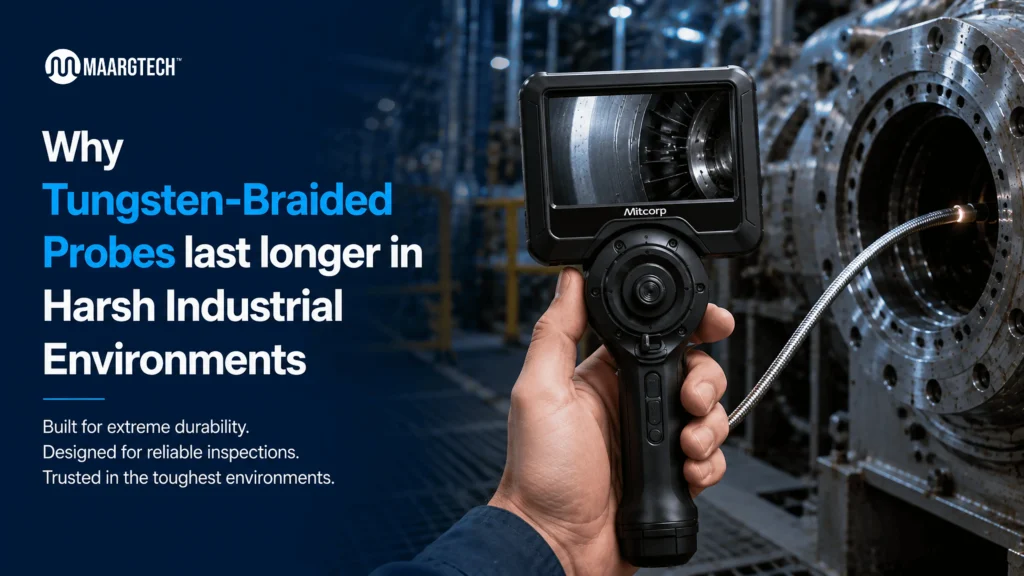
- Ultra-Slim Flexible Probes (3.9mm to 8mm diameter) that easily navigate long tube runs, tight bends, and headers
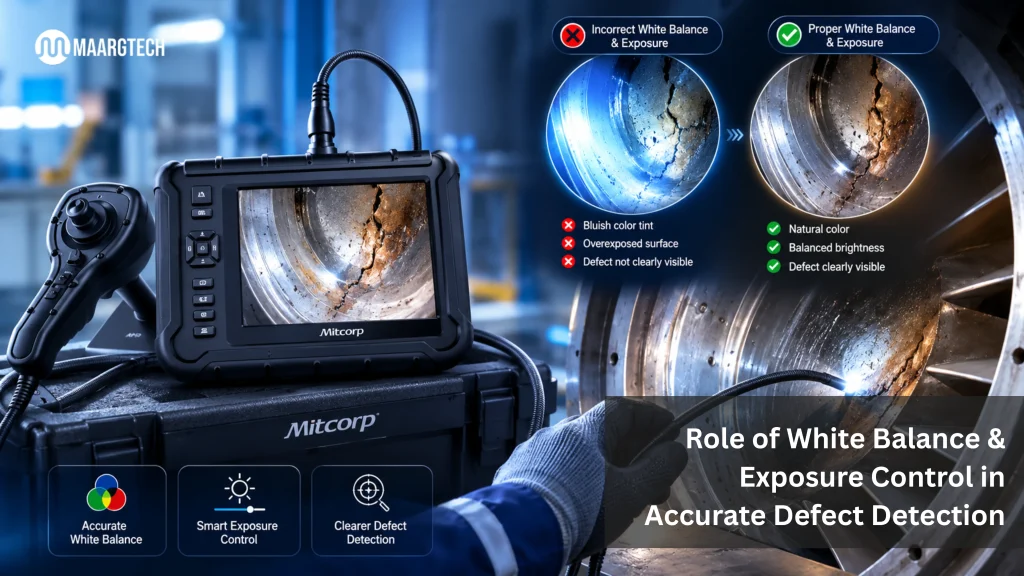
- High-Definition 1080p+ Imaging with powerful LED illumination for crystal-clear views of subtle erosion patterns
- 4-Way Articulation and dual-camera options for comprehensive multi-angle examination
- Advanced Measurement Capabilities — including 3D stereo measurement for accurate defect sizing and depth analysis
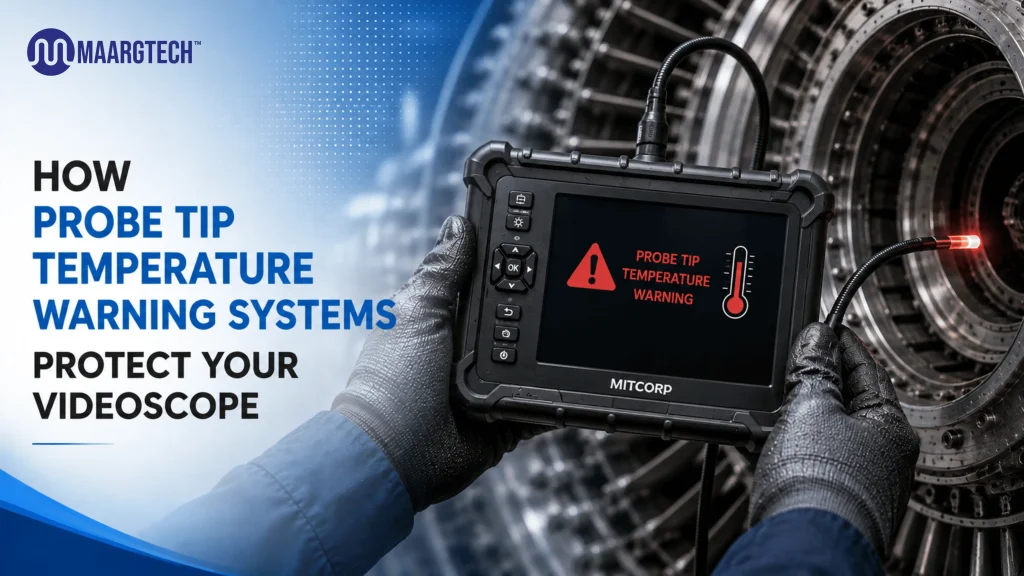
- High-Temperature Probe Options to reduce required cooldown time
- Robust Recording & Reporting tools for still images, video, annotations, and digital reports
These features make videoboscopes ideal for inspecting internal tube surfaces, welds, and hard-to-reach areas without major disassembly.
Real-World Applications:
- Detailed examination of economizer tubes for flow-accelerated erosion
- Assessment of superheater bundles for fly ash wear
- Post-outage verification of repairs
- Monitoring known erosion-prone zones over successive inspections
Best Practices for Effective Boiler Component Erosion Inspection Programs
- Develop a Risk-Based Inspection (RBI) Plan — Prioritize areas based on historical data, fuel analysis, and operating parameters.
- Combine Complementary NDT Methods — Use videoborescopes for visual and qualitative assessment alongside UT for precise thickness measurements.
- Establish Regular Inspection Intervals — Align with planned outages and monitor high-risk components more frequently.
- Implement Data Trending — Compare erosion rates across multiple inspections to predict future maintenance needs.
- Document Everything — High-quality images and reports support regulatory compliance and insurance requirements.
- Train Inspection Teams — Proper training on videoborescope operation maximizes the value of your program.
Benefits of Proactive Boiler Component Erosion Inspection
- Reduced unplanned downtime and emergency repairs
- Extended boiler tube and component life
- Improved plant efficiency and safety
- Lower overall maintenance costs
- Better compliance with industry standards and regulations
Plants that invest in regular boiler component erosion inspection shift from reactive to predictive maintenance strategies, delivering significant long-term savings.
Why Choose MAARGTECH for Your Inspection Needs?
MAARGTECH is a leading provider of Remote Visual Inspection solutions in India, offering reliable, high-performance videoboscopes at competitive prices. As authorized partners for premium brands like Mitcorp, we deliver tools trusted across power generation, petrochemical, automotive, and aerospace industries.
Our commitment includes:
- Expert pre-sales consultation and product demonstration
- Comprehensive training and after-sales support
- Tailored solutions for your specific boiler inspection challenges
- Fast response and genuine spare parts availability
Whether you need a portable system for routine checks or a feature-rich 3D measurement videoscope for critical assets, MAARGTECH has the right solution.
Protect Your Boilers Before Erosion Leads to Failure
Schedule a professional boiler component erosion inspection with Maargtech to detect wall thinning, wear, and damage before costly downtime occurs.
📞 +91-97572 76307 | 📧 sales@maargtech.com
Frequently Asked Questions (FAQ'S )
What is boiler component erosion inspection?
Boiler component erosion inspection is a preventive maintenance process used to detect and assess material loss (erosion) in critical boiler parts such as waterwall tubes, superheater tubes, economizer bends, and reheater sections. It involves advanced Remote Visual Inspection (RVI) tools like industrial videoborescopes to identify early signs of wear caused by fly ash, sootblowers, or flow-accelerated erosion before it leads to tube failure or unplanned shutdowns.
What are the main causes of erosion in boiler components?
The primary causes include fly ash particle impingement (especially in coal and biomass boilers), sootblower steam jet erosion, flow-accelerated erosion in turbulent zones like economizer bends, and erosion-corrosion. High-velocity particles, steam cutting, and continuous bed material movement in CFB boilers accelerate this damage, making regular boiler component erosion inspection essential.
How can videoborescopes help in detecting boiler tube erosion?
Videoborescopes allow inspectors to examine internal and hard-to-reach areas of boiler tubes without major disassembly. With slim flexible probes (3.9mm–8mm), high-definition imaging, 4-way articulation, and 3D measurement capabilities, they help detect early erosion patterns, grooves, wall thinning, and pitting accurately. This significantly reduces inspection time and cooldown requirements compared to traditional methods.
How often should boiler component erosion inspection be performed?
Inspection frequency depends on the boiler type, fuel used, operating conditions, and historical data. Most plants follow a risk-based inspection (RBI) approach — performing detailed boiler component erosion inspection during annual or biennial planned outages, with more frequent checks on high-risk areas like economizer bends and sootblower zones. Trending data from successive inspections helps predict erosion rates.
Why should I choose MAARGTECH for boiler component erosion inspection solutions?
MAARGTECH provides advanced Mitcorp-powered industrial videoboscopes specifically suited for power plant and boiler inspections. Our solutions offer excellent image quality, precise measurement tools, strong after-sales support, and cost-effectiveness. We help industries shift from reactive to predictive maintenance, reducing downtime and extending the life of critical boiler components.