
Introduction
Remote Visual Inspection (RVI) has transformed how industries perform non-destructive testing. Using advanced tools like video borescopes, robotic crawlers, and flexible probes, technicians can examine turbines, pipelines, engines, castings, and other critical components without full disassembly or hazardous confined space entry. At MAARGTECH, we specialize in high-quality industrial videoscopes and RVI solutions for sectors including automotive, aerospace, power generation, oil & gas, casting, and nuclear applications.
Despite its many benefits in safety and efficiency, it is essential to understand the inherent inspection limitations of remote visual inspection. Being aware of these inspection limitations helps companies set realistic expectations, integrate complementary methods, and select the right equipment. This guide explores the key inspection, their real-world impact, and practical ways to address them.
Why Remote Visual Inspection Matters
RVI enables faster inspections, reduces downtime, minimizes human risk, and creates detailed visual records for compliance. However, like any technology, it has trade-offs. Recognizing these inspection limitations is key to maximizing its value in industrial settings.
Major Inspection Limitations of Remote Visual Inspection
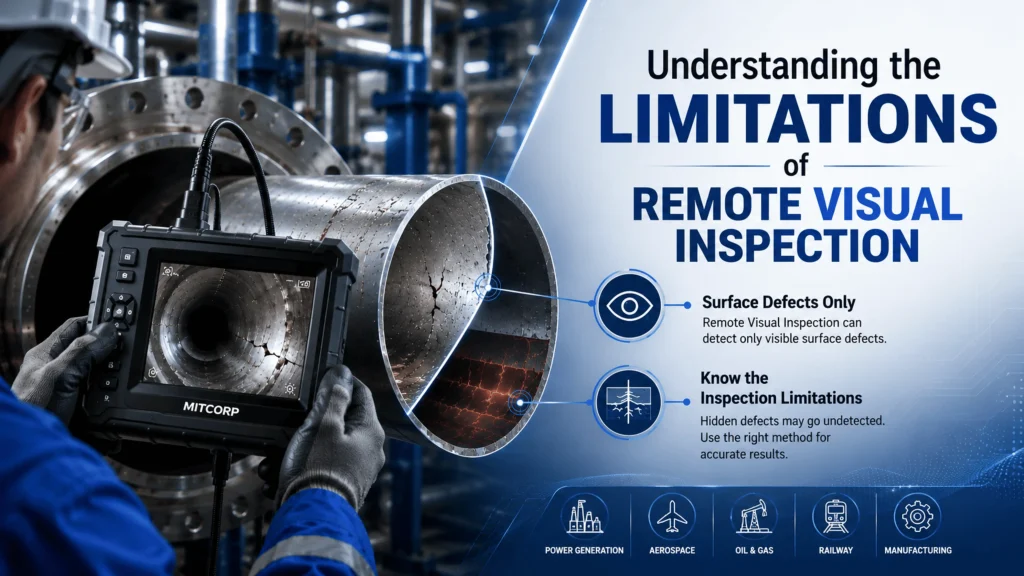
1. Restricted to Surface Defects
Remote Visual Inspection (RVI) is highly effective for identifying visible surface issues such as cracks, corrosion, erosion, weld defects, and foreign object debris. However, it cannot detect subsurface flaws like internal cracks, material inclusions, or wall thinning without support from other NDT methods such as ultrasonic or radiographic testing. This inspection limitation is especially important in pressure vessels, pipelines, and thick-walled components where hidden damage may lead to unexpected failures.
2. Image Resolution and Clarity Constraints
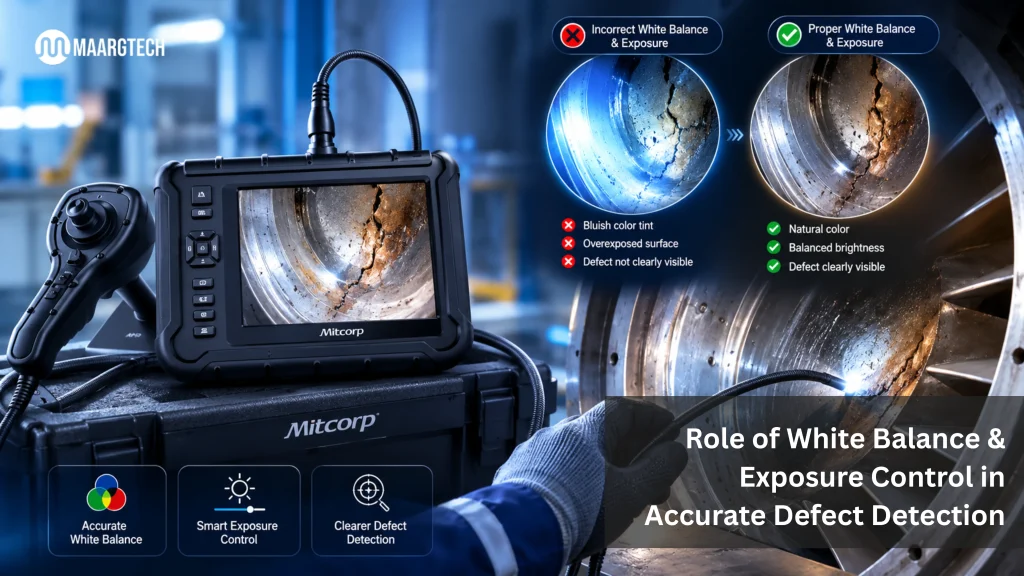
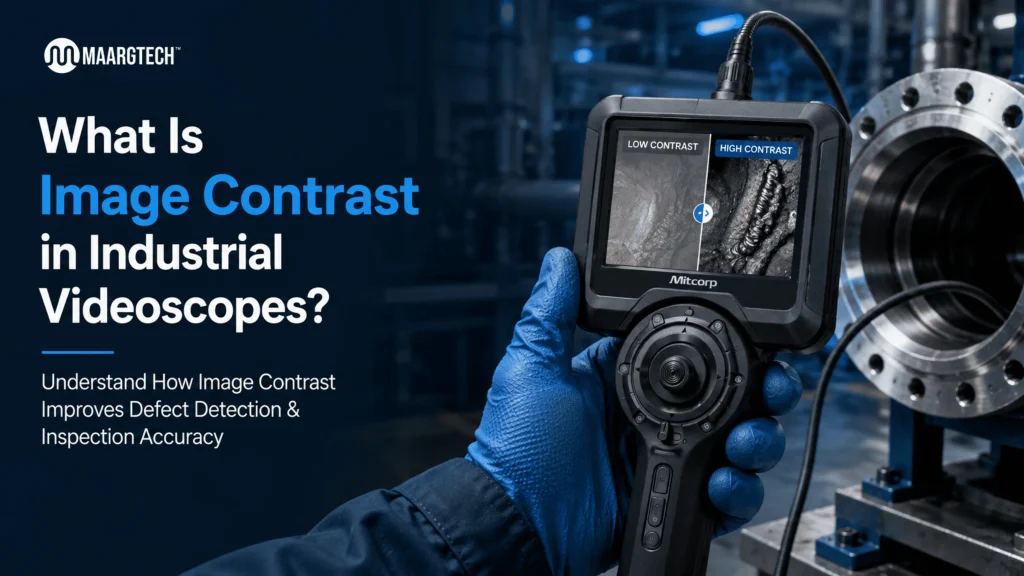
Even advanced HD videoscopes can experience reduced image quality due to factors such as probe distance, lens distortion, contamination, or poor focus. Small defects, early-stage wear, or low-contrast indications may become difficult to identify. Using high-quality imaging systems, proper calibration, and regular maintenance significantly improves inspection accuracy. MAARGTECH’s Mitcorp videoscopes are engineered with high-resolution imaging to minimize these challenges.
3. Lighting and Environmental Visibility Issues
Poor or uneven lighting can make inspections difficult, especially inside dark cavities or on highly reflective surfaces. Steam, dust, moisture, or glare may create blind spots that affect visibility. Built-in LED illumination helps, but proper probe positioning and operator experience remain essential for obtaining clear inspection results.
4. Physical Access and Maneuverability Challenges
Complex internal geometries, long pipe runs, and tight bends can limit probe movement and viewing angles. Standard insertion tubes may not provide enough flexibility or articulation to inspect every area thoroughly. This inspection limitation often requires specialized probes or multiple access points, particularly in aerospace, power generation, and industrial manufacturing applications.
5. Human Interpretation and Subjectivity
The effectiveness of RVI depends heavily on the inspector’s knowledge and experience. Differences in training, fatigue, or judgment can lead to inconsistent interpretations of inspection findings. Standardized inspection procedures, peer reviews, and AI-assisted image analysis are increasingly helping improve consistency and reliability.
6. Performance in Harsh or Hazardous Conditions
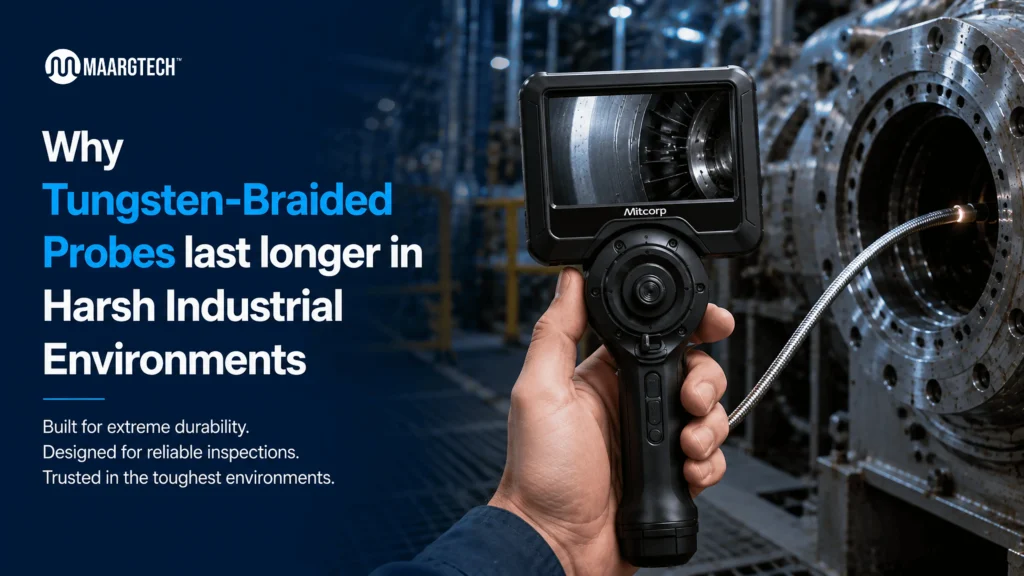
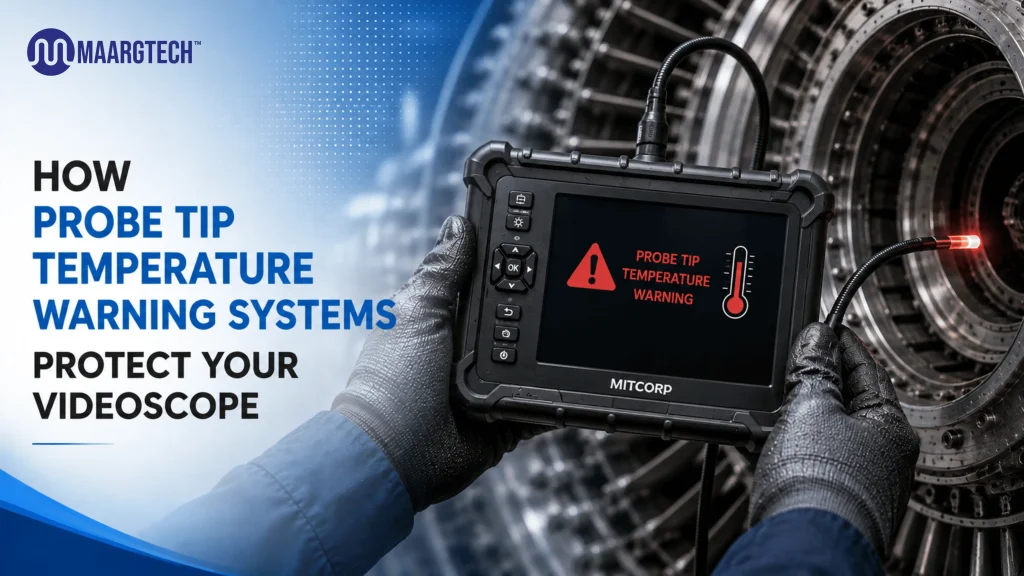
Extreme temperatures, corrosive chemicals, radiation, and explosive atmospheres can affect both equipment performance and image quality. In industries such as oil & gas, nuclear, and chemical processing, specially certified equipment (such as ATEX or IECEx compliant systems) is often required to ensure safe and reliable inspections.
7. Data Volume and Management Burden
Modern videoscopes generate large volumes of high-resolution images and videos. Without an organized system for storage, tagging, reporting, and retrieval, managing inspection records becomes increasingly difficult. This inspection limitation can impact long-term asset monitoring, regulatory compliance, and maintenance planning.
8. Initial Investment and Ongoing Costs
Professional-grade RVI systems require investment in equipment, operator training, calibration, maintenance, and replacement probes. Although these costs may be significant initially, many organizations achieve long-term savings through reduced downtime, improved inspection efficiency, and fewer unnecessary equipment disassemblies.
Real-World Implications and Industry Examples
In automotive casting inspections, undetected visual inspection challenges can lead to quality escapes and costly product recalls. In power plants, incomplete turbine blade inspections caused by restricted access may increase outage times. Aerospace MRO teams frequently combine Remote Visual Inspection (RVI) with other NDT methods to achieve more comprehensive evaluations. Understanding these inspection limitations helps maintenance teams develop effective hybrid inspection strategies that deliver reliable results.
Strategies to Mitigate Inspection Limitations
- Multi-Technology Approach: Combine RVI with ultrasonic, magnetic particle, or radiographic testing to detect defects that visual methods alone cannot identify.
- Invest in Advanced Equipment: Choose systems with 3D measurement, dual cameras, interchangeable probes, and superior articulation, such as MAARGTECH’s advanced industrial videoscopes.
- Operator Training & Certification: Regular training improves inspection consistency, reduces interpretation errors, and enhances decision-making.
- Digital Integration: Implement AI-assisted defect detection, automated reporting, and cloud-based data management for better inspection efficiency.
- Preventive Maintenance: Keep probes, insertion tubes, and imaging systems properly maintained to ensure reliable performance and extend equipment life.
By addressing these challenges proactively, organizations can improve inspection accuracy, reduce downtime, and achieve greater operational reliability.
The Future of Remote Visual Inspection
Emerging technologies such as AI-powered defect recognition, miniature high-resolution sensors, and robotic inspection platforms are steadily overcoming many traditional inspection limitations. At MAARGTECH, we stay at the forefront by offering cost-effective, advanced RVI solutions backed by reliable after-sales support. Our goal is to help customers maximize inspection performance while preparing for the next generation of industrial inspection technologies.
Conclusion
Remote Visual Inspection is a powerful and versatile technique, but achieving the best results requires understanding its capabilities and constraints. From surface-only detection and lighting challenges to accessibility and operator interpretation, every factor should be considered during inspection planning.
If your operations involve challenging inspections, partnering with experts like MAARGTECH can make all the difference. Explore our range of industrial videoscopes and RVI systems designed for demanding industrial applications and overcome common inspection limitations with confidence.
Need Expert Remote Visual Inspection Solutions?
Partner with MAARGTECH for advanced industrial videoscopes and reliable RVI solutions that improve inspection accuracy, reduce downtime, and optimize maintenance efficiency.
📞 +91-97572 76307 | 📧 sales@maargtech.com
Frequently Asked Questions (FAQ'S )
What are the main limitations of remote visual inspection (RVI)?
The primary inspection limitations of remote visual inspection include its restriction to surface-level defects only, challenges with image resolution in certain conditions, lighting and visibility issues in dark or reflective spaces, limited probe maneuverability in complex geometries, operator subjectivity, and reduced effectiveness in extreme or hazardous environments. While highly useful, understanding these inspection limitations helps in planning effective inspection strategies.
Can remote visual inspection completely replace other NDT methods?
No. Due to several inspection limitations — particularly its inability to detect subsurface flaws and dependency on clear visual access — RVI works best as part of a multi-technique approach. It is often combined with ultrasonic testing, eddy current, or radiographic methods for thorough asset evaluation.
How can companies overcome the inspection limitations of RVI?
Companies can reduce inspection limitations by investing in advanced videoscopes with better optics, articulation, and lighting (such as MAARGTECH’s Mitcorp systems), providing proper operator training, using AI-assisted analysis tools, maintaining equipment regularly, and adopting hybrid inspection programs that combine RVI with complementary NDT techniques.
Is remote visual inspection suitable for harsh or hazardous environments?
It can be used, but with notable inspection limitations. Equipment must be specially certified for explosive, corrosive, or high-temperature areas. Even then, factors like image degradation and probe durability remain challenges. Always verify IP ratings and certifications before deployment in extreme conditions.
What should I look for when choosing an RVI solution to minimize limitations?
Look for systems with high-resolution imaging, flexible articulation, strong lighting, 3D measurement capabilities, and good data management features. Partnering with experienced providers like MAARGTECH ensures you get reliable, application-specific tools along with strong technical support — helping you work effectively within the practical inspection limitations of the technology.