
Introduction
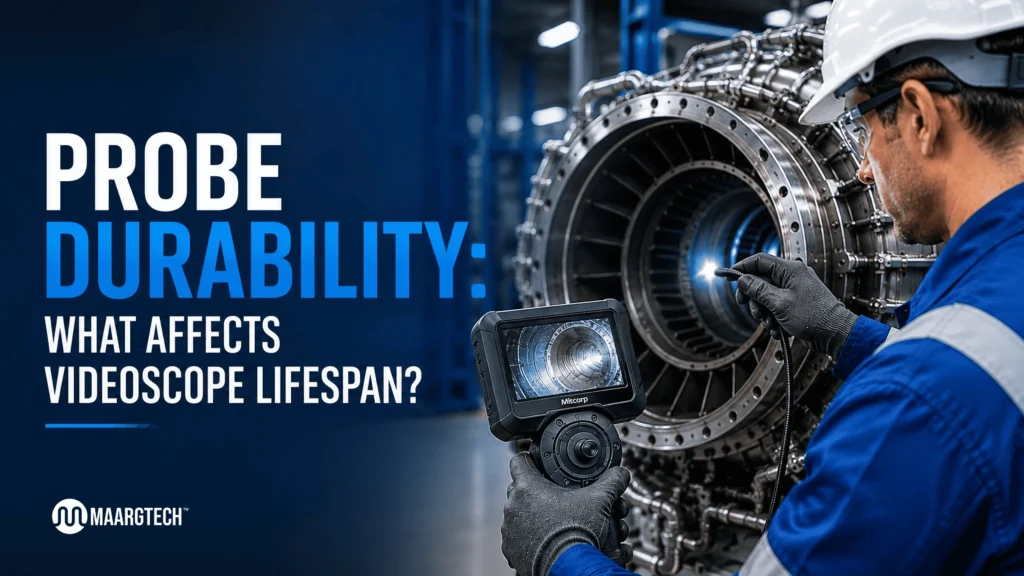
In the world of Remote Visual Inspection (RVI), the insertion probe (also called the insertion tube or flexible shaft) is the workhorse of your videoscope. It ventures into the harshest industrial environments — engine cylinders, turbines, pipelines, castings, and heat exchangers — day after day. While modern videoscopes like the Mitcorp X750 HD, X2000 HD, and X3000 series available through MAARGTECH are built for durability, understanding what impacts probe lifespan helps you maximize ROI, minimize downtime, and keep inspections running smoothly.
At Maarg Tech, we supply advanced yet economical Mitcorp videoscopes trusted across India’s automotive, aerospace, power generation, petrochemical, and manufacturing sectors. This guide explores the key factors affecting videoscope probe durability and practical tips to extend its life.
Why Probe Durability Matters in Industrial Inspections
A damaged probe means costly repairs, inspection delays, and potential safety risks. A high-quality probe with proper care can deliver years of reliable service, delivering crisp HD images even in demanding conditions. Key benefits of durable probes include:
- Reduced total cost of ownership
- Higher uptime and productivity
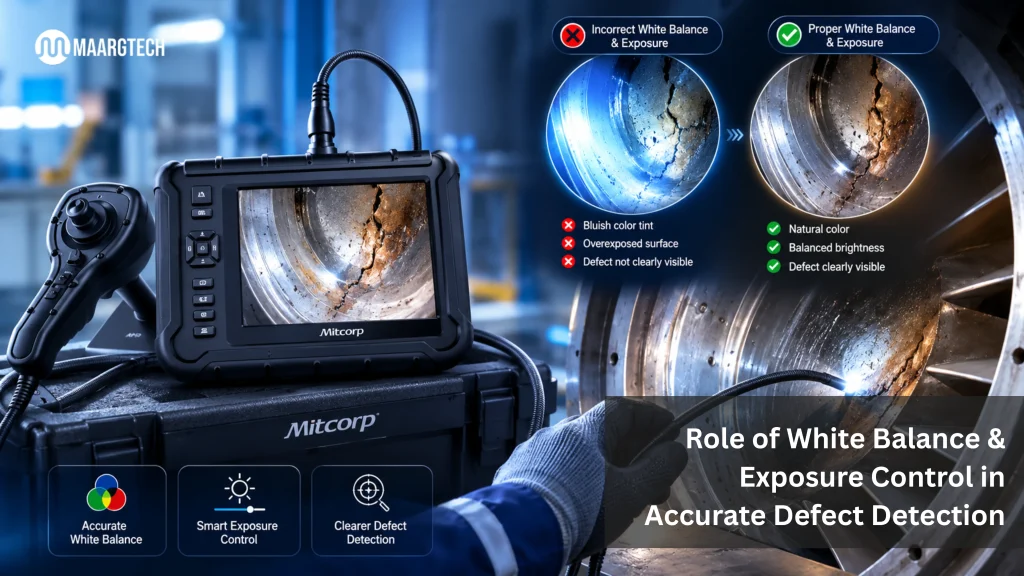
- Consistent image quality for accurate defect detection
- Safer operations in confined or hazardous spaces
Key Factors That Affect Videoscope Probe Lifespan
1. Material Construction and Build Quality
The outer layers determine abrasion, chemical, and impact resistance.
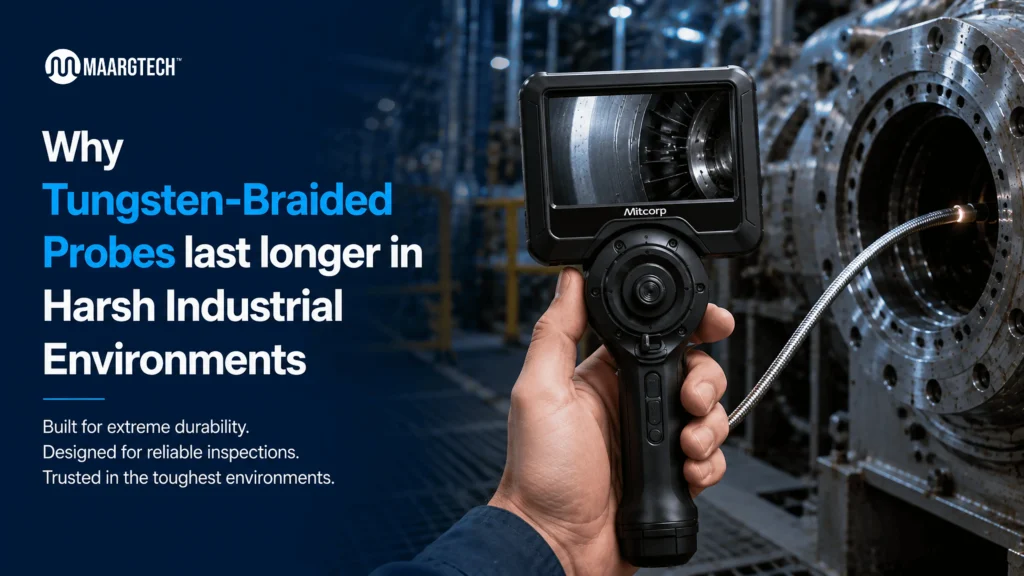
- Tungsten-braided sheathing: Offers superior abrasion resistance compared to stainless steel. Many Mitcorp probes use multi-layer tungsten braiding with polyurethane or similar protective jackets.
- Reinforced internal structure: Protects delicate fiber-optics, camera wiring, and articulation cables.
- IP67-rated probes: Excellent water, dust, and oil resistance — critical for automotive castings, pipelines, or wet environments.
Pro Tip: Choose tungsten-braided probes for high-wear applications. Mitcorp’s IP67-rated probes are designed precisely for India’s tough industrial conditions.
2. Articulation Mechanism and Usage Patterns
Frequent bending stresses the articulation section (the most flexible part near the tip).
- 2-way, 4-way, or 360° articulation: Higher degrees of freedom are convenient but require careful handling.
- Locked articulation during retrieval: A common cause of damage — always recenter the joystick before withdrawing the probe.
- Exceeding bend radius or forcing the probe: Leads to internal wire fatigue or sheath damage.
Regular, controlled articulation cycles extend life significantly.
3. Environmental and Operational Stressors
- Abrasion and sharp edges: Contact with burrs, welds, or debris wears the outer braid.
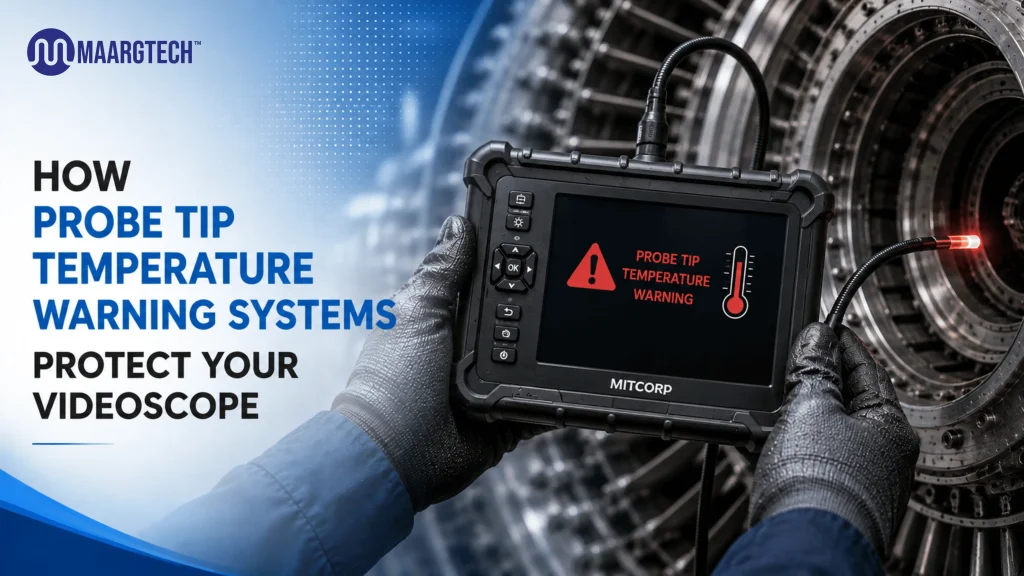
- Temperature extremes: Most probes handle up to 100°C at the tip with warnings; higher exposure (e.g., hot engines) requires caution and cooling time.
- Chemicals and contaminants: Oils, fuels, acids, or residues can degrade protective coatings if not cleaned promptly.
- Moisture and dust ingress: Compromised seals accelerate internal corrosion.
4. Handling, Storage, and Maintenance Practices
User habits often have the biggest impact:
- Drops and impacts: Even rugged designs (1m drop resistance on models like X600) benefit from careful handling.
- Improper cleaning: Residue buildup affects image quality and can damage optics or seals.
- Storage: Coiling too tightly or exposing to extreme temperatures shortens life.
- Tip adapters: Frequent attachment/removal without care wears threads; use hand-tightening only.
5. Probe Diameter, Length, and Application Fit
- Smaller diameters (e.g., 3.9mm) are more flexible but potentially less robust in very abrasive conditions.
- Longer probes (up to 7m+) experience more stress during navigation.
- Matching the right probe to the job (e.g., dual-camera for complex views) prevents overuse or misuse.
Best Practices to Maximize Your Videoscope’s Lifespan
- Pre- and Post-Inspection Routine:
- Inspect the probe for wear before use.
- Clean optics and sheath after every inspection with recommended solutions.
- Dry thoroughly before storage.
- Proper Handling Techniques:
- Always recenter articulation before retrieval.
- Avoid forcing the probe or sharp bends.
- Use protective sleeves or guides when possible.
- Regular Maintenance:
- Follow manufacturer guidelines for cleaning and lubrication.
- Schedule periodic service checks through authorized partners like Maarg Tech.
- Training: Ensure operators understand the equipment’s limits and best practices.
- Choose Quality from the Start: Mitcorp videoscopes from Maarg Tech combine rugged tungsten-braided probes, high-resolution imaging, and user-friendly features for long-term reliability.
Real-World Durability with MITCORP at MAARGTECH
Our customers in automotive casting and engine inspection report excellent longevity with proper care. Features like scratch-resistant designs, temperature warnings, and robust connectivity (Wi-Fi, USB-C, HDMI) make daily operations efficient while protecting the investment.
Conclusion: Invest in Durability, Reap Long-Term Savings
Probe durability isn’t just about withstanding punishment — it’s about smart design, quality materials, and disciplined usage. By understanding these factors and partnering with a reliable supplier, you can significantly extend your videoscope’s lifespan and enhance inspection effectiveness.
Protect Your Videoscope Investment with the Right Solution
Explore MAARGTECH’s industrial videoscopes and get expert guidance to maximize probe durability and inspection performance.
Frequently Asked Questions (FAQ'S )
What is the average lifespan of a videoscope probe?
The lifespan of a videoscope probe depends on several factors, including usage frequency, operating environment, and maintenance practices. With proper handling, regular cleaning, and routine maintenance, a high-quality videoscope probe can provide reliable performance for an extended period. However, frequent use in harsh or abrasive environments may shorten its lifespan, while careful operation and preventive maintenance can significantly extend its service life.
What is the most common cause of videoscope probe damage?
The most frequent causes are:
- Using locked articulation while pulling out the probe
- Forcing the probe through tight or sharp areas
- Dropping the unit or impact damage to the tip
- Inadequate cleaning after exposure to oil, chemicals, or debris. Proper handling and recentering the joystick before retrieval can prevent the majority of these issues.
How can I increase the lifespan of my videoscope probe?
Key practices include:
- Always recenter articulation before withdrawing the probe
- Clean the probe and optics after every use
- Avoid exceeding the recommended bend radius
- Store the probe loosely coiled in a cool, dry place
- Use protective sleeves/guides in highly abrasive environments
- Choose the right probe (tungsten-braided, IP67-rated) for your specific application.
Are tungsten-braided probes more durable than stainless steel ones?
Yes. Tungsten-braided probes offer significantly higher abrasion and wear resistance compared to standard stainless steel sheathing. They are ideal for demanding applications such as automotive castings, pipelines, turbines, and heavy engineering inspections. Most Mitcorp probes supplied by MAARGTECH use premium tungsten braiding for longer service life in harsh Indian industrial conditions.
How do I know if my videoscope probe needs repair or replacement?
Common warning signs include:
- Blurry or distorted images
- Reduced or uneven articulation
- Visible fraying, cuts, or bulges on the sheath
- Water/dust ingress or fogging inside the lens
- Error messages or tip temperature warnings becoming frequent. Regular visual checks and professional servicing from an authorized partner like Maarg Tech can help catch issues early and avoid costly downtime.