
Introduction
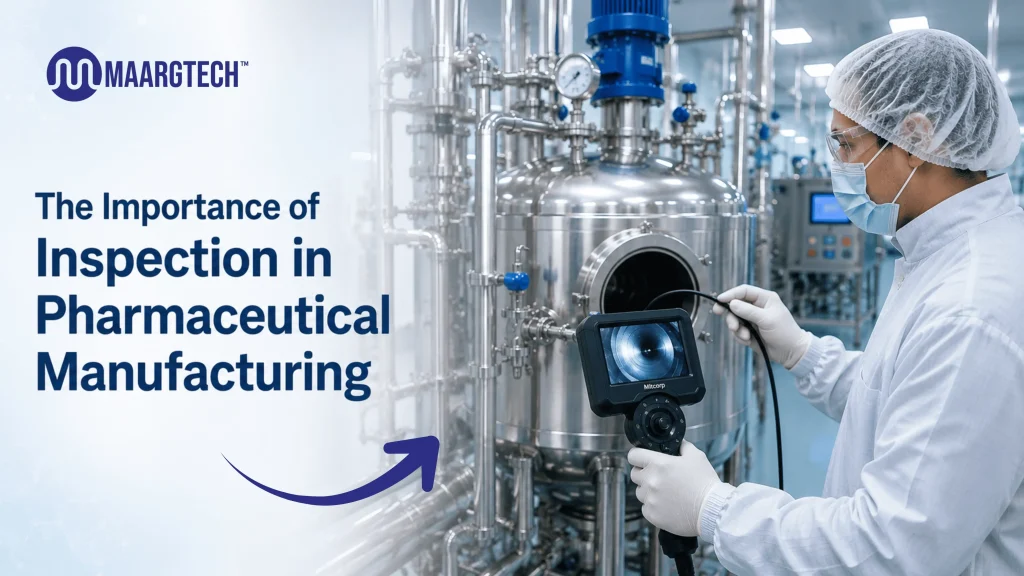
In the pharmaceutical industry, where patient safety and product efficacy are non-negotiable, inspection in Pharmaceutical Manufacturing stands as one of the most critical pillars of quality assurance and regulatory compliance. From raw material handling to final packaging, every stage of pharmaceutical manufacturing demands rigorous inspection protocols to prevent contamination, ensure equipment integrity, and maintain Good Manufacturing Practices (GMP).
At MAARGTECH, we specialize in advanced Remote Visual Inspection (RVI) solutions, including high-performance videoborescopes, that empower pharmaceutical manufacturers to conduct thorough, non-destructive internal inspections efficiently and safely.
Why Inspection Matters in Pharma Manufacturing
Pharmaceutical production involves complex equipment such as reactors, mixing vessels, piping systems, heat exchangers, storage tanks, and filling lines. Any defect, residue, or contamination in these systems can lead to:
- Product contamination — Microbial growth, particulate matter, or chemical residues.
- Batch failures and costly recalls.
- Regulatory non-compliance with FDA, WHO, EMA, or CDSCO guidelines.
- Safety risks for patients and production staff.
- Significant downtime and financial losses.
Regular and effective inspection helps mitigate these risks by identifying issues early, validating cleaning processes (Clean-In-Place or CIP), and ensuring weld integrity in process piping.
Key Areas Where Inspection is Essential
- Process Piping and Tubing Pipes and transfer lines are prone to corrosion, pitting, erosion, and residue buildup. Small-diameter videoborescopes allow inspectors to navigate bends and long runs without disassembly, detecting defects that could compromise product purity.
- Reactors, Vessels, and Tanks Internal surfaces must remain smooth and free from cracks or contamination points. Remote visual inspection provides high-resolution imagery and video recording for documentation and validation.
- Heat Exchangers and Boilers These components often harbor hidden fouling or corrosion. Timely inspection prevents efficiency losses and unexpected failures.
- Clean-In-Place (CIP) Validation Visual confirmation that cleaning procedures have removed all residues is a regulatory requirement. Videoborescopes offer clear evidence for audit trails.
- New Equipment Installation & Commissioning Baseline inspections ensure welds and internal finishes meet standards before production begins.
Benefits of Modern Remote Visual Inspection (RVI) in Pharma
Traditional inspection methods often require time-consuming disassembly, which increases downtime and contamination risks. Advanced RVI tools, such as MAARGTECH-MITCORP Videoborescopes, deliver:
- High-definition imaging with powerful LED lighting for crystal-clear views in confined spaces.
- Flexible, small-diameter probes (as thin as 3.9mm or less) ideal for pharmaceutical tubing and vessels.
- Articulation and long insertion lengths for accessing hard-to-reach areas.
- Image/video capture and reporting for complete documentation and compliance.
- Non-destructive approach that reduces downtime and labor costs.
- Improved safety by minimizing entry into confined or hazardous spaces.
These capabilities make RVI an industry standard for maintaining purity, productivity, and regulatory adherence in pharmaceutical facilities.
Regulatory and Quality Perspective
Regulatory bodies emphasize risk-based approaches to manufacturing. Tools like videoborescopes support:
- Process validation
- Preventive maintenance programs
- Deviation investigations
- Change control documentation
By integrating RVI into your quality system, you demonstrate proactive commitment to cGMP principles.
Best Practices for Effective Inspection Programs
- Schedule routine and risk-based inspections.
- Use equipment with appropriate certification (e.g., hygienic design where needed).
- Train personnel on proper insertion techniques and defect recognition.
- Maintain detailed digital records with timestamps and annotations.
- Combine visual inspection with other NDT methods for comprehensive assessment.
Conclusion: Inspection as a Strategic Advantage
In pharmaceutical manufacturing, inspection is far more than a regulatory checkbox — it is a strategic enabler of quality, safety, and operational excellence. Investing in reliable Remote Visual Inspection technology helps manufacturers protect their brand reputation, reduce costs, and most importantly, safeguard patient health.
At MAARGTECH, we are committed to providing advanced, cost-effective videoborescope solutions tailored to the stringent demands of the pharmaceutical industry. Whether you need to inspect pipelines, validate cleaning processes, or perform routine maintenance, our RVI tools deliver the clarity and reliability you need.
Enhance Your Pharmaceutical Inspection Process Today
Discover advanced industrial video borescope solutions from MAARGTECH to improve equipment inspections, reduce downtime, and maintain product quality.
Frequently Asked Questions (FAQ'S )
What is the importance of inspection in Pharmaceutical Manufacturing?
Inspection in Pharmaceutical Manufacturing is critical for ensuring product quality, preventing contamination, and maintaining regulatory compliance with GMP and FDA guidelines. It helps detect internal defects, corrosion, and residues in equipment like pipes, reactors, and tanks that could compromise drug safety and efficacy.
What are the main methods used for inspection in Pharmaceutical Manufacturing?
The most effective method today is Remote Visual Inspection (RVI) using videoborescopes. This non-destructive technique allows manufacturers to inspect internal surfaces of piping, vessels, heat exchangers, and tanks without disassembly, saving time and reducing contamination risks.
How does Remote Visual Inspection (RVI) help in Pharmaceutical Manufacturing?
RVI with videoborescopes enables high-resolution internal inspection, validates Clean-In-Place (CIP) processes, ensures weld integrity, and provides documented evidence for audits. It reduces downtime, improves safety, and helps maintain the highest standards of product purity.
Why is regular inspection important in pharmaceutical equipment?
Regular inspection prevents unexpected equipment failure, cross-contamination, and batch rejection. It ensures compliance with regulatory requirements and supports preventive maintenance, ultimately protecting patient safety and reducing operational costs.
Which tools are best for inspection in Pharmaceutical Manufacturing?
High-quality videoborescopes (borescopes) from MAARGTECH are among the best tools. They offer small-diameter flexible probes, HD imaging, articulation, and excellent documentation features specifically suited for the stringent hygiene and precision requirements of pharmaceutical manufacturing.