
Introduction
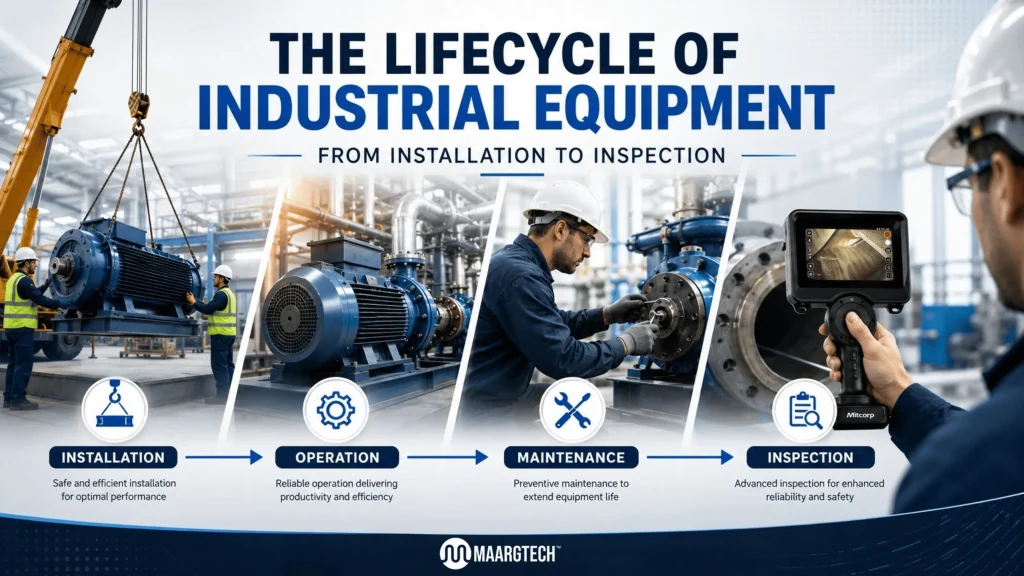
Industrial equipment forms the backbone of manufacturing plants, refineries, power stations, petrochemical facilities, and other critical industries. From the moment a machine is installed until it reaches the end of its operational life, proper maintenance and inspection play a crucial role in ensuring reliability, safety, and productivity.
Understanding the complete lifecycle of industrial equipment helps organizations maximize asset performance, reduce downtime, and avoid costly failures. In this blog, we explore the key stages of industrial equipment lifecycle management and how modern inspection technologies support each phase.
1. Equipment Installation and Commissioning
The lifecycle begins with installation and commissioning. During this phase, equipment is assembled, aligned, calibrated, and tested to ensure it meets operational requirements.
Key activities include:
- Mechanical and electrical installation
- System calibration and alignment
- Functional performance testing
- Safety verification checks
- Documentation and baseline data collection
Proper commissioning establishes a performance benchmark that can be used for future maintenance and inspections.
2. Routine Operation and Performance Monitoring
Once equipment becomes operational, continuous monitoring is essential for maintaining efficiency and reliability.
Operators monitor:
- Temperature levels
- Pressure readings
- Vibration patterns
- Flow rates
- Energy consumption
Any deviation from normal operating conditions may indicate developing issues that require further investigation. Early detection allows maintenance teams to take corrective actions before problems escalate.
3. Preventive Maintenance
Preventive maintenance is performed at scheduled intervals to reduce the likelihood of unexpected breakdowns.
Common preventive maintenance tasks include:
- Lubrication of moving components
- Cleaning and servicing
- Replacement of wear parts
- Alignment checks
- System performance verification
A proactive maintenance strategy extends equipment life and reduces repair costs over time.
4. Internal Inspection and Condition Assessment
As equipment ages, internal components may develop defects that cannot be detected through external visual inspections alone.
Common internal issues include:
- Corrosion
- Erosion
- Cracks
- Deposits and blockages
- Foreign object damage
- Wear and tear
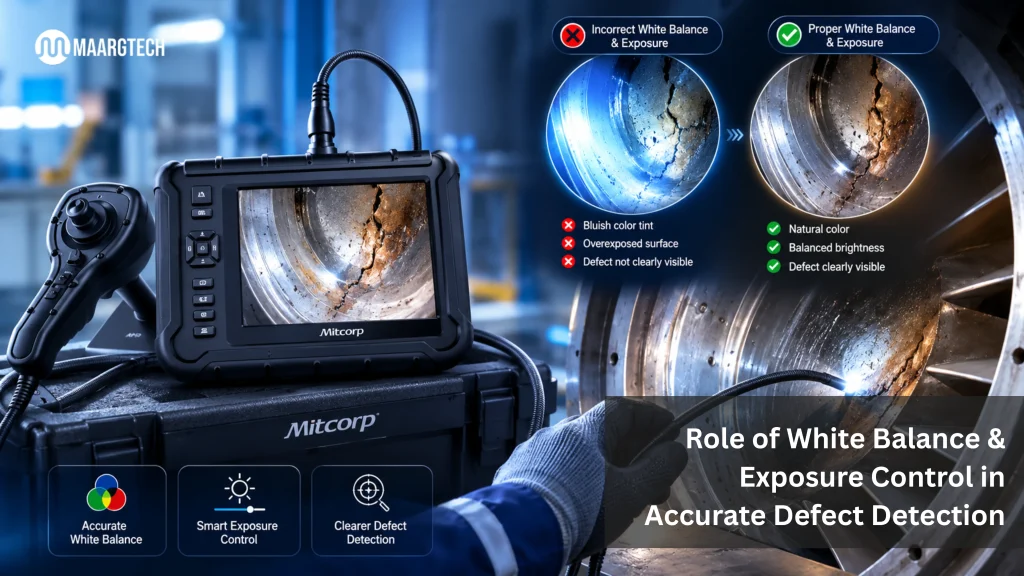
Modern inspection technologies such as industrial videoscopes and borescopes enable maintenance teams to inspect difficult-to-access areas without dismantling equipment.
Applications include:
- Turbine inspection
- Heat exchanger inspection
- Tank inspection
- Pipeline inspection
- Boiler inspection
- Valve inspection
By identifying problems early, facilities can plan maintenance activities more effectively and avoid unexpected shutdowns.
5. Predictive Maintenance and Advanced Diagnostics
Industries are increasingly adopting predictive maintenance strategies that rely on inspection data and condition monitoring.
Advanced diagnostics help organizations:
- Predict component failures
- Optimize maintenance schedules
- Improve equipment availability
- Reduce maintenance costs
- Enhance operational safety
Inspection findings collected through videoscopes and other NDT tools provide valuable insights into equipment health and remaining service life.
6. Repair, Overhaul, and Asset Life Extension
When inspections reveal defects, maintenance teams can perform targeted repairs or major overhauls.
Benefits of inspection-driven repairs include:
- Reduced downtime
- Lower repair costs
- Improved reliability
- Extended equipment lifespan
- Better maintenance planning
Instead of replacing entire systems, organizations can focus on specific components that require attention.
7. End-of-Life Evaluation and Replacement Planning
Eventually, industrial equipment reaches a stage where maintenance becomes less cost-effective than replacement.
End-of-life assessments evaluate:
- Structural integrity
- Operational efficiency
- Maintenance history
- Safety risks
- Repair costs versus replacement costs
Comprehensive inspection data supports informed decision-making and helps organizations plan future investments.
The Role of Industrial Inspection Throughout the Equipment Lifecycle
Inspection is not a one-time activity—it is a continuous process that supports every stage of equipment lifecycle management. From commissioning and routine maintenance to predictive diagnostics and replacement planning, inspection data provides the information needed to make smarter operational decisions.
Modern industrial videoscopes allow engineers to perform detailed visual inspections without costly disassembly, helping organizations improve safety, reduce downtime, and maximize asset reliability.
How MAARGTECH Supports Industrial Asset Reliability
MAARGTECH provides advanced industrial inspection solutions designed to help industries monitor equipment condition throughout its lifecycle. Our range of Videoscopes, Borescopes, and Remote Visual Inspection (RVI) systems enables fast, accurate, and non-destructive inspection of critical assets across power plants, refineries, manufacturing facilities, and process industries.
With high-definition imaging, flexible probe options, and advanced inspection capabilities, MAARGTECH helps maintenance teams identify defects early and make informed maintenance decisions that improve operational efficiency.
Conclusion
The lifecycle of industrial equipment extends far beyond installation. Regular monitoring, preventive maintenance, internal inspections, and condition-based decision-making are essential for maximizing equipment performance and reliability.
By integrating advanced inspection technologies into maintenance programs, organizations can reduce downtime, extend asset life, improve safety, and achieve greater operational efficiency throughout the entire equipment lifecycle.
Optimize Your Equipment Lifecycle with MAARGTECH
Get advanced industrial inspection solutions that help improve reliability, reduce downtime, and extend the life of your critical assets.
Frequently Asked Questions (FAQ'S )
What is the lifecycle of industrial equipment?
The lifecycle of industrial equipment includes installation, commissioning, operation, maintenance, inspection, repair, and eventual replacement. Proper management at each stage helps maximize performance, reliability, and asset lifespan.
Why are regular inspections important for industrial equipment?
Regular inspections help identify corrosion, cracks, wear, and other defects before they lead to equipment failure. Early detection reduces downtime, repair costs, and safety risks.
How does preventive maintenance extend equipment life?
Preventive maintenance involves scheduled servicing, lubrication, cleaning, and component replacement to prevent unexpected breakdowns and keep equipment operating efficiently for longer periods.
What role do industrial videoscopes play in equipment inspections?
Industrial videoscopes allow technicians to inspect internal components of machinery, pipelines, tanks, turbines, and other assets without dismantling them, saving time and reducing maintenance costs.
When should industrial equipment be replaced instead of repaired?
Equipment should be considered for replacement when maintenance costs become excessive, reliability declines significantly, safety risks increase, or inspections reveal extensive damage that affects performance.