Introduction
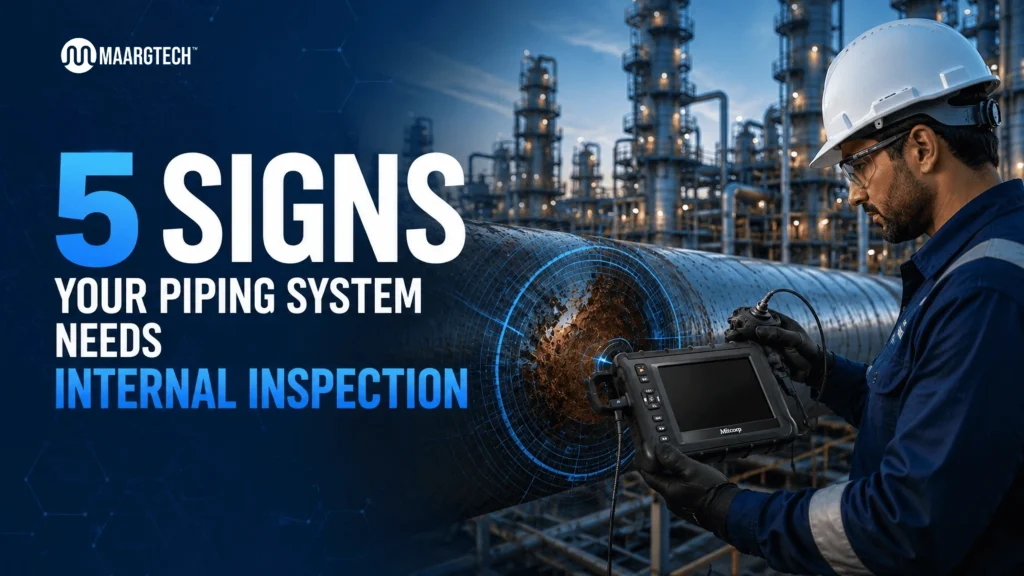
Industrial piping systems are critical assets in refineries, petrochemical plants, power stations, fertilizer facilities, and manufacturing units. While external inspections can identify visible issues, many serious defects develop inside pipelines where they remain hidden until they cause leaks, failures, or costly shutdowns. This is why regular Internal Piping Inspection is essential for maintaining asset integrity, operational reliability, and plant safety.
Regular internal inspections help detect corrosion, erosion, deposits, wall thinning, and other integrity threats before they become major problems. By identifying hidden defects early, Internal Piping Inspection enables organizations to reduce downtime, optimize maintenance planning, and prevent unexpected failures. Here are five warning signs that indicate your piping system may require an internal inspection.
1. Unexplained Pressure Drops
A sudden or gradual decrease in pipeline pressure often signals an internal problem. Corrosion products, scaling, deposits, or wall loss can restrict flow and affect system performance.
Common causes include:
- Internal corrosion
- Scale buildup
- Sediment accumulation
- Flow restrictions
If pressure losses cannot be explained by operating conditions, an internal inspection can help identify the root cause and prevent further deterioration.
2. Reduced Flow Efficiency
When pumps and compressors are operating normally but process output declines, the piping system may be experiencing internal blockage or damage.
Indicators include:
- Lower throughput
- Increased pumping requirements
- Higher energy consumption
- Inconsistent process performance
Internal inspection techniques can reveal deposits, fouling, erosion, or localized corrosion that may be affecting flow efficiency.
3. Recurring Leaks or Repairs
Frequent leaks in the same piping circuit are often symptoms of underlying internal degradation rather than isolated failures.
Potential issues include:
- Corrosion under deposits
- Localized pitting
- Erosion-corrosion
- Wall thinning
Instead of repeatedly repairing affected sections, a comprehensive internal inspection can identify the extent of damage throughout the system and support long-term reliability planning.
4. Increasing Corrosion Rates
Corrosion monitoring programs may reveal accelerated corrosion rates that exceed expected limits. Changes in process chemistry, operating temperatures, flow conditions, or contaminants can significantly impact internal pipe integrity.
Warning signs include:
- Rising corrosion monitoring readings
- Frequent thickness loss findings
- Unexpected material degradation
- Reduced remaining life calculations
Internal inspection provides valuable data for evaluating asset condition and determining appropriate mitigation measures.
5. Aging Infrastructure and Extended Service Life
Many industrial facilities continue operating piping systems well beyond their original design life. As assets age, the likelihood of internal damage increases, making periodic inspections essential.
Facilities should consider internal inspection when:
- Pipelines have exceeded design life expectations
- Historical inspection records are limited
- Operating conditions have changed
- Major turnarounds are scheduled
Proactive assessment helps ensure continued safe operation while reducing the risk of unplanned failures.
Why Internal Piping Inspection Matters
Internal piping inspections provide critical information about asset health that cannot be obtained through visual examination alone. Advanced inspection methods can identify:
- Internal corrosion
- Erosion damage
- Wall thinning
- Pitting
- Deposit buildup
- Integrity threats affecting reliability
By detecting these issues early, plant operators can optimize maintenance planning, improve safety, reduce downtime, and extend asset life.
Conclusion
Pressure loss, reduced flow efficiency, recurring leaks, accelerated corrosion, and aging infrastructure are all indicators that a piping system may require internal inspection. Ignoring these warning signs can lead to costly failures, production losses, and safety risks.
A proactive inspection strategy enables facilities to identify hidden damage, make informed maintenance decisions, and maintain long-term operational reliability.
Need an Internal Piping Inspection?
Detect hidden corrosion, wall thinning, and pipeline defects before they become costly failures—contact MAARGTECH for advanced industrial inspection solutions.
Frequently Asked Questions (FAQ'S )
What is internal piping inspection?
Internal piping inspection is the process of evaluating the inside condition of industrial pipelines to identify corrosion, wall thinning, erosion, deposits, cracks, and other defects that may affect system integrity and reliability.
How often should a piping system undergo internal inspection?
Inspection frequency depends on factors such as operating conditions, fluid type, corrosion rates, regulatory requirements, and asset age. Critical piping systems may require more frequent inspections to ensure safe operation.
What are the common signs that a piping system needs inspection?
Common warning signs include unexplained pressure drops, reduced flow efficiency, recurring leaks, increasing corrosion rates, and aging infrastructure operating beyond its original design life.
Can internal piping inspection help prevent pipeline failures?
Yes. Internal inspections help detect hidden defects before they become critical, allowing maintenance teams to address issues early and reduce the risk of leaks, shutdowns, and costly failures.
Which defects can be detected during an internal piping inspection?
Internal piping inspections can identify corrosion, erosion, pitting, wall thinning, scale buildup, deposits, cracks, and other integrity threats that may not be visible during external examinations.