
Introduction
Videoscope inspection has become an essential non-destructive testing (NDT) technique for examining hard-to-reach internal components without dismantling equipment. Whether inspecting pipes, pressure vessels, boilers, turbines, heat exchangers, or welds, obtaining a clear image is critical for identifying defects accurately.
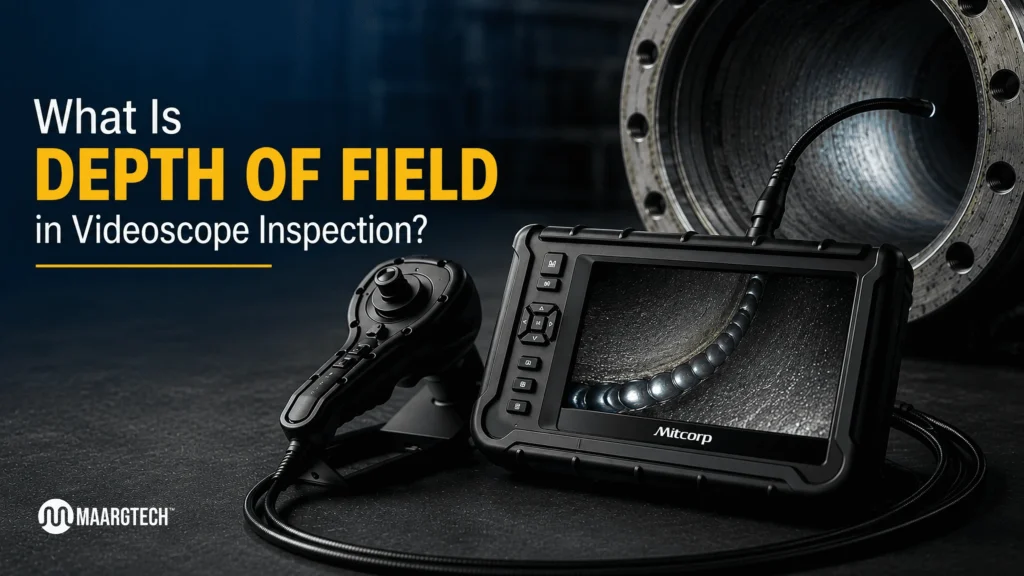
One important but often overlooked factor that affects image quality during inspection is depth of field (DOF) in videoscope. Understanding depth of field helps inspectors capture sharper images, improve defect detection, and produce more reliable inspection reports.
Understanding Depth of Field in Videoscope
Depth of field refers to the range of distance within an image that appears acceptably sharp and in focus. In videoscope inspection, it determines how much of the inspection area remains clear when viewing internal surfaces or components.
For example, if a videoscope is focused on a weld seam inside a pipe, the depth of field determines whether nearby surfaces and surrounding areas also appear sharp or become blurred.
A larger depth of field keeps more of the inspection area in focus, while a shallow depth of field focuses sharply on a smaller region and blurs objects outside that range.
Why Depth of Field Matters in Videoscope Inspection
Accurate defect identification depends on image clarity. If the depth of field is insufficient, critical defects may appear blurred or go unnoticed.
Proper depth of field helps inspectors:
- Detect cracks, corrosion, pitting, and erosion more clearly
- Inspect welds and surface conditions accurately
- Improve documentation quality for inspection reports
- Reduce the need for repeat inspections
- Increase confidence in maintenance and repair decisions
In industrial environments where equipment reliability and safety are critical, image quality directly impacts inspection effectiveness.
How Depth of Field in Videoscope Affects Defect Detection
Crack Identification
Small cracks often require precise focus to distinguish them from scratches or surface marks. An appropriate depth of field ensures the entire crack profile remains visible.
Corrosion Assessment
Corrosion can occur across uneven surfaces. A greater depth of field helps inspectors evaluate the full extent of material degradation.
Weld Examination
When inspecting welds inside vessels or piping systems, maintaining focus across the weld profile allows inspectors to identify discontinuities more effectively.
Surface Damage Evaluation
Erosion, pitting, and mechanical damage can occur at varying depths. Proper focus helps capture the true condition of the component being examined.
Factors That Influence Depth of Field
Several factors affect depth of field during videoscope inspection:
Inspection Distance
The distance between the videoscope tip and the inspection target significantly impacts focus. Objects too close or too far from the focal range may appear blurred.
Lens Design
Different videoscope lenses are designed for specific inspection applications. Some provide a wider depth of field for general inspections, while others offer higher magnification for detailed examinations.
Viewing Angle
Forward-viewing and side-viewing optics may produce different focus characteristics depending on the inspection environment.
Lighting Conditions
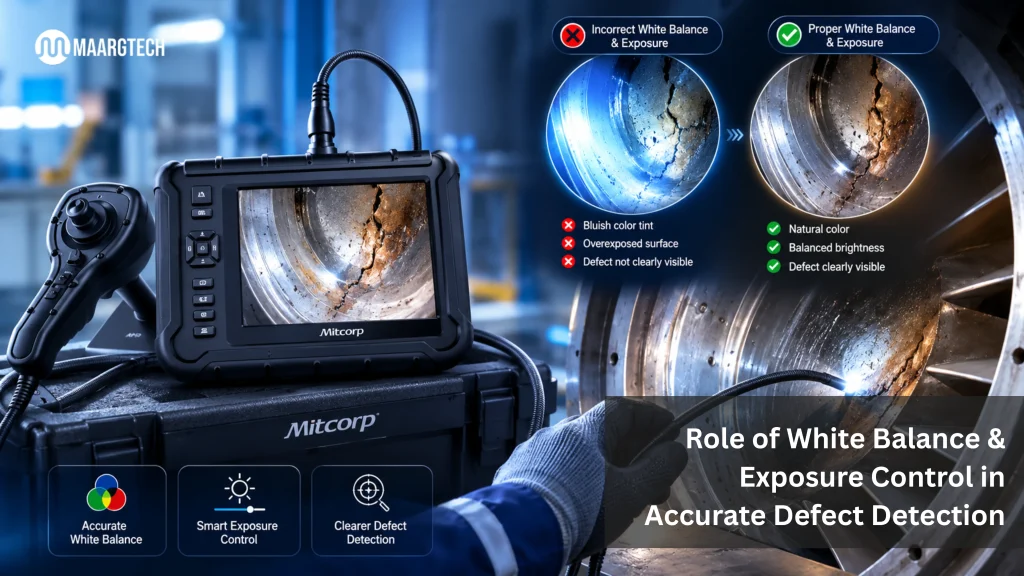
Proper illumination improves image sharpness and helps inspectors maintain focus across the inspection area.
Magnification Level
Higher magnification typically reduces depth of field, making focus more critical when inspecting small defects.
Best Practices for Managing Depth of Field in Videoscope
To achieve optimal inspection results, inspectors should:
- Maintain the recommended distance from the inspection surface
- Adjust focus settings when available
- Use appropriate lighting levels
- Select the correct videoscope lens for the application
- Capture images from multiple angles when necessary
- Verify image clarity before documenting findings
Following these practices helps ensure accurate defect detection and reliable reporting.
Applications Where Depth of Field Is Critical
Depth of field plays a crucial role in inspections involving:
- Pressure vessels
- Boilers and steam systems
- Heat exchangers
- Process piping
- Storage tanks
- Turbines and rotating equipment
- Welded structures
- Manufacturing components
In these applications, clear visualization is essential for identifying defects before they develop into costly failures.
How Professional Videoscope Inspection Services Help
Professional inspection providers use advanced videoscope equipment designed to deliver high-resolution images with optimized depth of field. Experienced inspectors understand how to adjust viewing parameters and inspection techniques to capture accurate visual data.
This expertise improves defect detection, supports maintenance planning, and helps organizations maintain compliance with safety and quality standards.
Conclusion
Depth of field is a fundamental aspect of videoscope inspection that directly affects image quality and inspection accuracy. By understanding how depth of field works and applying proper inspection techniques, inspectors can obtain clearer images, identify defects more effectively, and make better-informed maintenance decisions.
For industries relying on non-destructive testing and internal visual inspections, managing depth of field is essential for achieving reliable and accurate inspection results.
Looking for Reliable Videoscope Inspection Solutions?
Contact MAARGTECH for advanced videoscope inspection equipment, expert technical guidance, and customized industrial inspection solutions to improve quality, safety, and operational efficiency.
Frequently Asked Questions (FAQ'S )
What is a videoscope inspection?
A videoscope inspection is a non-destructive testing (NDT) method that uses a flexible or rigid camera-equipped probe to visually inspect hard-to-reach areas inside machinery, pipelines, engines, and industrial equipment without dismantling them.
What are the advantages of videoscope inspection?
Videoscope inspection helps reduce downtime, lower maintenance costs, improve defect detection, and provide real-time visual documentation while avoiding unnecessary equipment disassembly.
Where is videoscope inspection commonly used?
Videoscope inspections are widely used in aerospace, automotive, power generation, oil and gas, manufacturing, and industrial maintenance for inspecting internal components and confined spaces.
Can videoscope inspection detect cracks and corrosion?
Yes. High-resolution videoscopes can identify cracks, corrosion, blockages, wear, foreign object damage (FOD), and other defects that may affect equipment performance and safety.
How do I choose the right videoscope for industrial inspection?
When selecting a videoscope, consider factors such as probe diameter, insertion length, image quality, articulation capability, lighting, recording features, and the specific inspection environment.