
Introduction
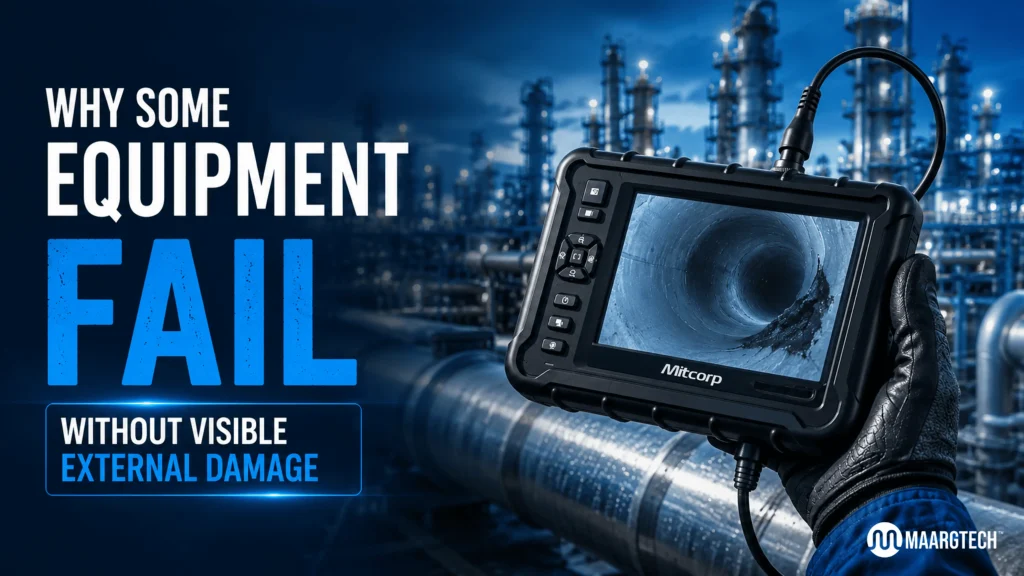
Industrial equipment is built to endure tough operating conditions. However, plant managers and maintenance teams often face a common challenge: a critical machine or component suddenly fails or starts underperforming even though it looks completely normal from the outside. There are no dents, cracks, leaks, or obvious signs of wear — yet the equipment stops functioning properly. This phenomenon of equipment fail is more common than many realize and highlights important gaps in traditional maintenance approaches.
At MAARGTECH, we specialize in helping industries detect these hidden internal issues through advanced Remote Visual Inspection (RVI) solutions and high-performance industrial videoborescopes. In this detailed blog post, we explore why equipment fail without visible external damage occurs, the main root causes, limitations of conventional inspection methods, and how modern videoborescope technology enables proactive detection and prevention.
Understanding Equipment Fail Without Visible External Damage
Equipment operates under demanding conditions such as high temperatures, thermal cycling, continuous vibration, corrosive environments, high pressure, and cyclic loading. These factors cause degradation that starts and progresses from the inside, often leaving the external surfaces untouched and appearing perfectly fine.
By the time performance issues or complete failure appear, significant internal damage has usually already developed. This makes equipment fail without visible external damage particularly challenging to predict using only external checks.
Common Causes of Hidden Internal Failures
1. Internal Corrosion and Pitting
Corrosion frequently develops inside pipes, heat exchangers, boilers, tanks, valves, and pressure vessels due to moisture, aggressive chemicals, or fluid chemistry issues. Pitting creates deep cavities that weaken the structure while the outer surface remains intact.
2. Metal Fatigue and Microscopic Cracks
Repeated stress cycles from vibration, pressure changes, and start-stop operations lead to microscopic cracks in turbine blades, engine components, welded joints, and rotating shafts. These cracks grow over time and can cause sudden failure without any external warning signs.
3. Erosion and Abrasive Wear
High-velocity fluids carrying solid particles gradually erode internal surfaces in pumps, turbines, piping systems, and valves. This material loss occurs deep inside the equipment and remains invisible during routine external inspections.
4. Foreign Object Debris (FOD) and Blockages
Debris, broken parts, or contaminants left inside during assembly, maintenance, or operation can cause serious internal damage, misalignment, or blockages — especially in aircraft engines, gas turbines, and hydraulic systems.
5. Coating and Lining Degradation
Internal protective coatings and linings can blister, crack, or delaminate due to thermal stress or chemical exposure. Once the base material is exposed, accelerated damage follows while the exterior continues to look normal.
6. Manufacturing or Installation Defects
Latent defects such as incomplete welds, material inclusions, or voids may remain undetected for a long time until operational stresses activate them.
Why Traditional Inspection Methods Fall Short
Standard maintenance practices often focus on what is visible:
- External visual checks only examine surface conditions.
- Scheduled preventive maintenance is usually time-based rather than condition-based.
- Techniques like vibration analysis or thermography provide indirect data but cannot deliver direct visual confirmation of internal problems.
- Full disassembly for inspection is time-consuming and may introduce new risks during reassembly.
Many critical areas — such as long narrow tubes, complex internal assemblies, and deep cavities — are simply inaccessible without specialized tools. This limitation allows equipment failure without visible external damage to go unnoticed until it is too late.
The Effective Solution: Remote Visual Inspection (RVI) with Videoborescopes
MAARGTECH provides reliable Remote Visual Inspection technology that allows you to see inside equipment without disassembly. Our industrial videoborescopes, including trusted MITCORP models, offer:
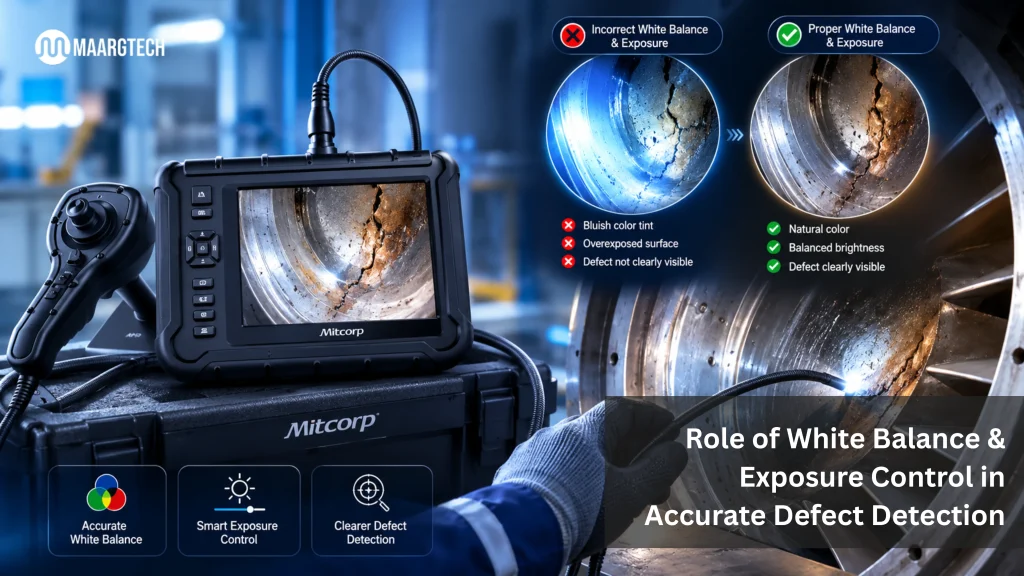
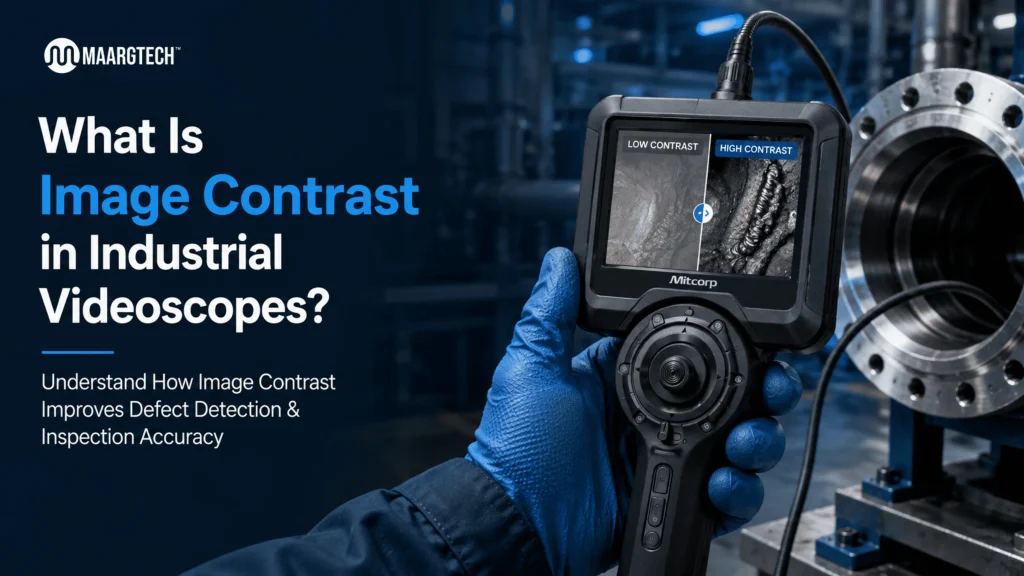
- High-definition imaging with excellent clarity even in low-light conditions
- Flexible and rigid probes in various small diameters
- Articulating probe tips that navigate bends and tight spaces
- Powerful LED illumination for detailed viewing
- Image and video recording features for documentation
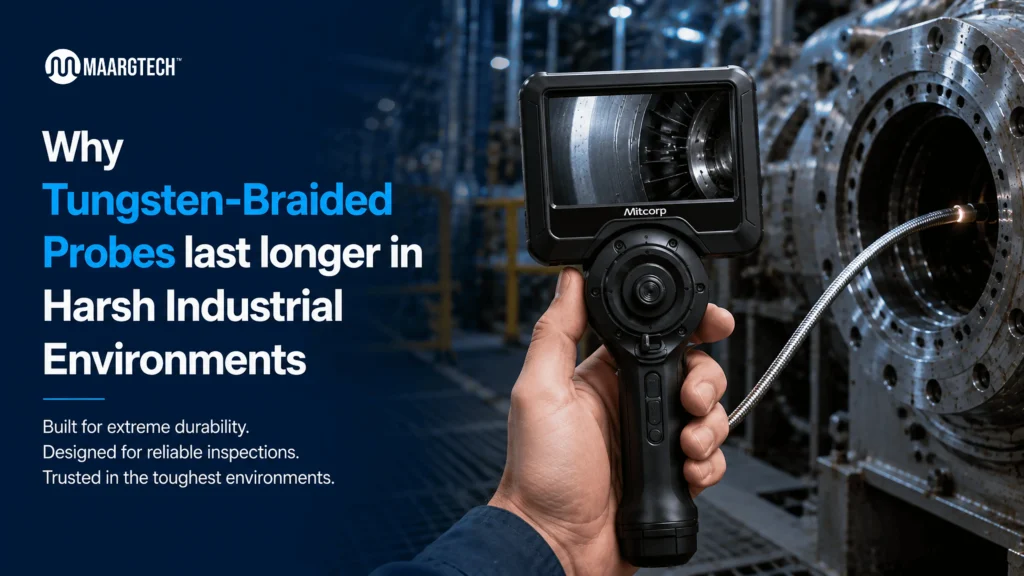
- Robust designs built for industrial environments
With these tools, inspection teams can thoroughly examine internal surfaces, identify early signs of corrosion, cracks, erosion, FOD, and other issues, and make informed maintenance decisions.
Key Benefits of Implementing RVI
- Early and accurate detection of hidden defects
- Improved equipment reliability and operational continuity
- Enhanced safety by reducing the need for hazardous disassembly or confined space entry
- Better documentation and trending of internal conditions over time
- More effective predictive maintenance programs
Industry Applications
MAARGTECH’s videoborescopes are widely used across sectors including:
- Power generation (boiler tubes, turbines, condensers)
- Oil & gas and petrochemical (heat exchangers, pipelines, reactors)
- Aerospace and automotive (engine internals, castings, fuel systems)
- Manufacturing and process industries (hydraulic systems, machined parts)
Best Practices for Preventing Hidden Failures
- Conduct regular internal inspections on critical assets
- Integrate videoborescope results with other non-destructive testing methods
- Train technicians to accurately recognize and document defects
- Maintain digital records of inspections for long-term analysis
- Adopt a risk-based approach to prioritize equipment with higher failure potential
Real-World Example
A power plant experienced repeated issues with heat exchanger tubes. Traditional external inspections revealed nothing unusual. Using a MAARGTECH videoborescope, the team identified severe internal pitting and erosion. This allowed them to address the problem during planned maintenance, avoiding unexpected failures and supporting smoother operations.
Conclusion
Equipment fail without visible external damage is not random — it results from internal degradation that cannot be seen through conventional external inspections. Understanding and addressing these hidden issues is essential for maintaining reliable and safe industrial operations.
At MAARGTECH, our mission is to provide the right path (“Maarg”) with advanced yet practical Remote Visual Inspection solutions. Our videoborescopes help you see what others miss inside your critical equipment.
Ensure Pressure Vessel Safety Before Defects Become Failures
Protect your assets with expert pressure vessel inspection, NDT, and remote visual inspection solutions from MAARGTECH. Contact our team today to schedule an inspection.
📞 +91-97572 76307 | 📧 sales@maargtech.com
Frequently Asked Questions (FAQ'S )
What is equipment failure without visible external damage?
Equipment failure without visible external damage refers to situations where industrial machinery or components stop working or perform poorly even though they appear completely normal from the outside. The damage occurs internally due to factors like corrosion, metal fatigue, erosion, or debris, which are not detectable through regular external visual checks.
What are the main causes of hidden internal equipment failures?
The most common causes include internal corrosion and pitting, metal fatigue and microscopic cracks, erosion from high-velocity fluids, foreign object debris (FOD), degradation of internal coatings, and latent manufacturing or installation defects. These issues develop inside pipes, heat exchangers, turbines, engines, and other critical components under harsh operating conditions.
Why can’t traditional inspection methods detect these failures?
Traditional methods like external visual inspection, vibration analysis, or thermography are limited because they cannot see inside narrow tubes, complex assemblies, or deep internal areas. Many problems remain completely hidden until failure occurs. Full disassembly is often impractical and risky, which is why specialized tools are needed.
How can I detect equipment failure without visible external damage early?
The most effective way is through Remote Visual Inspection (RVI) using industrial videoborescopes. These tools allow you to inspect internal surfaces without disassembly. MAARGTECH’s high-quality videoborescopes (including MITCORP models) provide clear HD images, video recording, and access to hard-to-reach areas, enabling early detection of corrosion, cracks, erosion, and other hidden issues.
How can MAARGTECH help prevent hidden equipment failures?
MAARGTECH offers advanced Remote Visual Inspection solutions and reliable videoborescopes designed for Indian industrial conditions. Our tools help industries such as power generation, oil & gas, aerospace, and automotive to inspect critical equipment internally, improve reliability, enhance safety, and shift from reactive to proactive maintenance. Contact us for the right videoborescope solution for your needs.