
Introduction
Pressure vessels are critical components in industries like oil & gas, petrochemicals, power generation, pharmaceuticals, and manufacturing. They store or process fluids and gases under high pressure, making their integrity paramount for safety, regulatory compliance, and operational efficiency. Regular inspections help prevent catastrophic failures, leaks, explosions, or environmental hazards.
At MAARGTECH, we specialize in advanced Remote Visual Inspection (RVI) solutions, including high-quality Mitcorp videoborescopes. These tools enable safe, efficient, and detailed internal inspections without costly shutdowns or disassembly. In this post, we explore common pressure vessel defects, detection methods, and how RVI technology from Maargtech enhances inspection outcomes.
Why Pressure Vessel Inspection Matters
Pressure vessels operate under extreme conditions, leading to wear over time. Standards like API 510 emphasize periodic inspections to identify issues early. Neglecting them can result in downtime, hefty repair costs, legal liabilities, and safety risks. Effective inspection combines multiple Non-Destructive Testing (NDT) methods, with visual and remote visual inspection often serving as the first and most accessible line of defense.
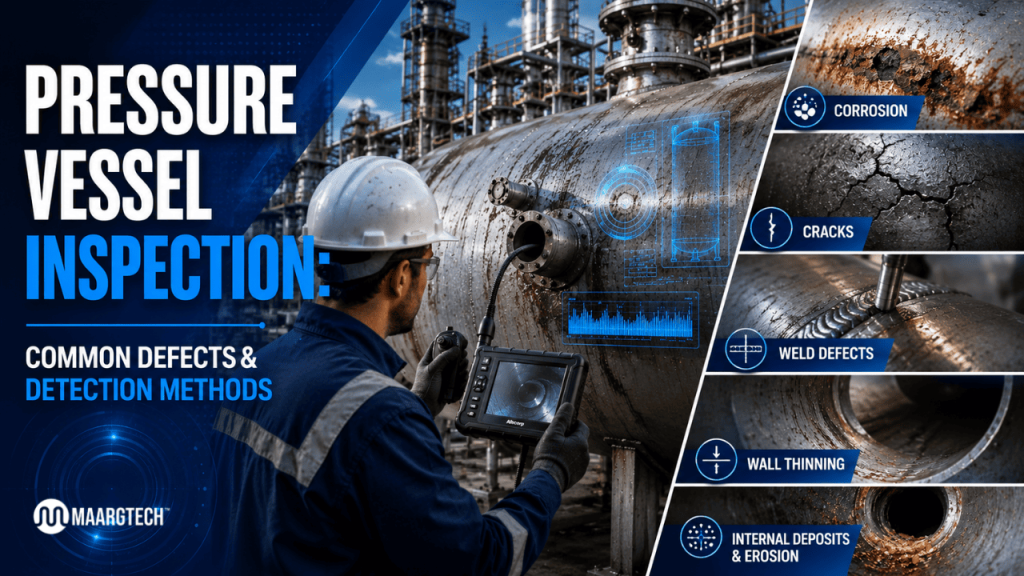
Common Defects in Pressure Vessels
Here are the most frequently encountered defects:
- Corrosion (Internal and External)
- General corrosion: Uniform thinning of walls.
- Pitting corrosion: Localized pits that can penetrate deeply.
- Stress Corrosion Cracking (SCC): Cracks due to combined stress and corrosive environment. Corrosion is one of the leading causes of vessel degradation, especially in environments with moisture, chemicals, or high temperatures.
- Cracks
- Fatigue cracks from cyclic loading.
- Weld-related cracks (e.g., lack of fusion, hydrogen-induced).
- Surface or subsurface cracks in nozzles, seams, or base material.
- Weld Imperfections
- Porosity (gas pockets).
- Slag inclusions.
- Incomplete penetration or lack of fusion.
- Undercut or overlap at weld toes.
- Material Degradation and Deformation
- Wall thinning.
- Bulging, buckling, or distortion.
- Creep (slow deformation under sustained high temperature).
- Embrittlement (loss of ductility).
- Erosion and Mechanical Damage
- Erosion from high-velocity fluids or particles.
- Dents, gouges, or impact damage.
- Nozzle misalignment or excessive loads causing cracks.
- Other Issues
- Leaks or seepage.
- Lining/coating failures.
- Internal blockages or foreign objects.
How to Detect These Defects: Key Inspection Methods
A combination of techniques provides comprehensive coverage:
- Visual Inspection (VT): External checks for obvious signs like corrosion, leaks, bulging, or distortion. Internal VT requires access points or borescopes.
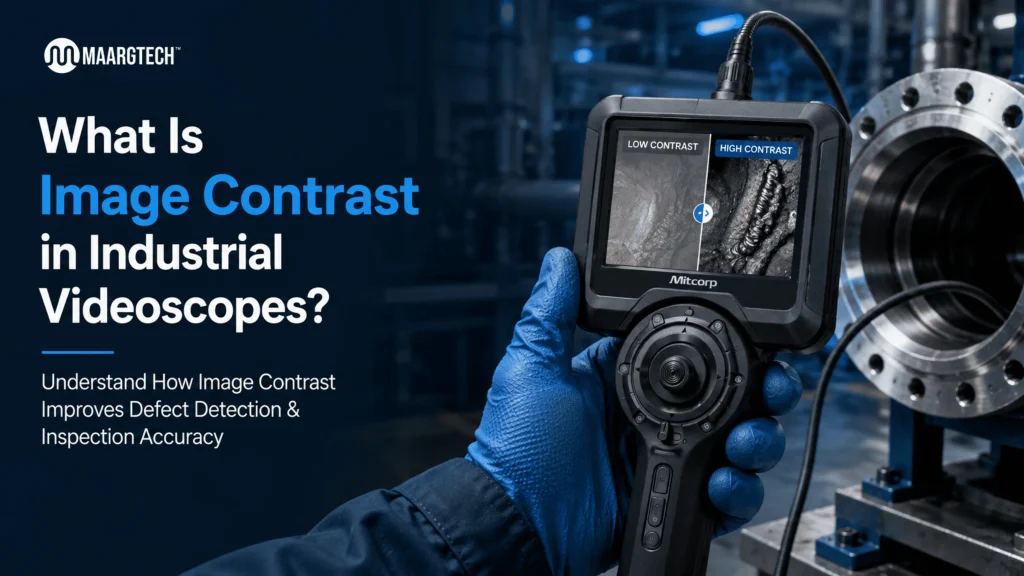
- Remote Visual Inspection (RVI) with Videoborescopes: Ideal for confined spaces like vessel interiors, tubes, and heat exchangers. High-resolution cameras with articulation, lighting, and measurement capabilities allow detailed documentation without entry.
- Ultrasonic Testing (UT): Measures wall thickness and detects subsurface flaws.
- Magnetic Particle Inspection (MPI) and Dye Penetrant Testing (PT): Excellent for surface-breaking cracks on ferromagnetic or non-magnetic materials.
- Radiographic Testing (RT): Reveals internal volumetric defects like porosity and inclusions.
- Eddy Current Testing: Useful for detecting surface and near-surface flaws in conductive materials.
Pro Tip: Always follow a structured checklist covering external surfaces, welds, nozzles, supports, and internal components. Document findings with photos, videos, and measurements for traceability.
The Role of Advanced RVI Tools in Modern Inspections
Traditional internal inspections often require vessel entry, which is time-consuming, hazardous, and costly. MAARGTECH’s Mitcorp Videoborescopes (such as the X2000 HD, X3000 with 3D measurement, and X750 models) revolutionize this process:
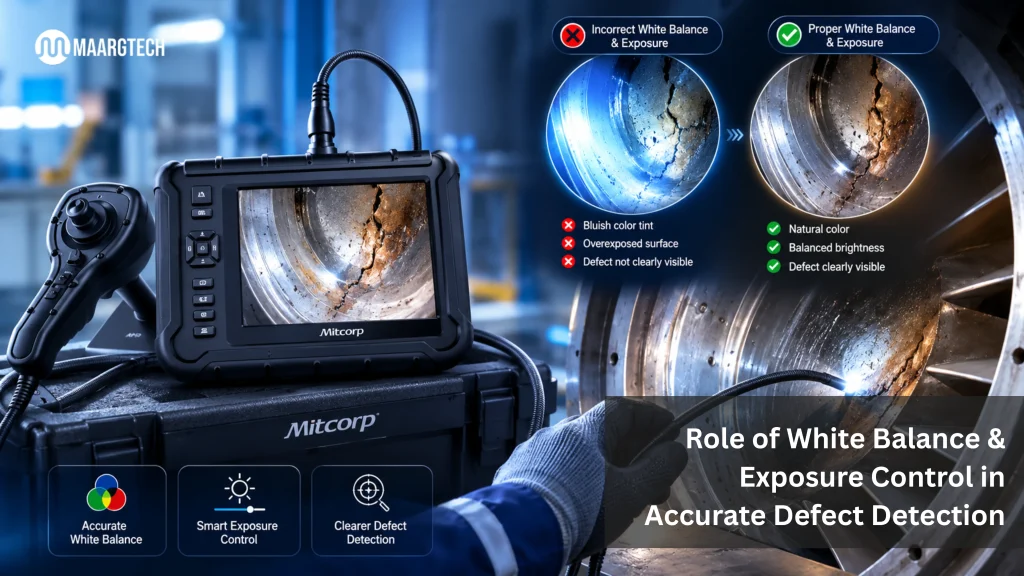
- High-Definition Imaging: Crystal-clear views of defects even in dark, confined spaces.
- Flexible Articulation: Navigate complex geometries in tubes, vessels, and piping.
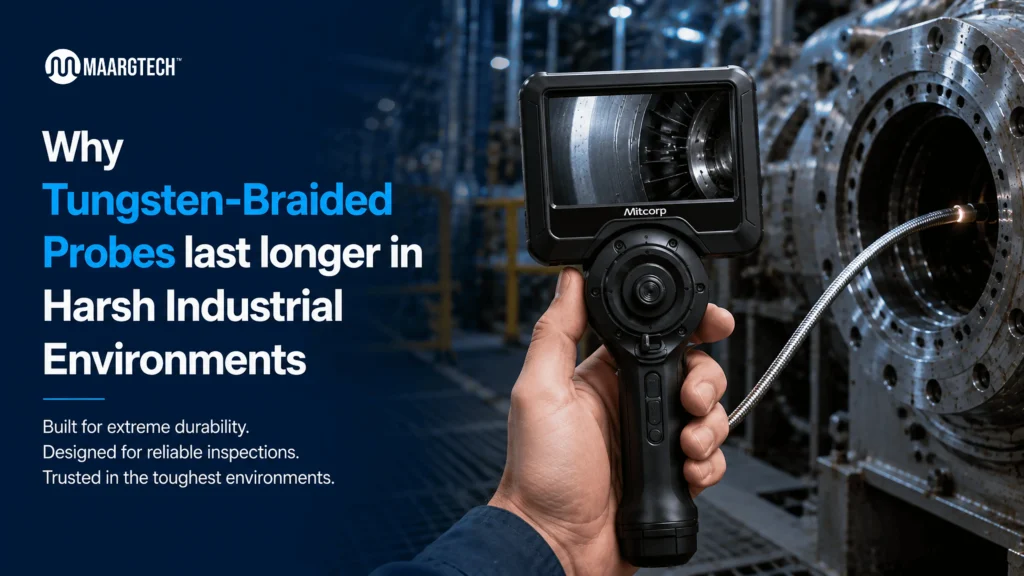
- Advanced Features: 3D measurement for accurate defect sizing, dual cameras, robust probes, and recording capabilities for reports.
- AI-Enhanced Options: Automation aids in defect recognition and analysis.
- Applications: Perfect for pressure vessel internals, boiler tubes, heat exchangers, and more across power, petrochemical, and manufacturing sectors.
These economical yet reliable RVI solutions help Indian and global industries reduce downtime, improve safety, and ensure compliance. Maargtech has supported over 200 customers, including leading automotive and NDT firms, with excellent after-sales service.
Best Practices for Effective Pressure Vessel Inspection
- Schedule inspections based on risk, usage, and regulatory requirements.
- Use certified inspectors and calibrated equipment.
- Combine RVI with other NDT methods for thorough assessment.
- Maintain detailed records and trend analysis for predictive maintenance.
- Partner with experts like Maarg Technologies for the right tools and support.
Conclusion
Proactive pressure vessel inspection saves lives, assets, and money. By identifying common defects like corrosion, cracks, and weld issues early—using reliable methods such as Remote Visual Inspection—you can maintain operational excellence and regulatory compliance.
At MAARGTECH, we provide cutting-edge videoborescopes and NDT solutions tailored to your needs. Explore our range of Mitcorp products or contact us today for a consultation.
Ensure Pressure Vessel Safety Before Defects Become Failures
Protect your assets with expert pressure vessel inspection, NDT, and remote visual inspection solutions from MAARGTECH. Contact our team today to schedule an inspection.
📞 +91-97572 76307 | 📧 sales@maargtech.com
Frequently Asked Questions (FAQ'S )
What are the most common defects found during pressure vessel inspections?
The most frequently encountered defects include corrosion (general, pitting, and stress corrosion cracking), cracks (fatigue or weld-related), weld imperfections (porosity, lack of fusion, slag inclusions), wall thinning, erosion, and mechanical damage like dents or bulging. Early detection of these issues is critical to prevent failures.
How can internal defects in pressure vessels be inspected without full disassembly or vessel entry?
Internal inspections are best performed using Remote Visual Inspection (RVI) tools such as Mitcorp videoborescopes offered by Maarg Technologies. These high-definition, flexible borescopes allow safe, detailed viewing of vessel interiors, tubes, and hard-to-reach areas with excellent image quality, articulation, and 3D measurement capabilities — significantly reducing downtime, cost, and safety risks.
Which Non-Destructive Testing (NDT) methods are most effective for pressure vessel inspection?
A combination of methods works best:
- Visual Inspection & RVI (first line of defense)
- Ultrasonic Testing (UT) for wall thickness and subsurface flaws
- Magnetic Particle (MPI) and Dye Penetrant (PT) for surface cracks
- Radiography (RT) for internal weld defects. RVI with videoborescopes is often the most practical and fastest starting point.
Why is regular pressure vessel inspection important?
Regular inspections help identify defects early, ensure compliance with standards like API 510, prevent catastrophic failures, reduce unplanned downtime, and extend the life of the equipment. Neglecting inspections can lead to safety hazards, heavy financial losses, and legal liabilities.
What videoborescope solutions does Maarg Technologies offer for pressure vessel inspection?
MAARGTECH provides a range of advanced Mitcorp videoborescopes (X2000 HD, X3000 with 3D measurement, X750, etc.). These tools feature high-resolution imaging, robust articulation, measurement functions, and reliable performance, making them ideal for pressure vessels, boilers, heat exchangers, and piping in petrochemical, power, and manufacturing industries.