
Introduction
Reactor vessels are among the most critical assets in chemical processing, petrochemical, pharmaceutical, refinery, and fertilizer industries. These vessels operate under high temperatures, pressures, and corrosive environments, making regular inspection essential for maintaining safety, reliability, and production efficiency.
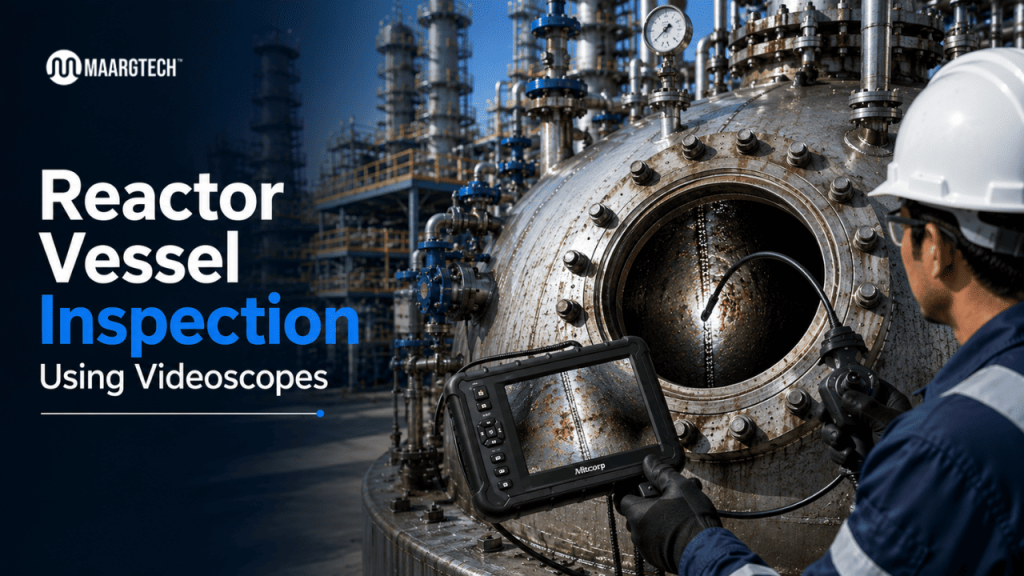
Traditionally, inspecting the internal condition of a reactor vessel required extensive shutdowns, scaffolding, confined space entry, and partial disassembly. Today, advanced industrial videoscopes allow maintenance teams to perform detailed internal inspections quickly and safely without dismantling major equipment.
In this blog, we explore how videoscope technology is transforming reactor vessel inspections, the common defects that can be detected, and why industries are increasingly adopting Remote Visual Inspection (RVI) as part of their predictive maintenance programs.
Why Reactor Vessel Inspection Is Important
Reactor vessels are continuously exposed to:
- High operating pressures
- Elevated temperatures
- Aggressive chemicals
- Mechanical stress
- Corrosive process conditions
Over time, these factors can lead to internal degradation that may compromise equipment integrity and process safety.
Regular inspections help identify:
- Corrosion and pitting
- Cracks and material degradation
- Weld defects
- Coating damage
- Deposit build-up
- Foreign object contamination
- Mechanical wear
Early detection prevents unexpected failures, costly shutdowns, and safety incidents. Videoscope inspections help maintenance teams identify these issues before they become critical.
What Is a Videoscope Inspection?
A videoscope is an advanced remote visual inspection tool equipped with a high-definition camera, LED illumination, articulation controls, and image recording capabilities.
The flexible insertion probe can enter reactor vessels through existing access ports, nozzles, manways, or inspection openings, providing real-time visual access to areas that are otherwise difficult to inspect.
Unlike traditional inspection methods, videoscopes allow inspectors to:
- Access confined spaces remotely
- Capture HD images and videos
- Inspect complex internal geometries
- Reduce inspection time
- Improve inspection accuracy
- Minimize confined space entry requirements
Common Areas Inspected Inside Reactor Vessels
Videoscopes enable detailed examination of various internal reactor components, including:
Internal Vessel Walls
Inspectors assess the condition of internal surfaces for corrosion, scaling, pitting, and coating deterioration.
Weld Seams and Joints
Critical welds are inspected for cracking, porosity, corrosion, and other integrity concerns. Advanced videoscope technology provides clear visual access to weld areas without extensive dismantling.
Agitators and Mixing Components
Mixing blades, shafts, and internal attachments can be checked for wear, erosion, damage, or misalignment.
Baffles and Internal Structures
Baffles, support brackets, trays, and internal fixtures are examined for mechanical damage and corrosion.
Nozzles and Process Connections
Videoscopes help inspect internal nozzle surfaces for blockages, corrosion, and material degradation.
Common Defects Detected During Reactor Vessel Inspections
1. Corrosion and Pitting
Corrosion is one of the most frequently encountered issues in process reactors. Exposure to chemicals and moisture can gradually weaken vessel walls and internal structures.
Videoscopes help identify:
- Surface corrosion
- Pitting corrosion
- Rust formation
- Chemical attack
- Coating breakdown
2. Cracks and Structural Defects
Thermal cycling, pressure fluctuations, and operational stress can lead to crack formation over time.
Videoscope inspections can detect:
- Surface cracks
- Thermal stress cracks
- Fatigue cracking
- Weld cracking
Early identification helps prevent serious structural failures.
3. Weld Deterioration
Welds are often the most vulnerable areas inside reactor vessels.
Common weld-related defects include:
- Cracking
- Porosity
- Incomplete fusion
- Corrosion around weld zones
4. Deposit Build-Up and Fouling
Many process reactors experience internal accumulation of:
- Scale
- Sludge
- Product residue
- Chemical deposits
These deposits can reduce process efficiency and increase operating costs.
5. Mechanical Wear and Erosion
Continuous process flow and abrasive materials can cause:
- Surface wear
- Erosion
- Material loss
- Grooving and scoring
Videoscopes provide detailed visual evidence to support maintenance planning.
Benefits of Videoscope Inspection for Reactor Vessels
Reduced Downtime
Since major disassembly is often unnecessary, inspections can be completed significantly faster than conventional methods.
Improved Safety
Videoscope inspections reduce the need for personnel to enter confined spaces, improving workplace safety and reducing operational risks.
Lower Inspection Costs
Faster inspections and reduced labor requirements help lower maintenance expenses.
Better Defect Detection
High-definition imaging enables maintenance teams to identify defects before they lead to failures.
Enhanced Documentation
Images and videos can be stored for reporting, trend analysis, and future comparison.
Supports Predictive Maintenance
Regular videoscope inspections provide valuable condition data that supports proactive maintenance strategies and asset reliability programs.
Industries That Benefit from Reactor Vessel Videoscope Inspections
Videoscope technology is widely used across industries such as:
- Petrochemical Plants
- Chemical Processing Facilities
- Pharmaceutical Manufacturing
- Fertilizer Plants
- Oil & Gas Refineries
- Specialty Chemical Production
- Food Processing Facilities
These industries rely on regular reactor vessel inspections to ensure operational efficiency, regulatory compliance, and equipment reliability.
Why Choose MAARGTECH for Reactor Vessel Inspection Solutions?
MAARGTECH provides advanced MITCORP industrial videoscopes designed for demanding inspection applications.
Key features include:
- HD image quality
- Articulating probes
- Long insertion lengths
- High-intensity LED illumination
- Image and video recording
- Portable and rugged design
- Ideal for confined space inspections
Our videoscope solutions help maintenance and inspection teams perform accurate reactor vessel inspections while reducing downtime and improving operational safety.
Conclusion
Reactor vessels are critical assets that require regular inspection to maintain safety, efficiency, and reliability. Videoscope technology provides a fast, safe, and cost-effective method for examining internal vessel conditions without extensive disassembly.
By detecting corrosion, cracks, weld defects, fouling, and wear at an early stage, videoscope inspections help organizations prevent unexpected failures, reduce maintenance costs, and improve plant productivity.
As industries continue to adopt predictive maintenance practices, videoscope-based reactor vessel inspection has become an essential tool for ensuring long-term asset integrity and operational excellence.
Need a Reliable Reactor Vessel Inspection Solution?
Discover how MAARGTECH’S advanced industrial videoscopes can help detect defects early, reduce downtime, and improve inspection safety.
Frequently Asked Questions (FAQ'S )
What is reactor vessel inspection?
Reactor vessel inspection is the process of evaluating the internal condition of a reactor vessel to identify corrosion, cracks, weld defects, fouling, and other forms of damage that could affect safety, performance, and equipment reliability.
How do videoscopes improve industrial inspections?
Videoscopes provide high-resolution visual access to hard-to-reach areas without requiring extensive disassembly, allowing faster and safer inspections with minimal operational disruption.
What types of defects can be detected inside process equipment?
Common defects include corrosion, pitting, weld damage, erosion, coating deterioration, deposit build-up, and foreign object contamination.
Can internal inspections be performed without entering confined spaces?
Yes. Modern videoscopes allow inspectors to examine internal surfaces through existing access points such as manways and nozzles, significantly reducing the need for confined-space entry.
How often should process vessels be inspected?
Inspection frequency depends on operating conditions, industry regulations, maintenance schedules, and the criticality of the equipment. Many facilities conduct inspections during planned shutdowns.