



Introduction
Turbines are critical assets in industries such as power generation, aviation, oil & gas, and manufacturing. Whether operating in a gas turbine, steam turbine, or aircraft engine, turbine blades are exposed to extreme temperatures, pressure fluctuations, vibration, and high rotational speeds. Even minor blade defects can develop into serious failures if left undetected.
Modern maintenance teams increasingly rely on a Videoscope for Turbine Blade Inspection to identify early signs of damage without dismantling critical equipment. By providing access to internal turbine components, videoscopes help inspectors detect defects early, reduce downtime, and support predictive maintenance programs.
Why Early Turbine Blade Damage Detection Matters
A damaged turbine blade can affect efficiency, increase vibration levels, reduce performance, and potentially cause catastrophic equipment failure. The cost of an unplanned outage often far exceeds the cost of routine inspections.
Early detection helps organizations:
- Prevent unexpected shutdowns
- Reduce repair and replacement costs
- Improve equipment reliability
- Extend turbine service life
- Enhance operational safety
- Support predictive maintenance strategies
Industry inspections frequently reveal that small issues such as coating loss, erosion, or surface cracks can progress into major failures when left unchecked.
Common Types of Turbine Blade Damage
1. Cracks and Thermal Fatigue
Continuous heating and cooling cycles can cause thermal fatigue cracks on turbine blades. These cracks often begin as microscopic defects that are difficult to detect through conventional inspection methods.
A Videoscope for Turbine Blade Inspection enables maintenance teams to identify:
- Surface cracks
- Thermal fatigue damage
- Stress fractures
- Crack propagation areas
Detecting these defects early allows maintenance teams to schedule repairs before failure occurs.
2. Erosion and Wear
Turbine blades operate in harsh environments where airborne particles, moisture, and contaminants gradually erode blade surfaces.
Common signs include:
- Leading-edge erosion
- Surface material loss
- Pitting
- Blade profile degradation
High-definition videoscope imaging helps inspectors accurately assess erosion severity and monitor wear progression over time.
3. Foreign Object Damage (FOD)
Foreign objects entering a turbine can strike blades and cause:
- Dents
- Chips
- Surface gouges
- Blade deformation
Videoscopes provide access to internal turbine stages where FOD damage is most likely to occur, enabling detailed inspection without dismantling the machine.
4. Corrosion and Oxidation
Moisture, chemicals, and high-temperature environments can accelerate corrosion and oxidation.
Inspectors use videoscopes to identify:
- Surface corrosion
- Oxidation damage
- Material degradation
- Coating deterioration
Early detection helps prevent further structural weakening of turbine components.
Benefits of Using a Videoscope for Turbine Blade Inspection
One of the biggest advantages of using a Videoscope for Turbine Blade Inspection is the ability to inspect critical components without extensive disassembly. This reduces maintenance time and allows inspections to be performed more frequently.
Key benefits include:
- Faster inspections
- Reduced downtime
- Improved defect detection
- Lower maintenance costs
- Better maintenance planning
- Enhanced equipment reliability
These benefits make videoscope technology an essential part of modern turbine maintenance strategies.
How Videoscopes Detect Hidden Damage
Access Without Disassembly
Videoscopes can enter turbines through existing access ports, allowing inspectors to examine:
- Compressor blades
- Turbine blades
- Guide vanes
- Combustion chambers
- Cooling passages
Without removing major components, maintenance teams can quickly evaluate equipment condition and make informed decisions.
High-Resolution Imaging
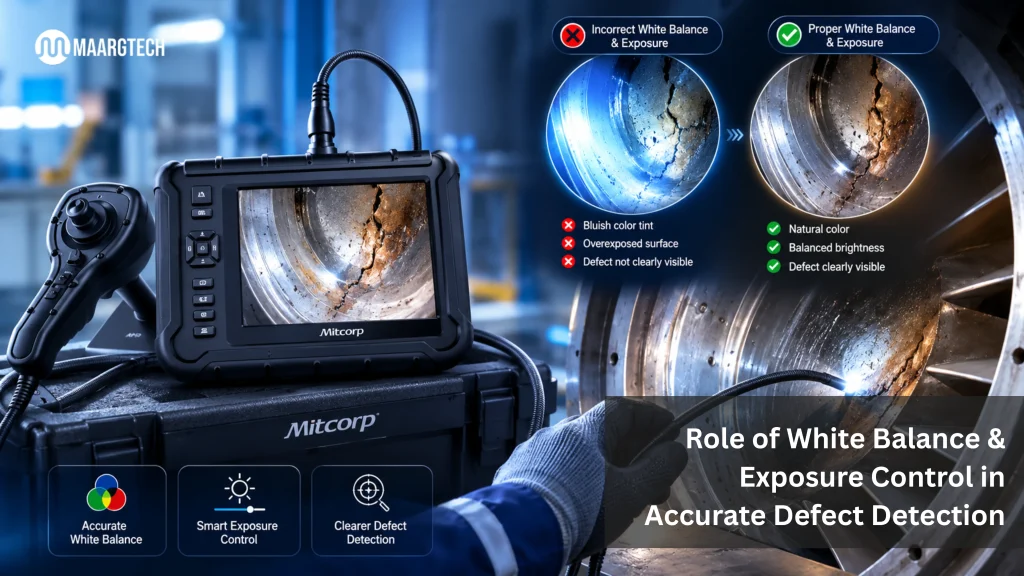
Modern industrial videoscopes provide detailed images and videos that reveal defects invisible to the naked eye.
Benefits include:
- Sharp image quality
- Digital zoom capability
- Enhanced illumination
- Accurate defect documentation
A high-quality Videoscope for Turbine Blade Inspection significantly improves the ability to identify damage before it becomes critical.
Articulating Probe Technology
Advanced videoscopes feature articulated insertion tubes that can navigate complex turbine geometries.
This allows inspectors to:
- Reach difficult inspection areas
- View blade leading and trailing edges
- Inspect cooling channels
- Examine hidden surfaces
The result is a more comprehensive assessment of turbine health.
Documentation and Trend Analysis
Modern videoscope systems can record images and videos for future comparison.
Maintenance teams can:
- Track damage progression
- Compare inspection reports
- Monitor wear trends
- Improve maintenance planning
By using a Videoscope for Turbine Blade Inspection, organizations can build historical inspection records that support predictive maintenance and long-term asset reliability.
Key Areas to Inspect During Turbine Blade Inspections
When performing a videoscope inspection, technicians typically focus on:
Compressor Section
- Blade leading edges
- Trailing edges
- Guide vanes
- Signs of FOD and erosion
Combustion Section
- Combustion liners
- Fuel nozzles
- Cracks and thermal damage
Turbine Section
- First-stage turbine blades
- Blade tips
- Shrouds
- Cooling holes
- Signs of burning, cracking, and coating loss
These areas are particularly vulnerable to high-temperature and high-stress operating conditions.
How MAARGTECH Supports Turbine Inspections
MAARGTECH provides advanced industrial videoscope solutions designed for demanding turbine inspection applications. Whether inspecting gas turbines, steam turbines, aircraft engines, or industrial rotating equipment, our systems deliver high-definition imaging, precise articulation, and powerful illumination.
A Videoscope for Turbine Blade Inspection from MAARGTECH helps maintenance teams detect cracks, erosion, corrosion, and foreign object damage before these issues result in costly downtime or equipment failure.
Key features include:
- High-resolution image capture
- Flexible articulation
- Powerful LED illumination
- Image and video recording
- Reliable inspection reporting
These capabilities help engineers inspect critical turbine components efficiently and confidently.
Conclusion
Turbine blade failures rarely occur without warning. Cracks, erosion, corrosion, thermal fatigue, and foreign object damage often develop gradually before leading to serious operational issues.
Using a Videoscope for Turbine Blade Inspection enables maintenance teams to identify these defects early, monitor their progression, and take corrective action before failure occurs. The result is improved reliability, reduced downtime, lower maintenance costs, and safer turbine operation.
As industries continue to prioritize predictive maintenance and asset reliability, videoscope inspections remain one of the most effective methods for detecting turbine blade damage before it becomes a costly problem.
Protect Your Turbines Before Minor Damage Becomes a Major Failure
Detect cracks, erosion, and blade wear early with MAARGTECH’s advanced videoscope inspection solutions. Contact our experts to find the right system for reliable turbine blade inspection and predictive maintenance.
📞 +91-97572 76307 | 📧 sales@maargtech.com
Frequently Asked Questions (FAQ'S )
What is a videoscope for turbine blade inspection?
A videoscope for turbine blade inspection is a remote visual inspection tool used to examine internal turbine components without disassembly. It helps maintenance teams detect cracks, erosion, corrosion, and foreign object damage in turbine blades quickly and accurately.
How does a videoscope help detect turbine blade damage?
A videoscope uses a flexible insertion probe, high-resolution camera, and powerful illumination to capture detailed images of turbine blades. This allows inspectors to identify defects such as cracks, thermal fatigue, wear, and coating deterioration before they lead to equipment failure.
What types of turbine blade defects can be detected with a videoscope?
Videoscope inspections can detect various turbine blade defects, including:
- Surface cracks
- Thermal fatigue damage
- Erosion and wear
- Corrosion and oxidation
- Foreign object damage (FOD)
- Coating loss and material degradation
Early detection helps prevent costly repairs and unplanned downtime.
How often should turbine blades be inspected using a videoscope?
Inspection frequency depends on operating conditions, industry standards, and manufacturer recommendations. Many organizations perform videoscope inspections during scheduled maintenance outages or at regular intervals as part of a predictive maintenance program.
What are the benefits of using a videoscope for turbine blade inspection?
Using a videoscope for turbine blade inspection offers several benefits, including reduced downtime, lower maintenance costs, faster inspections, improved defect detection, enhanced equipment reliability, and extended turbine service life. It also allows critical components to be inspected without extensive disassembly.