
Introduction
Jet engines are marvels of engineering, operating under extreme conditions of temperature, pressure, and stress. Regular internal inspection is critical to detect issues like cracks, corrosion, foreign object damage (FOD), blade wear, or thermal distress before they compromise safety or lead to costly downtime.
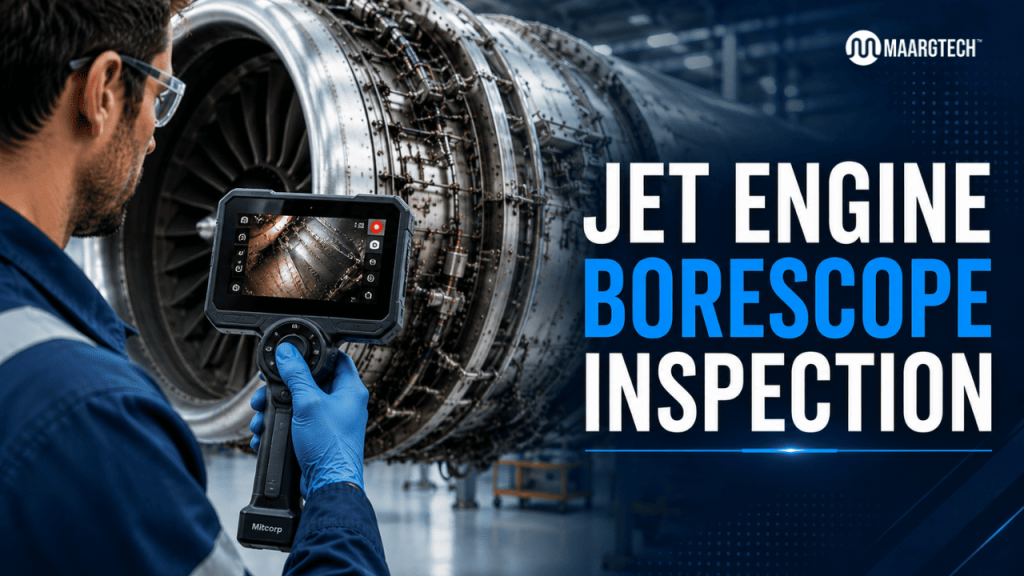
Jet Engine Borescope Inspection (also known as BSI) is the gold-standard non-destructive testing (NDT) method that allows technicians to visually examine internal components without full engine disassembly. At Maarg Technologies, we specialize in providing affordable, high-performance videoborescopes tailored for aerospace applications, helping MRO facilities, airlines, and operators maintain the highest standards of safety and efficiency.
Why Borescope Inspection Matters for Jet Engines
- Early Defect Detection: Identifies problems in compressors, combustors, turbines, and other hard-to-reach areas.
- Reduced Downtime: Inspections can be completed in hours instead of days or weeks required for teardown.
- Cost Savings: Prevents unnecessary overhauls and extends on-wing time.
- Regulatory Compliance: Meets requirements from FAA, EASA, and engine OEMs (e.g., CFM, GE, Pratt & Whitney).
- Safety: Critical for high-cycle operations and ETOPS-certified aircraft.
Modern videoborescopes with HD imaging, articulation, measurement capabilities, and video recording make inspections more accurate and documented than ever.
Tools and Equipment Needed
- High-Quality Videoborescope: Flexible insertion tube (typically 4-8mm diameter), 4-way articulation, HD camera, bright LED lighting, and image capture. Maarg Technologies recommends MITCORP videoborescopes for their reliability in aerospace environments.
- Accessories: Guide tubes, optical tips (forward, side, oblique), protective sleeves, and measurement software.
- Safety Gear: Gloves, eye protection, hearing protection, and anti-contamination measures.
- Supporting Tools: Engine maintenance manuals, access port tools, cleaning supplies, and a laptop or tablet for real-time viewing and reporting.
- Documentation Tools: Digital reporting software for annotations, measurements, and trend analysis.
Ensure your borescope is calibrated and rated for the temperature and environmental conditions of the engine sections being inspected.
Step-by-Step Guide to Jet Engine Borescope Inspection
Step 1: Preparation and Safety
- Review the aircraft and engine maintenance manual (AMM) and Engine Shop Manual (ESM) for specific borescope ports, procedures, and acceptance criteria.
- Ensure the engine is shut down, cooled down completely (critical for safety and equipment protection), and properly locked out/tagged out.
- Assemble a qualified team (often two people for safety and efficiency).
- Gather all required tools, PPE, and reference images of normal vs. defective components.
- Clean external access areas to prevent introducing contaminants.
Step 2: Access the Inspection Ports
- Locate designated borescope ports on the engine (common in fan, compressor, combustor, high-pressure turbine, and low-pressure turbine sections).
- Remove plugs, covers, or fuel nozzles as per OEM instructions. Use guide tubes where required for precise navigation.
- For certain engines (e.g., CFM56 or LEAP series), ports are strategically placed for comprehensive gas path inspection.
Step 3: Set Up the Borescope
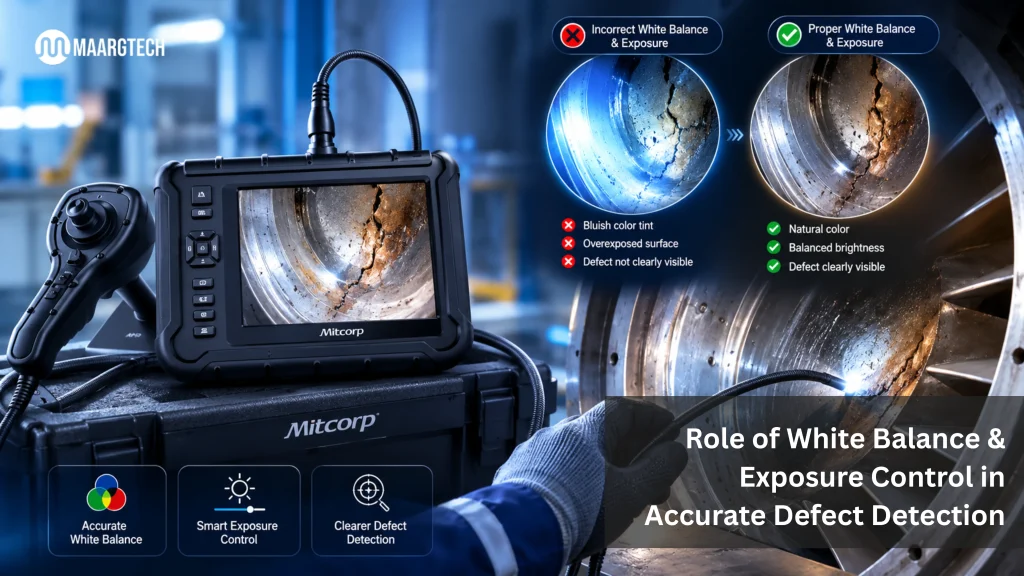
- Power on the videoborescope and check functionality (white balance, lighting, articulation, recording).
- Attach the appropriate optical tip or guide tube.
- Apply anti-seize or protective lubricant to the insertion tube if recommended.
- Connect to a monitor or recording device for real-time viewing and team collaboration.
Step 4: Perform the Inspection
- Carefully insert the borescope probe into the access port. Use slow, controlled movements and articulation to navigate bends.
- Systematically inspect key areas:
- Fan and Compressor: Blade leading/trailing edges, tips, corrosion, FOD.
- Combustor: Liner cracks, coating loss, fuel nozzle condition, hot spots.
- Turbine Sections: Blade integrity, cooling holes, thermal distress, sulfidation, shroud wear.
- Rotate the engine manually (if required) to inspect all blades in a stage. Capture high-quality still images and videos from multiple angles.
- Look for common issues: cracks, dents, burns, erosion, missing material, or abnormal deposits. Use measurement features for sizing defects.
Step 5: Document and Analyze Findings
- Record clear, labeled images/videos with timestamps and locations.
- Annotate defects with measurements and severity notes.
- Compare against OEM serviceable limits.
- Generate a detailed inspection report for maintenance records and regulatory compliance.
- Trend data over multiple inspections to predict maintenance needs.
Step 6: Remove Equipment and Close Out
- Carefully retract the borescope to avoid damage.
- Clean and inspect the probe for contamination.
- Reinstall all access plugs with proper torque and sealing.
- Perform a final visual check and log the inspection in the aircraft records.
- Clean and store the borescope properly.
Best Practices and Common Challenges
- Always follow a standardized checklist for consistency.
- Train inspectors thoroughly — experience significantly improves defect detection.
- Use high-intensity lighting and HD/4K imaging for better clarity in dark internal sections.
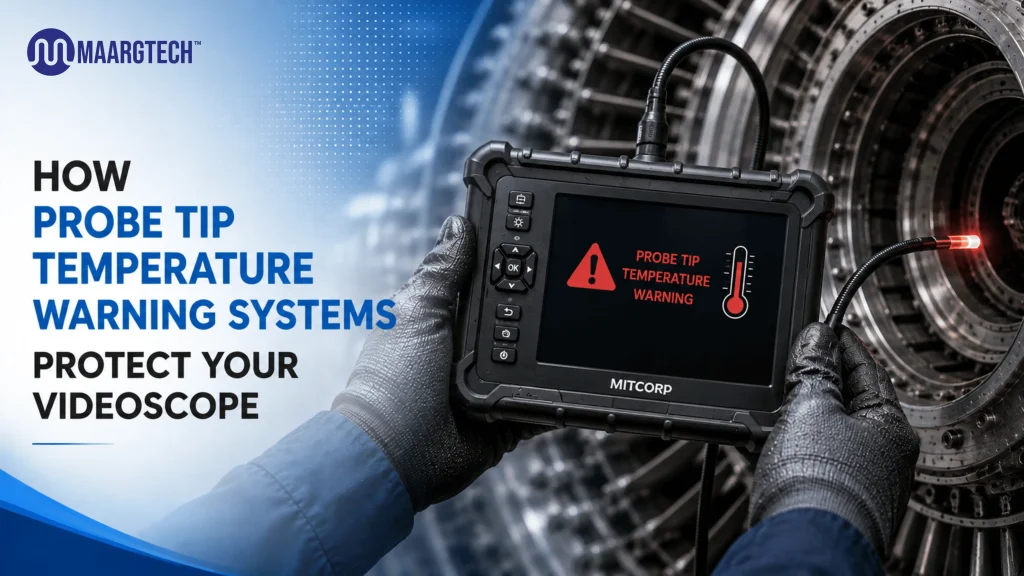
- Protect the borescope from excessive heat and oil contamination.
- Combine borescope inspections with other NDT methods (e.g., eddy current, oil analysis) for comprehensive insights.
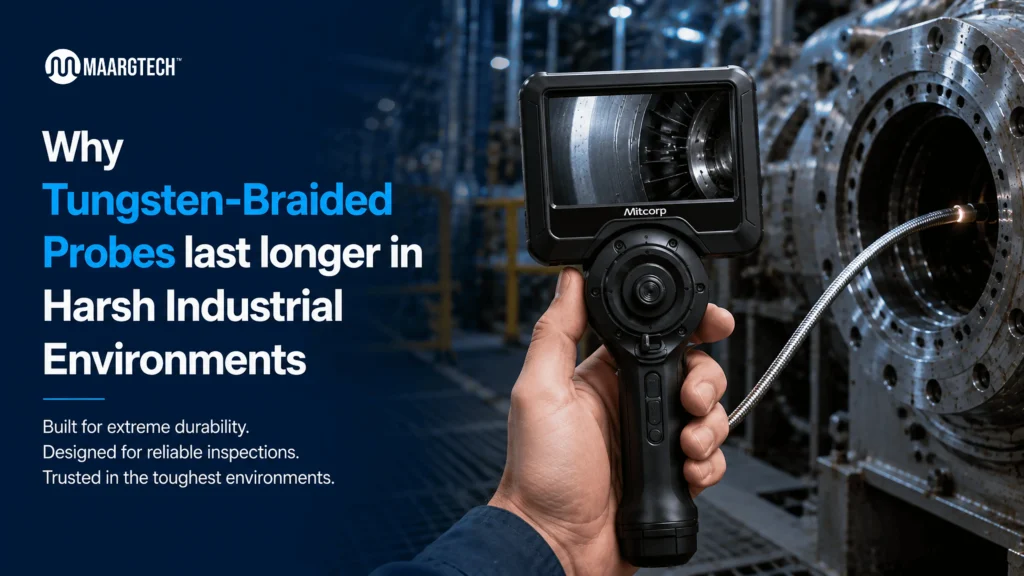
- For challenging environments, opt for videoborescopes with robust articulation and durable construction.
Conclusion
At MAARGTECH, we understand the demands of aviation maintenance. We provide cost-effective, high-performance videoborescopes from trusted brands like MITCORP, along with German-made rigid borescopes and fiberscopes. Our solutions are used across aerospace, power generation, and other critical industries by 200+ satisfied clients.
Whether you need equipment sales, training, or inspection support, our team is committed to delivering reliable RVI solutions that help keep your aircraft flying safely.
Keep Your Jet Engines Flying with Confidence
Get advanced videoscope solutions from MAARGTECH for faster jet engine inspections, accurate defect detection, and reduced maintenance downtime.
📞 +91-97572 76307 | 📧 sales@maargtech.com
Frequently Asked Questions (FAQ'S )
What is Jet Engine Borescope Inspection?
Jet Engine Borescope Inspection is a non-destructive testing (NDT) method used to visually examine the internal components of a jet engine, such as compressors, combustors, and turbines, without disassembling the engine. It uses a flexible videoborescope with a camera and light to detect defects like cracks, corrosion, and foreign object damage.
Why is Jet Engine Borescope Inspection important?
It is critical for early detection of engine problems, reducing downtime, extending engine life, ensuring flight safety, and maintaining compliance with FAA, EASA, and OEM standards. Regular inspections help prevent costly failures and unplanned maintenance.
How often should Jet Engine Borescope Inspection be performed?
The frequency depends on the engine type, flight hours, and manufacturer recommendations. Most airlines and MRO facilities perform Jet Engine Borescope Inspection at scheduled intervals (e.g., every 500–2000 flight hours) or after suspected events like bird strikes or FOD.
What tools are required for Jet Engine Borescope Inspection?
You need a high-quality videoborescope (4–8mm diameter) with 4-way articulation, HD camera, bright LED lighting, various optical tips, guide tubes, and digital reporting software. Maarg Technologies offers reliable MITCORP videoborescopes suitable for aerospace use.
Can Jet Engine Borescope Inspection replace a full engine overhaul?
No. While Jet Engine Borescope Inspection significantly reduces the need for full disassembly by identifying issues early, it complements other maintenance procedures. It helps decide whether an engine needs deeper maintenance or can remain on-wing.