
Introduction
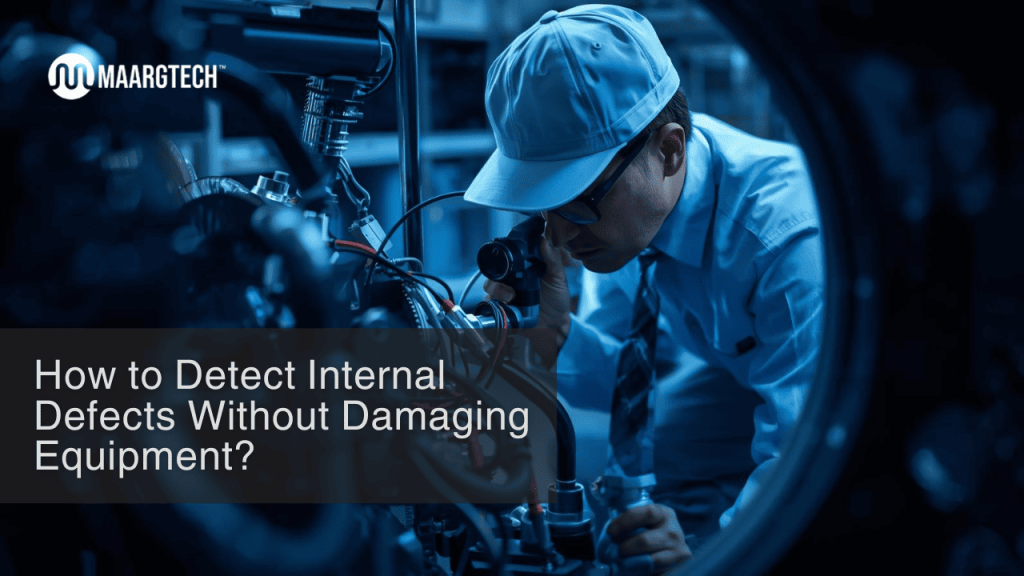
Internal defects like cracks, voids, corrosion, or weld imperfections in turbines, pipelines, castings, engines, and pressure vessels can lead to unexpected failures, safety risks, and expensive downtime. The solution lies in non-destructive testing (NDT) and remote visual inspection (RVI) techniques that examine the inside of equipment without disassembly or harm.
These methods support predictive maintenance, extend asset life, and help meet industry standards while keeping operations running smoothly.
Why Internal Defect Detection Is Critical
Hidden flaws often remain invisible until they cause major issues. Common problems include:
- Micro-cracks in turbine blades or rotors
- Corrosion and pitting inside pipes, boilers, and heat exchangers
- Voids, inclusions, or porosity in castings
- Weld defects in pressure vessels
- Blockages or foreign objects in engines and assemblies
Traditional inspection usually requires full disassembly, increasing labor, downtime, and the chance of accidental damage. Modern NDT and RVI approaches avoid these drawbacks entirely.
Key Non-Destructive Methods for Internal Defect Detection
Several proven techniques allow you to “see inside” equipment without causing harm. Here are the most effective ones used across automotive, aerospace, power generation, oil & gas, nuclear, and manufacturing sectors:
1. Remote Visual Inspection (RVI) with Industrial Videoborescopes
RVI is often the first and fastest line of defense for internal cavities and hard-to-reach areas.
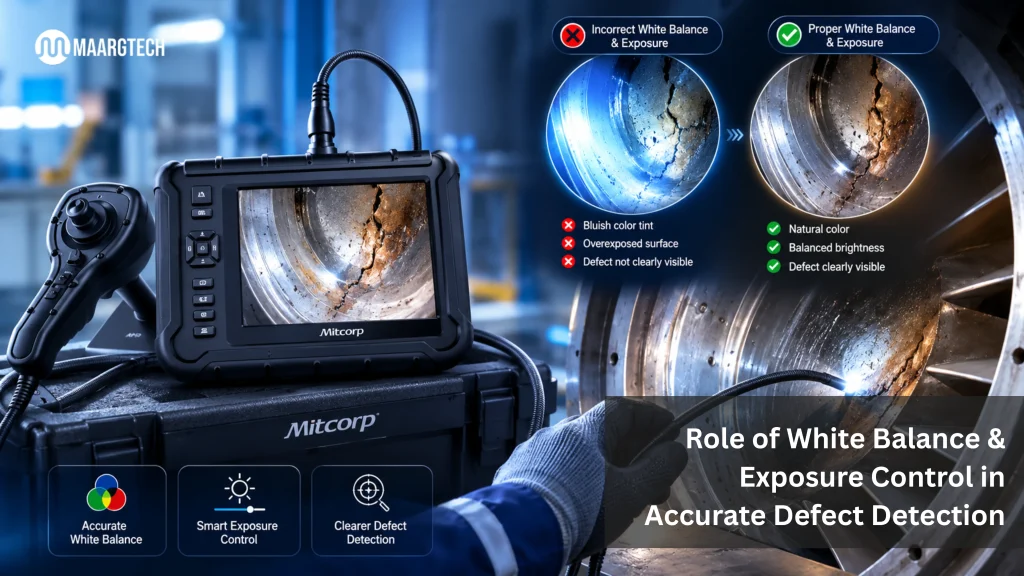
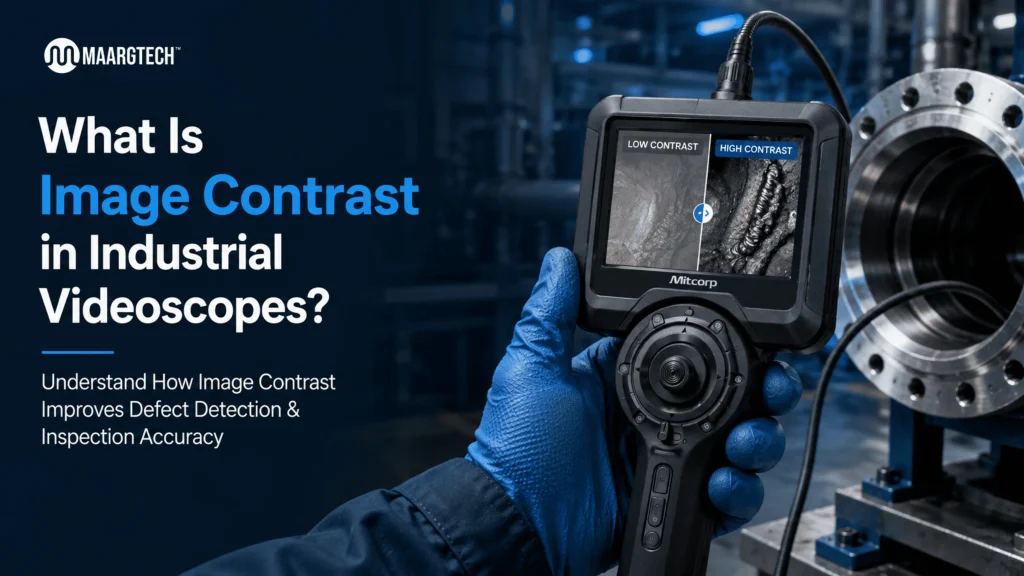
A high-resolution videobscope (also called borescope or inspection camera) inserts a flexible probe with a camera and LED lighting into the equipment. You get crystal-clear, real-time video and still images on a display or tablet.
Best for detecting: Surface cracks, corrosion, erosion, blockages, and foreign debris inside engines, turbines, pipes, castings, and heat exchangers.
Advantages:
- No disassembly required
- Instant results with photo/video recording for reports
- Articulating probes (2-way or 4-way) navigate complex bends
- HD or higher resolution + advanced lighting for dark environments
MAARGTECH Recommendation: Our flagship Mitcorp X2000 HD and X3000 HD videoborescopes deliver exceptional clarity, with the X3000 offering dual cameras and 3D measurement for precise defect sizing. These tools are rugged, portable, and trusted by leaders in casting, aerospace, and power industries across India.
2. Ultrasonic Testing (UT)
Ultrasonic waves travel through materials and reflect back from internal flaws. Advanced variants like Phased Array UT (PAUT) and Time-of-Flight Diffraction (TOFD) create detailed cross-sectional images.
Best for: Volumetric defects deep inside solid materials (cracks, voids, laminations).
Advantages: Highly accurate thickness measurement and defect sizing; works on metals, composites, and welds.
3. Radiographic Testing (RT) / Digital Radiography
X-rays or gamma rays pass through the equipment, creating a shadow image of internal structures (similar to medical X-rays). Digital RT now offers instant results without film.
Best for: Welds, castings, and assemblies where you need a permanent record of internal voids or inclusions.
Advantages: Excellent for complex geometries; non-contact.
4. Other Complementary NDT Techniques
- Acoustic Emission Testing: Listens for sounds emitted by growing cracks under stress.
- Infrared Thermography: Detects internal heat anomalies caused by defects (great for electrical and mechanical systems).
- Eddy Current Testing: Effective for near-surface cracks in conductive materials.
Pro Tip: Combine RVI with other NDT methods for complete coverage. Start with a videoborescope for quick visual confirmation, then use UT or RT for deeper analysis.
Benefits of Modern NDT & RVI Solutions
- Zero damage to equipment
- Significant time & cost savings (no disassembly = less downtime)
- Improved safety in hazardous or confined spaces
- Better documentation for audits and insurance
- Early defect detection supports predictive maintenance programs
- Environmentally friendly (reduced waste from unnecessary repairs)
Industries like automotive, aerospace, casting, nuclear, and power generation have dramatically reduced failure rates by adopting these technologies.
How to Choose the Right Inspection Solution for Your Needs
When selecting tools, consider these factors:
- Access requirements – Probe diameter (as small as 4mm) and length
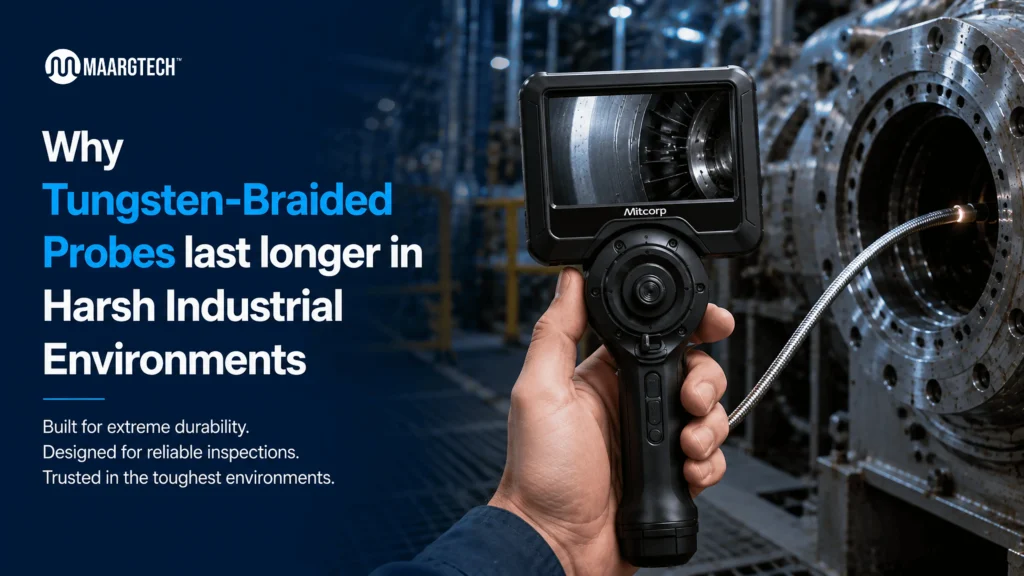
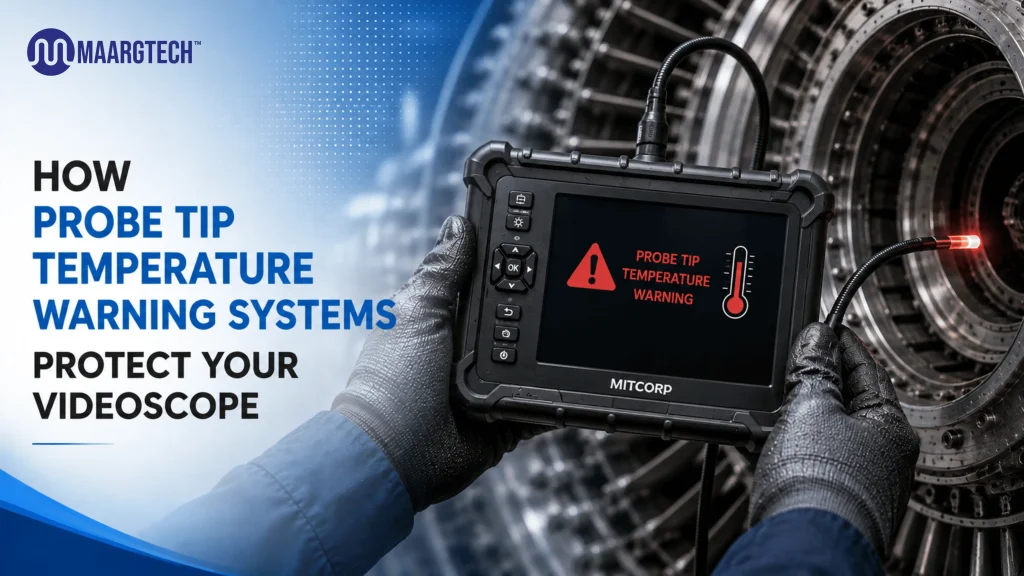
- Environment – Waterproof, oil-resistant, high-temperature rated?
- Defect type – Visual (RVI) vs. subsurface (UT/RT)
- Advanced features – HD resolution, 3D measurement, AI-assisted defect detection, wireless connectivity
- Portability & ease of use – Handheld systems with intuitive interfaces
- Budget & support – Reliable after-sales service matters
At MAARGTECH, we don’t just sell equipment—we help you select the most suitable, economical RVI-NDT solution tailored to your exact application. Our tools are used by ISRO, GAIL, Air India, and hundreds of other satisfied clients.
Applications Across Industries
- Automotive & Casting: Engine blocks, cylinder heads, weld inspections
- Aerospace & Power: Turbine blades, rotors, and combustion chambers
- Oil & Gas / Process: Pipelines, pressure vessels, and heat exchangers
- Nuclear: Critical component integrity checks
Conclusion: Inspect Smarter, Not Harder
Detecting internal defects without damaging equipment is no longer a challenge—it’s a standard practice with the right NDT and RVI tools. Whether you need quick visual checks with videoborescopes or comprehensive subsurface analysis, modern solutions deliver unmatched accuracy and efficiency.
Ensure Your Equipment is Defect-Free Today
Don’t let hidden defects compromise safety and performance. Detect issues early with MAARGTECH’S advanced NDT solutions and keep operations running smoothly.
Frequently Asked Questions (FAQ'S )
What is Non-Destructive Testing (NDT)?
Non-Destructive Testing (NDT) is a set of inspection techniques used to evaluate the internal condition of materials and equipment without causing any damage. It helps identify defects while keeping the asset fully operational.
Which method is best for detecting internal defects?
The best method depends on the material and application. Techniques like Ultrasonic Testing (UT) and Radiographic Testing (RT) are commonly used for detecting internal defects, while borescope inspection is ideal for visual access in hard-to-reach areas.
Why is detecting internal defects important?
Detecting internal defects early helps prevent equipment failure, reduces maintenance costs, ensures safety, and improves the overall efficiency and lifespan of machinery.
Is Non-Destructive Testing safe for equipment?
Yes, NDT methods are completely safe as they do not harm or alter the structure of the equipment. They allow inspections to be carried out without interrupting operations.
How can MAARGTECH help with defect detection?
MAARGTECH provides advanced NDT solutions using modern equipment and expert professionals to accurately detect internal defects, ensuring safety, reliability, and compliance with industry standards.