Introduction
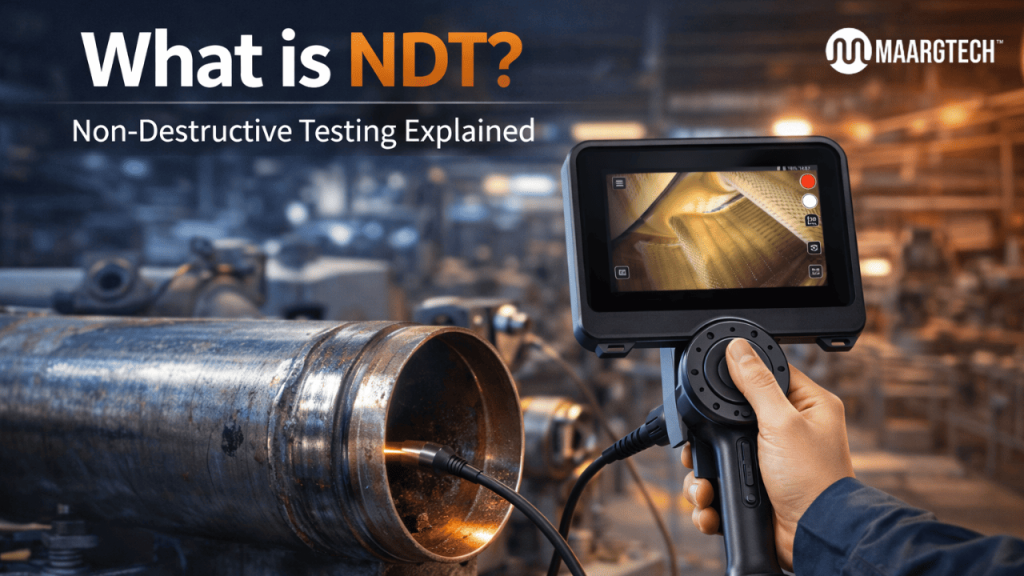
Non-Destructive Testing (NDT) is a smart way to check the quality and safety of materials, components, and structures without damaging them. From aircraft parts to pipelines and boilers, NDT helps detect cracks, corrosion, voids, and other flaws while keeping the asset fully usable.
At MAARGTECH, we provide advanced Remote Visual Inspection (RVI) and NDT solutions that make inspections safer, faster, and more reliable.
What is NDT?
NDT (also called NDE or NDI) uses techniques based on sound, light, radiation, or electromagnetism to inspect objects without altering them. Unlike destructive testing, the inspected part remains completely functional.
It plays a critical role in ensuring safety, compliance, and cost savings across industries.
Why NDT Matters
- Prevents unexpected failures in critical assets
- Reduces downtime and maintenance costs
- Helps meet strict industry standards (ASME, API, ASTM)
- Extends the life of equipment and infrastructure
MAARGTECH supports these goals with practical, affordable RVI and NDT tools designed for real industrial challenges.
Common NDT Methods (Simplified)
Here are the most popular methods every beginner should know:
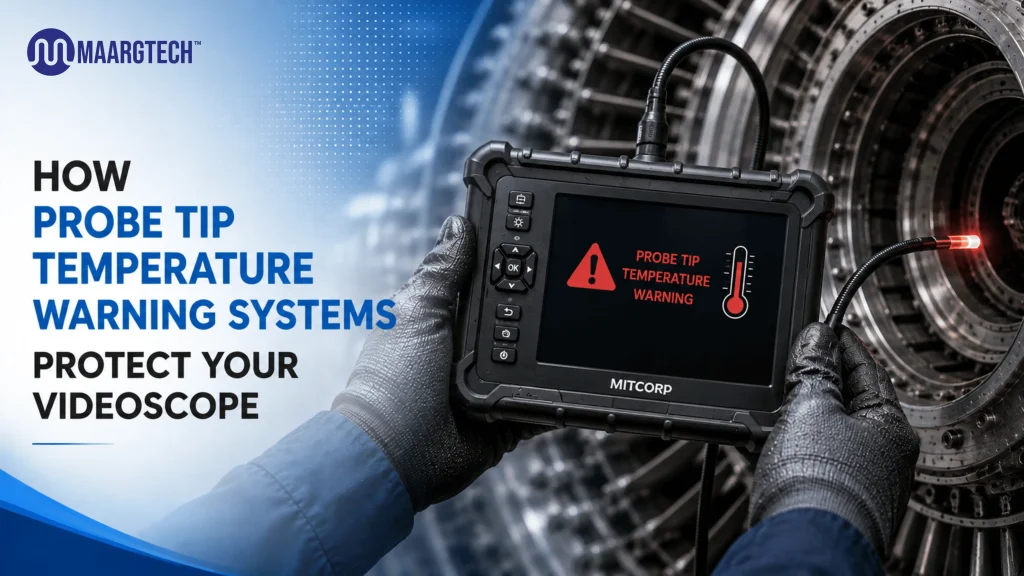
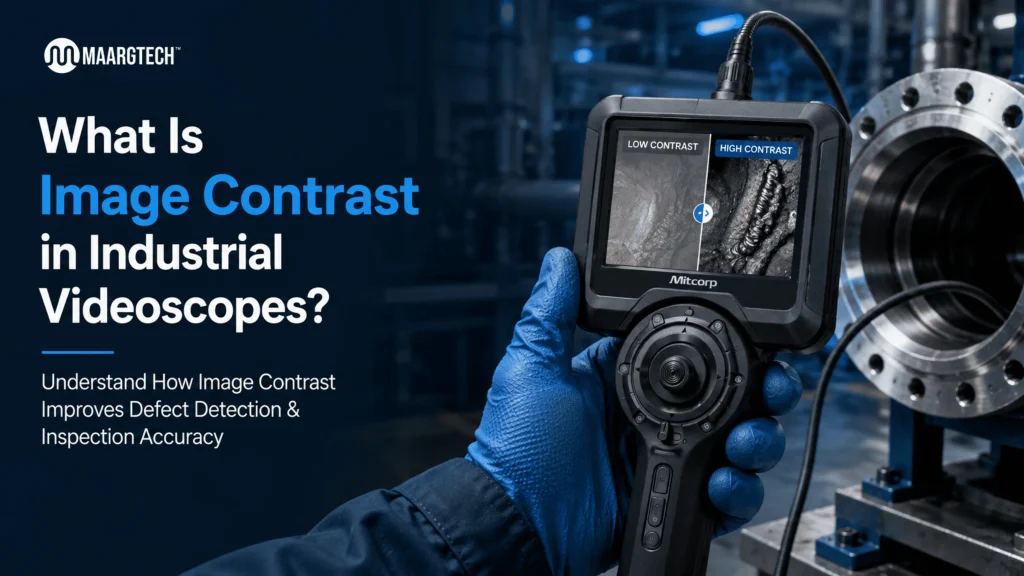
- Visual Testing (VT) & Remote Visual Inspection (RVI) The most basic and widely used method. Inspectors use eyes, cameras, or videoborescopes to check for surface defects. MAARGTECH specializes in high-quality industrial videoborescopes (including HD and AI-enabled models) that allow clear inspection of confined or hard-to-reach areas without disassembly.
- Liquid Penetrant Testing (PT) — Detects surface cracks using dye.
- Magnetic Particle Testing (MT) — Best for ferromagnetic materials to find surface/near-surface flaws.
- Ultrasonic Testing (UT) — Uses sound waves to detect internal defects and measure thickness.
- Radiographic Testing (RT) — X-ray or gamma ray imaging for internal structures.
- Eddy Current Testing (ET) — Quick method for conductive materials.
Multiple methods are often combined for complete inspection. MAARGTECH helps by offering powerful RVI tools that complement traditional NDT techniques.
Where NDT is Used
Non-Destructive Testing (NDT) is widely used in industries where safety and quality are critical. It helps detect defects without damaging materials, ensuring reliable performance.
- Aerospace: Ensures aircraft safety with
borescope inspection of aeroengines
, detecting cracks and structural issues. - Oil & Gas: Inspects pipelines and tanks to prevent leaks and failures.
- Power Generation: Maintains turbines and equipment for safe operations.
- Automotive & Manufacturing: Improves product quality by identifying defects.
- Construction & Infrastructure: Checks strength of buildings and structures.
- Marine & Railways: Ensures safety of ships, tracks, and components.
MAARGTECH has served 200+ customers across India and abroad with reliable RVI-NDT solutions.
Advantages & Limitations
Advantages:
- Non-invasive and cost-effective in the long run
- Can be done on-site or during operation
- Improves safety and regulatory compliance
Limitations:
- Requires trained, certified technicians
- Some methods need proper surface preparation
- No single method detects every type of defect
The Future of NDT
Digital advancements, AI-powered defect detection, drones, robotics, and smarter Remote Visual Inspection (RVI) systems are rapidly shaping the future of NDT. These technologies are making inspections faster, more accurate, and safer than ever before.
Conclusion
NDT is the silent guardian of safety and reliability in our modern world. Whether you’re a student, engineer, or industry professional, understanding NDT opens exciting opportunities.
Looking for reliable Remote Visual Inspection tools and NDT solutions? Explore MAARGTECH’S advanced videoborescopes and buy high-quality inspection equipment designed for real industrial needs.
Looking for Reliable NDT Equipment?
Explore our range of high-performance NDT and RVI equipment.
Start improving safety and efficiency today.
Frequently Asked Questions (FAQ'S )
What is the difference between NDT, NDE, and NDI?
NDT, NDE, and NDI all refer to the same process — inspecting materials without causing any damage. The terms are used interchangeably depending on the industry or region.
Which NDT method is the best?
No single method is best. The choice depends on the material, defect type (surface or internal), and application. Visual Testing/RVI is usually the starting point.
What is Remote Visual Inspection (RVI) and how is it related to NDT?
RVI uses videoborescopes and cameras to inspect internal or hard-to-reach areas without disassembly. It is an advanced form of Visual Testing within NDT.
Do I need certification to perform NDT?
Yes. Most industries require ASNT or ISO 9712 certification. It ensures technicians are properly trained to interpret results accurately.
Why should industries invest in NDT and RVI tools?
NDT prevents failures, reduces downtime, ensures safety, and saves long-term costs. Good RVI tools make inspections faster and more accurate in difficult areas.