
Introduction
What seems like a routine inspection in a nuclear facility is never truly simple. Engineers face the constant challenge of checking critical internal components without shutting systems down or exposing anyone to risk—something that’s often complex, costly, and time-consuming.
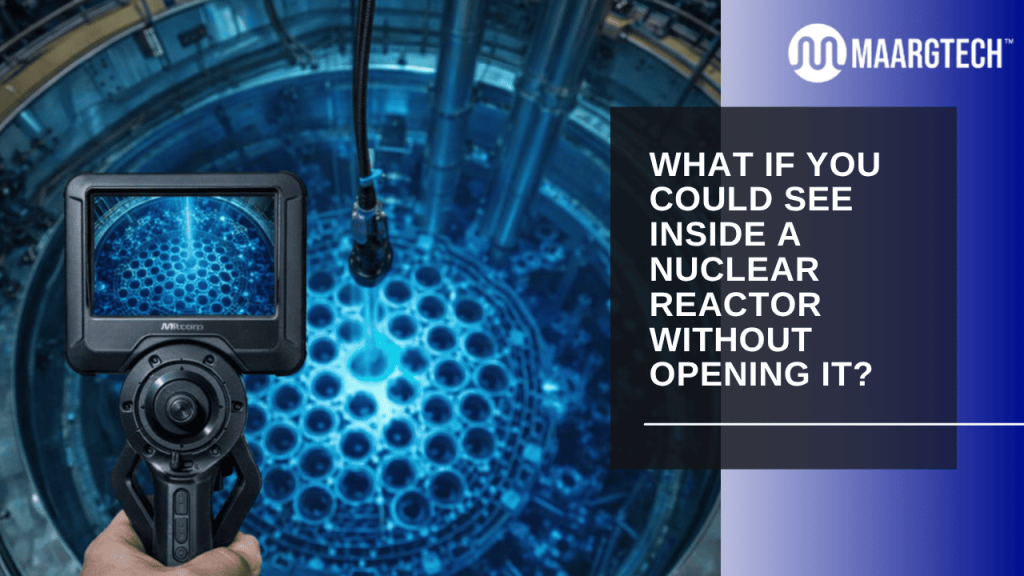
In nuclear power plants, Borescope Inspection in Nuclear Reactor is a proven Remote Visual Inspection (RVI) technique essential for assessing critical components without unnecessary personnel exposure or extended downtime.
Why Borescope Inspection in Nuclear Reactor Matters?
Nuclear reactors involve high-radiation zones, confined geometries, and strict regulatory requirements—even during refueling outages. Conventional direct inspections increase radiation exposure and outage durations.
Borescope inspection in Nuclear Reactor leverages advanced video borescopes with flexible, radiation-tolerant probes to enable remote, high-quality visual assessments. This approach strongly supports ALARA principles and delivers significant radiation exposure reduction by allowing operators to work from low-dose areas.
Core Advantages in Nuclear Settings
- Remote access to hard-to-reach areas while minimizing dose
- Detailed imaging and documentation compliant with ASME Section XI
- Faster outage execution and improved plant availability
- Early detection of defects like cracks, corrosion, erosion, or foreign objects
Typical Applications in PWR and BWR Inspections
Borescope inspection in Nuclear Reactor is routinely used in Pressurized Water Reactors (PWR) and Boiling Water Reactors (BWR) for in-service and augmented examinations.
Reactor Vessel Internals and Core Components
Key targets include core shroud, baffle bolts, jet pumps, top guide, core plate, and fuel assemblies—critical for identifying cracking, wear, or loose parts (FOSAR).
Steam Generators and Reactor Pressure Vessel Areas
In PWRs, focus areas cover steam generators tube sheets, U-bends, sludge buildup, and reactor vessel penetrations, cladding, and nozzles.
Piping, Welds, and Balance-of-Plant Systems
Video borescopes examine welds, piping, and containment penetrations for corrosion, erosion, or integrity issues.
Reliable MAARGTECH Solutions for Nuclear RVI
MAARGTECH offers a trusted range of MITCORP videoborescopes specifically engineered for demanding nuclear and power generation environments. These tools combine high performance, durability, and ease of use to support safe and effective remote visual inspection (RVI) during outages.
- X2000 HD Industrial Videoscope — Delivers high-resolution dual-view imaging and robust probe options for comprehensive inspection of nuclear reactor internals.
- X750 HD Portable Videoscope — Features 6mm diameter probes (available in 5–10 meter lengths), lightweight one-handed operation, HD 2560×1440 resolution, and IP67-rated durability—ideal for quick access in confined nuclear spaces.
- X3000 HD with 3D Measurement — Includes 3-meter probe versions with advanced dual-camera 3D measurement technology for precise sizing of cracks, corrosion, pitting, or wear—essential when quantitative data is required in borescope inspection in Nuclear Reactor programs.
All models feature radiation-tolerant probes, strong articulation, powerful LED illumination, and integrated reporting software to meet stringent regulatory documentation needs.
Real-World Impact and Future Outlook
Facilities relying on borescope inspection in Nuclear Reactor achieve lower collective radiation doses, proactive degradation detection (e.g., baffle bolt or shroud issues), and optimized outage schedules—supporting extended plant life beyond 60 years.
Borescope inspection in Nuclear Reactor continues to advance with better probes and AI-assisted analysis, reinforcing its role in nuclear safety and reliability.
Connect with us for the latest RVI updates, tips, and nuclear inspection insights:🔗 LinkedIn: https://in.linkedin.com/company/maargtech-rvi-ndt-pvt-ltd
📘 Facebook: https://www.facebook.com/profile.php?id=61580606240935
📸 Instagram: Follow for visual demos and event highlights
Inspect Smarter. Reduce Risk. See More.
Enhance safety and reduce downtime with MAARGTECH’S advanced Borescope Inspection solutions. Get the right RVI support for your nuclear inspection needs today.
Frequently Asked Questions (FAQ'S )
What is borescope inspection in a nuclear reactor?
Borescope inspection is a remote visual inspection (RVI) method that uses flexible video probes to examine internal reactor components without disassembly or direct human entry.
How does borescope inspection reduce radiation exposure?
It allows inspectors to assess critical areas remotely, minimizing time spent in high-radiation zones and supporting ALARA principles.
Which reactor components can be inspected using a borescope?
Common components include reactor vessel internals, steam generators, piping systems, welds, fuel assemblies, and core structures.
Is borescope inspection compliant with nuclear industry standards?
Yes, modern video borescopes provide high-resolution imaging and documentation that align with standards like ASME Section XI for inspection and reporting.
When should borescope inspections be performed?
They are typically conducted during scheduled outages, refueling periods, or whenever early signs of wear, corrosion, or defects need to be investigated.