
Introduction
Industrial videoscopes (also known as videoborescopes) are critical for remote visual inspection (RVI) and non-destructive testing (NDT) in challenging industrial environments. From aero-engine turbines and casting cavities to pipelines, heat exchangers, boilers, and heavy machinery, these tools help companies inspect without costly disassembly.
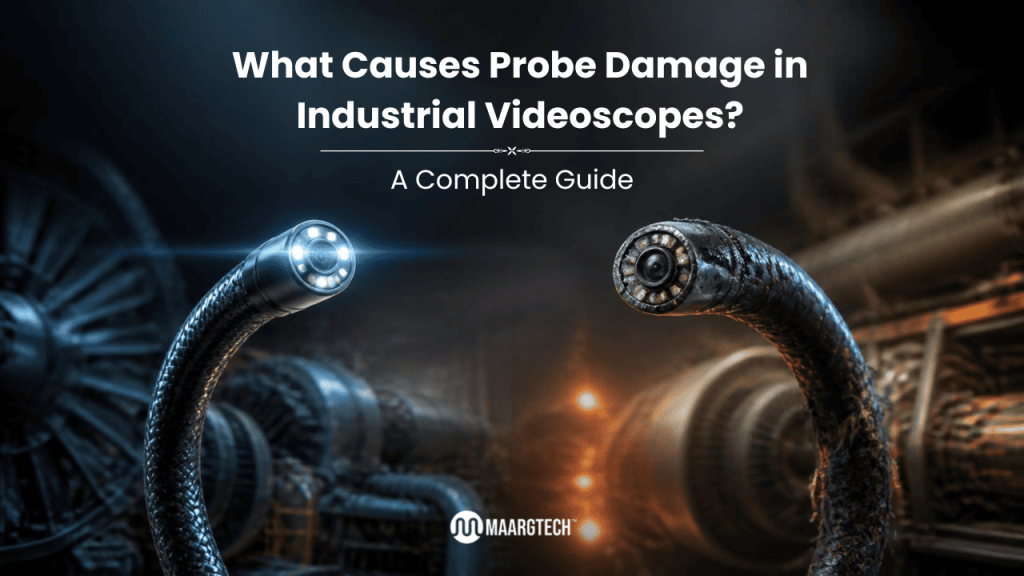
However, probe damage in industrial videoscopes systems is a very common and costly problem. The probe (insertion tube) is the most vulnerable and expensive part of any videoscope. Even minor damage can result in blurred images, loss of articulation, reduced lighting, or complete probe failure — leading to inspection delays and high repair costs.
At MAARGTECH, we support industries across India with reliable industrial videoscopes and practical knowledge to protect their investment. This comprehensive guide explains the real causes of probe damage in industrial videoscopes and how to prevent them effectively.
Why the Probe is the Most Vulnerable Component
The insertion tube is a sophisticated assembly containing:
- High-resolution camera sensor and lens system
- Powerful LED illumination
- Precision articulation wires (steering cables)
- Signal and power transmission cables
- Protective outer sheath (often tungsten or stainless-steel braided)
Unlike the main unit, the probe must repeatedly bend, twist, and navigate through dark, narrow, hot, abrasive, and sometimes chemically aggressive spaces. This constant exposure makes it prone to gradual wear and sudden failures if proper care is not taken.
Major Causes of Probe Damage in Industrial Videoscopes
1. Excessive Bending and Forced Articulation
This is one of the leading causes of probe failure, especially in models with 4-way articulation.
Why it happens:
- Operating the articulation controls while the probe is tightly coiled or still inside the case
- Forcing the tip through bends tighter than the minimum bend radius
- Pulling or twisting the probe while the distal end is articulated
- Repeated over-articulation in complex inspection paths
Consequences: Stretched or broken internal steering cables, stiff articulation, or total loss of tip control.
Prevention Tips:
- Always straighten the probe tip before withdrawal
- Use articulation controls gently and smoothly
- Respect the manufacturer’s minimum bend radius specification
- Choose probes with appropriate flexibility for your typical inspection paths
2. Abrasion and Mechanical Wear from Harsh Surfaces
Industrial components often have sharp edges, burrs, weld seams, and rough textures that act like sandpaper on the probe sheath.
High-Risk Areas:
- Turbine blade roots and leading edges
- Weld joints and heat-affected zones
- Rough castings and threaded holes
- Corroded pipelines and heat exchanger tubes
Over time, abrasion wears down the outer braiding, exposing delicate internal cables and optics.
Prevention Tips:
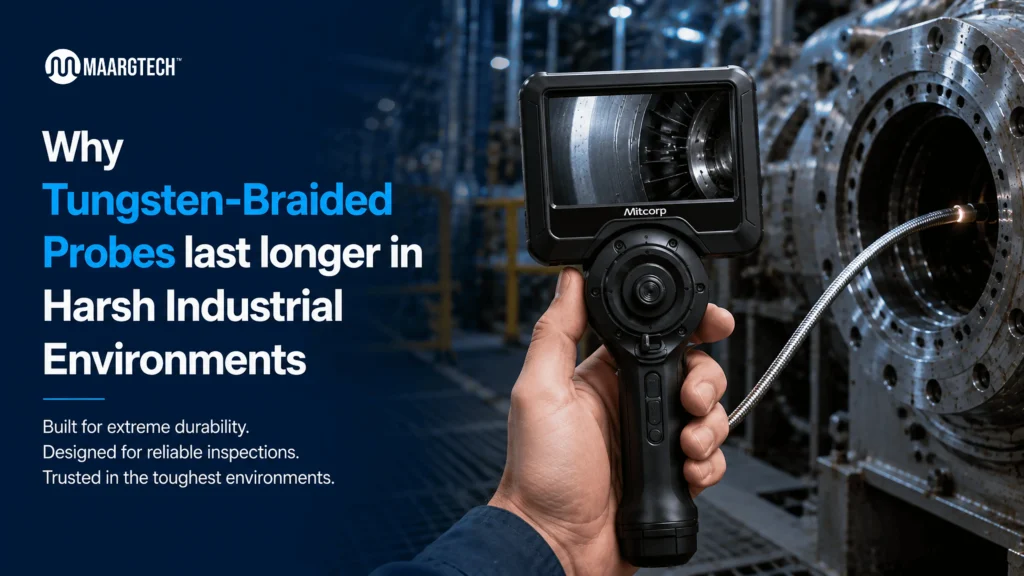
- Use tungsten-braided or reinforced insertion tubes for abrasive environments
- Install protective guide tubes or sleeves where possible
- Inspect and clear access points before inserting the probe
- Move the probe slowly and avoid dragging it against sharp surfaces
3. High-Temperature Exposure
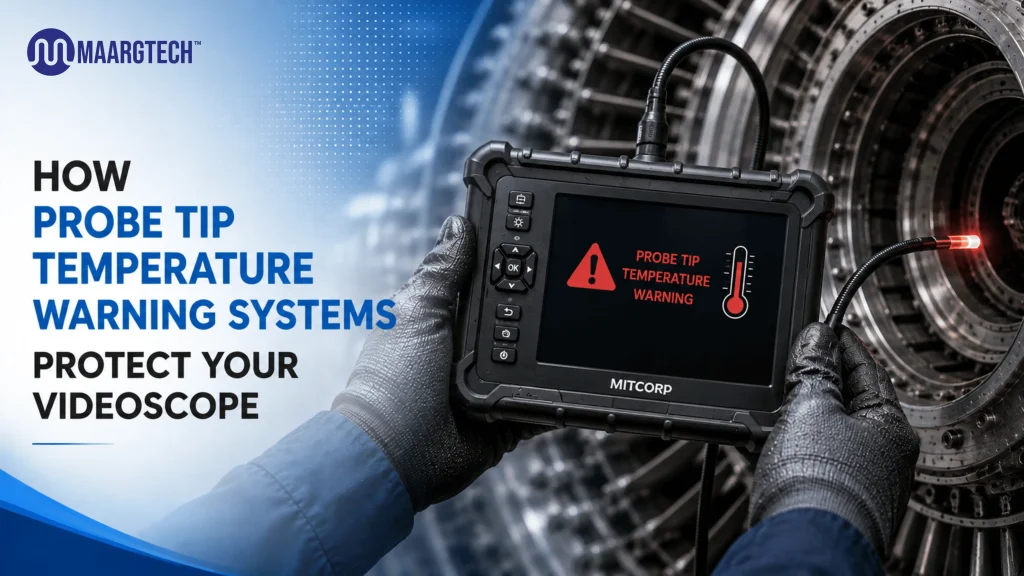
Many videoscopes have temperature ratings (typically up to 80°C or higher for special models), but prolonged exposure beyond limits causes serious damage.
Effects of Excessive Heat:
- Degradation of camera sensors and LEDs
- Softening or cracking of seals and adhesives
- Loss of flexibility in the insertion tube
- Reduced lifespan of internal components
Common Applications at Risk:
- Gas turbines and steam turbines
- Boilers and furnaces
- Exhaust manifolds and catalytic converters
- Hot heat exchangers
Prevention Tips:
- Always verify the probe’s maximum operating temperature
- Allow components to cool down whenever operationally feasible
- Use high-temperature rated probes for continuous hot inspections
- Minimize dwell time inside high-heat areas
4. Impact, Crushing, and Improper Storage
Physical damage from drops, stepping on the probe, or improper coiling is surprisingly common.
Common Scenarios:
- Dropping the probe during transport or setup
- Placing heavy tools or equipment on the insertion tube
- Tight coiling or twisting during storage
- Leaving the distal tip unsupported
Prevention Tips:
- Always use the original rugged carrying case for transport
- Store the probe in large, gentle loops (avoid kinks)
- Never let the camera tip hang freely
- Keep the probe away from walkways and heavy objects
5. Chemical Contamination and Moisture Ingress
Industrial environments expose probes to oils, coolants, acids, solvents, and moisture. Once seals are compromised, contaminants can enter and corrode electronics and optics.
Prevention Strategy:
- Clean the probe thoroughly immediately after every inspection
- Use only manufacturer-recommended cleaning solutions
- Regularly inspect O-rings and sheath integrity
- Choose probes with suitable IP rating (IP65/IP67) for your environment
6. Improper Cleaning and Maintenance Practices
Ironically, many probes get damaged during the cleaning process.
Best Practices:
- Use soft, lint-free microfiber cloths
- Apply approved lens cleaners only
- Avoid aggressive scrubbing or sharp tools
- Ensure the probe is completely dry before storing
Why Proper Care Matters for Your Operations
Probe damage is not just a maintenance issue — it directly impacts your business:
- Increased Downtime: A failed probe can halt critical inspections and delay maintenance schedules.
- Higher Costs: Probe repairs or replacements are expensive and sometimes take weeks.
- Poor Inspection Quality: Damaged optics or lighting lead to missed defects, compromising safety and quality.
- Reduced Equipment Life: Minor neglect compounds into major failures, lowering overall ROI.
- Safety Risks: In aerospace, power plants, or oil & gas, unreliable inspections can have serious safety implications.
Companies that train their teams and establish standard operating procedures for videoscope handling typically enjoy 2–3 times longer probe life and far fewer operational disruptions.
Early Warning Signs You Should Never Ignore
- Blurry, distorted, or dark images
- Reduced or uneven LED brightness
- Stiff, unresponsive, or one-sided articulation
- Visible kinks, cuts, or fraying on the sheath
- Intermittent video signal or flickering
- Black spots or dead pixels on the display
Acting quickly on these signs can save you from complete probe failure.
How MAARGTECH Helps You Minimize Probe Damage
At MAARGTECH, we go beyond selling industrial videoscopes. We help customers select the right tool for their specific application and environment.
Our offerings include:
- Heavy-duty tungsten-braided probes
- High-temperature and high-flexibility options
- HD and Full HD imaging systems with excellent articulation
- Long-reach probes for deep inspections
We also provide operator training, application-specific recommendations, and ongoing technical support to help Indian industries in automotive, aerospace, power generation, casting, and heavy engineering achieve maximum reliability and value.
Conclusion
Probe damage in industrial videoscopes is rarely caused by poor manufacturing. In most cases, it results from a combination of environmental stress, handling practices, and maintenance gaps. By understanding these causes and implementing simple preventive habits, you can significantly extend the service life of your equipment, improve inspection accuracy, and protect your operational efficiency.
Investing in quality videoscopes and proper care practices delivers excellent long-term returns.
Protect Your Videoscopes from Probe Damage
Contact MAARGTECH for expert guidance on industrial videoscope care, maintenance, and inspection solutions. Improve probe life, reduce downtime, and ensure reliable inspection performance.
📞 +91-97572 76307 | 📧 sales@maargtech.com
Frequently Asked Questions (FAQ'S )
What is the most common cause of probe damage in industrial videoscopes?
The most common cause is excessive bending and forced articulation. This happens when operators push the probe beyond its minimum bend radius, twist it manually, or operate the articulation controls too aggressively. This stretches or breaks the internal steering cables, leading to loss of tip control.
How can I prevent probe damage during daily inspections?
Always straighten the probe tip before pulling it out, insert and move the probe slowly, use tungsten-braided probes in abrasive environments, respect the temperature rating, and clean the probe immediately after every use. Proper storage in loose loops is also very important.
Can a damaged videoscope probe be repaired?
It depends on the type and extent of damage. Minor issues like lens scratches or sheath wear can often be repaired. However, severe damage to articulation cables, camera sensor, or internal wiring usually requires full probe replacement, which is quite expensive.
How do I know if my videoscope probe is damaged?
Common warning signs include blurry or distorted images, reduced LED brightness, stiff or unresponsive articulation, flickering video, visible kinks or cuts on the sheath, and black spots on the display. Regular visual inspection of the probe is highly recommended.
Which type of probe is more resistant to damage?
Tungsten-braided insertion tubes are significantly more resistant to abrasion and wear compared to standard stainless-steel braided probes. For high-temperature applications, you should choose specially rated high-temp probes. Always match the probe specification to your working environment.