
Introduction
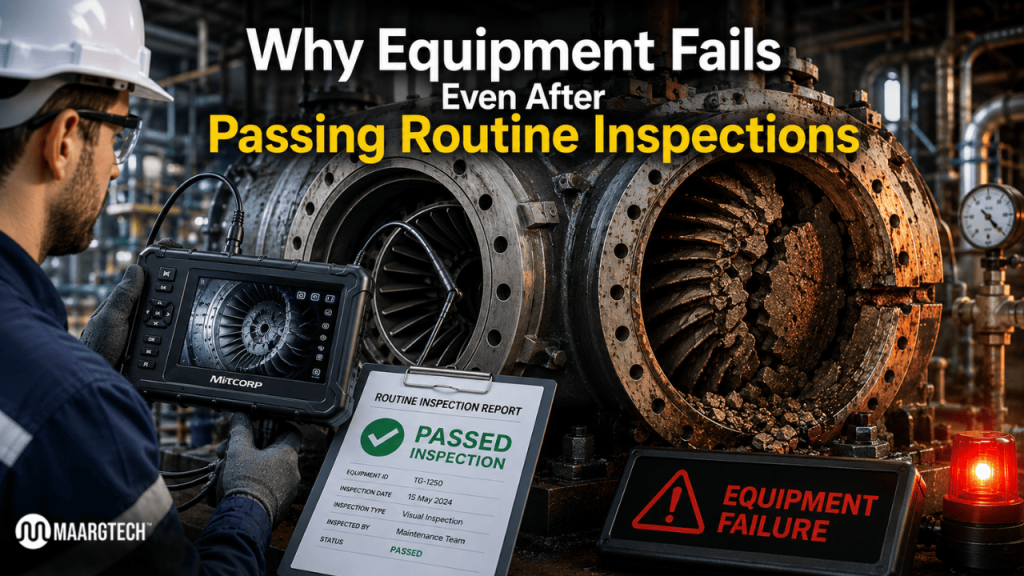
Routine inspections are a fundamental part of industrial maintenance programs. They help organizations identify visible defects, maintain safety standards, and reduce the risk of unexpected equipment failures. However, many facilities still experience costly breakdowns shortly after equipment has successfully passed scheduled inspections. When equipment fails after inspection, it often raises concerns about inspection effectiveness, hidden defects, and maintenance practices. Understanding why this happens is essential for improving equipment reliability, minimizing downtime, and preventing costly operational disruptions.
This raises an important question:
Why does equipment fail even after passing routine inspections?
The answer often lies in the limitations of traditional inspection methods, hidden defects, changing operating conditions, and the inability to detect early-stage damage before it becomes critical.
In this article, we’ll explore the common reasons behind post-inspection equipment failures and how advanced inspection technologies such as videoborescopes and Remote Visual Inspection (RVI) systems can help uncover issues that conventional inspections may miss.
The Misconception: Passing Inspection Means Equipment Is Healthy
A routine inspection confirms that equipme8nt meets specific inspection criteria at a particular moment in time. It does not guarantee that the equipment is free from all defects or that it will continue operating without failure.
Many industrial assets operate under harsh conditions involving:
- High temperatures
- Extreme pressures
- Continuous vibration
- Corrosive environments
- Heavy mechanical loads
Even small defects can rapidly develop into major failures between inspection intervals.
Common Reasons Equipment Fails After Inspections
1. Hidden Internal Defects Remain Undetected
Many critical components contain areas that are difficult or impossible to inspect visually without specialized tools.
Examples include:
- Turbine blades
- Heat exchanger tubes
- Boiler tubes
- Internal pipe networks
- Aircraft engines
- Gearboxes
- Welded joints
Surface-level inspections may show no visible issues while internal damage continues to progress.
Common hidden defects include:
- Internal corrosion
- Pitting
- Cracks
- Foreign object damage (FOD)
- Deposits and blockages
- Erosion
Advanced videoborescopes allow inspectors to access confined spaces and capture high-resolution images of these hidden areas without disassembly.
2. Inspection Intervals Are Too Long
A piece of equipment may pass inspection today and develop serious damage weeks later.
Factors that accelerate degradation include:
- Increased production demands
- Higher operating temperatures
- Process fluctuations
- Material fatigue
- Chemical exposure
If inspections are performed only quarterly or annually, defects may grow significantly before the next inspection cycle.
This is particularly common in:
- Power generation plants
- Petrochemical facilities
- Manufacturing lines
- Aerospace systems
3. Human Error During Inspection
Even experienced inspectors can occasionally overlook subtle indications of damage.
Challenges include:
- Limited visibility
- Inadequate lighting
- Restricted access
- Time constraints
- Inspector fatigue.
Small cracks, early corrosion, or minor wear patterns can be difficult to identify during conventional inspections.
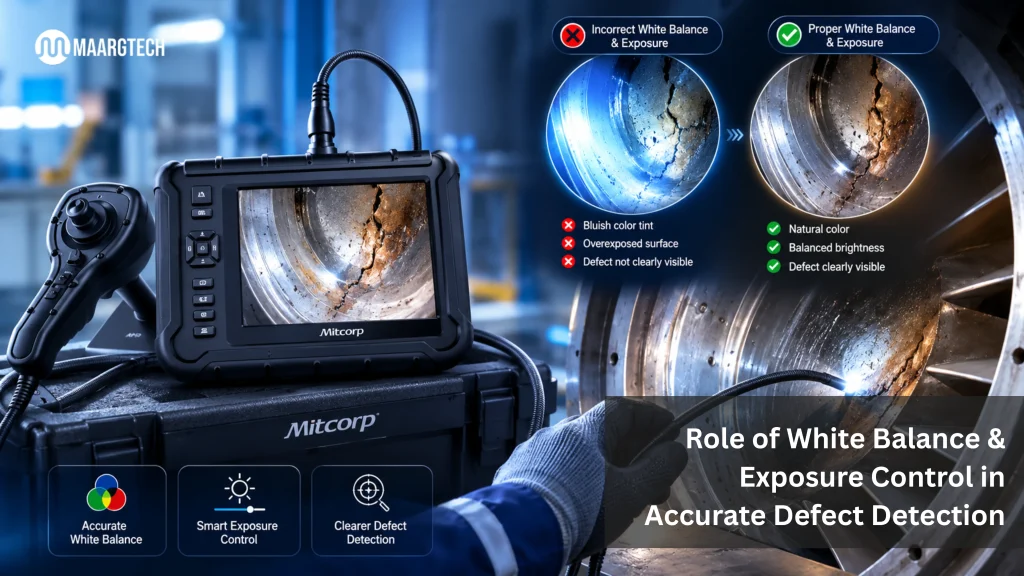
Modern inspection systems equipped with HD imaging, image enhancement, and recording capabilities help reduce the risk of missed defects.
4. Early-Stage Defects Are Difficult to Detect
Many failures begin as microscopic defects that are not easily visible during standard inspections.
Examples include:
- Hairline cracks
- Early corrosion pits
- Surface fatigue
- Coating degradation
- Micro-fractures
Although these defects may appear insignificant initially, they can grow rapidly under operational stress and eventually lead to catastrophic failures.
Early detection is essential for preventing unexpected downtime and expensive repairs.
5. Inspection Scope May Be Limited
In many facilities, routine inspections focus only on predefined checkpoints.
As a result:
- Non-critical areas may be skipped
- Internal surfaces may remain unexamined
- Hard-to-reach locations may be inaccessible.
Critical defects can therefore remain hidden outside the inspection scope.
Remote Visual Inspection (RVI) allows maintenance teams to expand inspection coverage without extensive dismantling.
6. Changing Operating Conditions
Equipment is often designed to operate within specific limits.
Unexpected changes such as:
- Higher throughput
- Increased pressure
- Elevated temperatures
- Frequent start-stop cycles
can significantly increase stress on components.
Even equipment that passes inspection may fail if operating conditions become more demanding than originally anticipated.
7. Progressive Corrosion and Wear
Corrosion and wear are continuous processes.
Equipment may pass inspection because deterioration remains within acceptable limits at the time of examination. However, ongoing exposure to aggressive environments can quickly worsen the condition.
Industries particularly vulnerable include:
- Oil & gas
- Chemical processing
- Marine applications
- Power generation
- Mining
Regular monitoring and trend analysis are necessary to track deterioration rates effectively.
8. Foreign Object Damage (FOD)
Foreign objects can enter machinery unexpectedly and cause severe internal damage.
Common examples include:
- Metal fragments
- Loose fasteners
- Debris
- Dust accumulation
- Process contaminants
A system may pass inspection and subsequently experience damage caused by newly introduced foreign material.
Videoborescope inspections are widely used to detect and remove FOD before it impacts equipment performance.
The Cost of Undetected Defects
When hidden defects go unnoticed, organizations may face:
- Unplanned downtime
- Production losses
- Expensive emergency repairs
- Safety incidents
- Reduced equipment lifespan
- Regulatory compliance issues
For critical industrial assets, even a few hours of downtime can result in substantial financial losses.
How Advanced Inspection Technologies Improve Reliability
Modern inspection solutions help bridge the gap between routine inspections and actual equipment condition.
High-Definition Videoborescopes
Industrial videoborescopes provide:
- High-resolution imaging
- Flexible probe access
- Articulating cameras
- Image and video recording
- Measurement capabilities
These features enable inspectors to identify defects that may otherwise remain hidden.
Remote Visual Inspection (RVI)
RVI allows internal inspections without major disassembly, reducing:
- Downtime
- Inspection costs
- Maintenance labor
while improving defect detection accuracy.
Digital Documentation
Advanced inspection systems create visual records that support:
- Trend analysis
- Predictive maintenance
- Root cause investigations
- Compliance reporting
Best Practices to Prevent Post-Inspection Failures
Organizations can reduce unexpected failures by:
- Increasing inspection frequency for critical assets.
- Implementing risk-based inspection strategies.
- Using advanced videoborescope technology for internal inspections.
- Recording and comparing inspection data over time.
- Combining visual inspection with predictive maintenance programs.
- Training inspectors on emerging defect patterns.
- Expanding inspection coverage to difficult-to-access areas.
Conclusion
Passing a routine inspection does not necessarily mean equipment is free from risk. Hidden defects, progressive degradation, changing operating conditions, and limitations in traditional inspection methods can all contribute to failures shortly after an inspection is completed.
To improve equipment reliability and reduce unplanned downtime, organizations must go beyond basic inspection practices. Advanced Remote Visual Inspection (RVI) technologies and industrial videoborescopes provide deeper visibility into critical components, enabling earlier defect detection and more informed maintenance decisions.
By combining routine inspections with modern inspection technologies, industries can move from reactive maintenance toward a more proactive and predictive approach, ultimately improving safety, productivity, and asset lifespan.
Prevent Equipment Failures Before They Cause Costly Downtime
Detect hidden defects early with MAARGTECH’S advanced videoborescope and RVI solutions to improve reliability and reduce unplanned downtime.
Frequently Asked Questions (FAQ'S )
Why does equipment fail even after passing a routine inspection?
Passing a routine inspection only confirms that equipment met inspection criteria at that specific time. Hidden defects such as internal corrosion, fatigue cracks, wear, or foreign object damage may remain undetected and continue to develop, eventually causing unexpected equipment failure.
What types of defects are commonly missed during routine inspections?
Routine inspections can sometimes miss internal defects that are difficult to access, including corrosion, pitting, cracks, erosion, deposits, and foreign object damage. These issues often require advanced inspection tools such as videoborescopes or Remote Visual Inspection (RVI) systems for accurate detection.
How can industrial videoborescopes help prevent equipment failures?
Industrial videoborescopes allow inspectors to examine internal components without disassembling equipment. Their high-definition imaging capabilities help detect hidden defects early, enabling maintenance teams to take corrective action before a minor issue becomes a costly failure.
What is the difference between routine inspections and predictive maintenance?
Routine inspections are performed at scheduled intervals to assess equipment condition, while predictive maintenance uses inspection data, condition monitoring, and trend analysis to predict potential failures before they occur. Predictive maintenance helps reduce unplanned downtime and maintenance costs.
Which industries benefit most from Remote Visual Inspection (RVI)?
Remote Visual Inspection (RVI) is widely used in industries such as power generation, oil & gas, petrochemicals, aerospace, manufacturing, automotive, and energy. It enables safe and efficient inspection of hard-to-reach areas without extensive equipment disassembly.