
Introduction
Tubes and piping systems are critical components in industries such as power generation, oil & gas, petrochemicals, automotive, aerospace, heat exchangers, boilers, and manufacturing. Over time, these tubes are exposed to extreme temperatures, pressures, corrosive environments, flow-induced stresses, and mechanical wear, leading to various internal defects. Identifying the common defects found during tube inspection is essential for preventing unexpected failures, reducing maintenance costs, and ensuring operational reliability.
Remote Visual Inspection (RVI) using advanced videoborescopes (also known as industrial videoscopes or borescopes) has become the preferred non-destructive testing (NDT) method for identifying these issues early. It allows inspectors to examine internal surfaces without costly disassembly, minimizing downtime and enhancing safety.
At MAARGTECH, we specialize in providing reliable RVI solutions, including Mitcorp videoborescopes, tailored for tube and small-diameter inspections across Indian and global industries. This blog explores the common defects found during tube inspection and explains how videoscopes help detect them quickly and effectively.
Why Regular Tube Inspections Matter
Undetected defects in tubes can lead to:
- Reduced heat transfer efficiency in exchangers and boilers
- Leaks, contamination, or catastrophic failures
- Unplanned shutdowns and high repair costs
- Safety and environmental risks
Videoscopes deliver high-resolution, real-time visuals of internal tube walls, welds, bends, and hard-to-reach areas, enabling proactive maintenance.
Common Defects Found During Tube Inspections
Here are the most frequently observed defects using videoscopes and other complementary NDT methods:
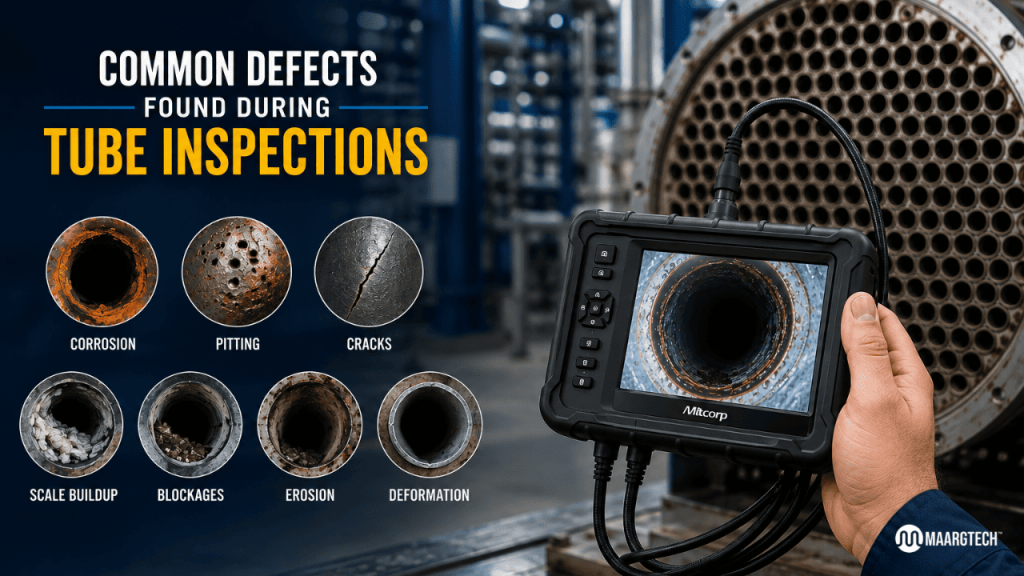
- Corrosion and Pitting: One of the most prevalent issues, caused by exposure to moisture, chemicals, oxygen, or aggressive process fluids. Pitting appears as localized holes or cavities that weaken the tube wall.
Visual Signs: Rust, scaling, discoloration, or small craters on the inner surface.
Impact: Wall thinning, leaks, and reduced structural integrity. Common in heat exchanger tubes, condensers, and process piping. - Erosion and Wear: Caused by high-velocity fluid flow, abrasive particles, or steam impingement (especially at inlets or bends).
Visual Signs: Grooving, material loss, thinning, or polished/smooth worn surfaces.
Impact: Reduced wall thickness and potential rupture under pressure. - Cracks and Fractures: Including fatigue cracks, stress corrosion cracking, or weld-related cracks. These often appear at high-stress areas like bends, welds, or tube sheets.
Visual Signs: Linear or branching lines, sometimes with discoloration.
Impact: Can propagate rapidly, leading to sudden failure. - Blockages and Deposit Build-Up: Scale, sludge, sediment, biofilm, or foreign debris that restricts flow.
Visual Signs: Accumulated material obstructing the tube interior.
Impact: Reduced efficiency, overheating, and pressure imbalances. - Weld Defects: Porosity, incomplete fusion, cracks, or undercuts in welded joints.
Visual Signs: Irregular surfaces, gaps, or voids at weld seams.
Impact: Weak points prone to leakage or failure under operational stress. - Deformation, Dents, and Mechanical Damage: Caused by manufacturing issues, installation damage, or external forces (e.g., baffle wear or fretting).
Visual Signs: Dents, bulges, ovality, or scoring from rod wear. - Foreign Object Debris (FOD) and Loose Parts: Tools, fragments, or contaminants left inside during maintenance.
Impact: Can cause secondary damage or blockages.
Other notable defects include laminations, inclusions, and coating failures in lined tubes.
How Videoscopes Help Detect These Defects
Modern industrial videoscopes from MAARGTECH, such as the Mitcorp X2000 HD or X3000 series, offer:
- Slim probes (as small as 2-4.9mm) ideal for small-diameter tubes.
- 4-way articulation for navigating bends.
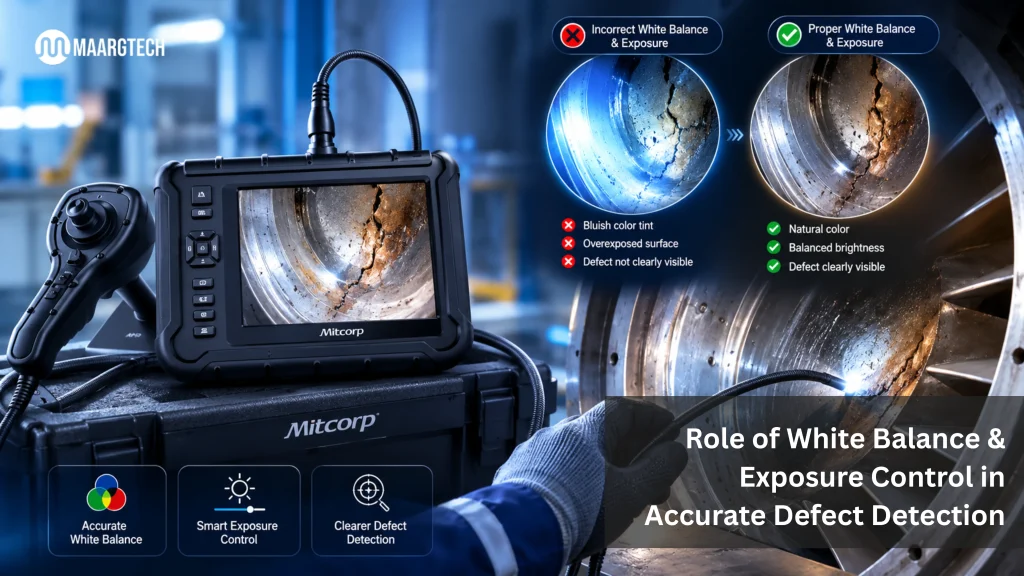
- HD/Full HD imaging with powerful LED lighting.
- Image/video capture, measurement tools, and reporting features.
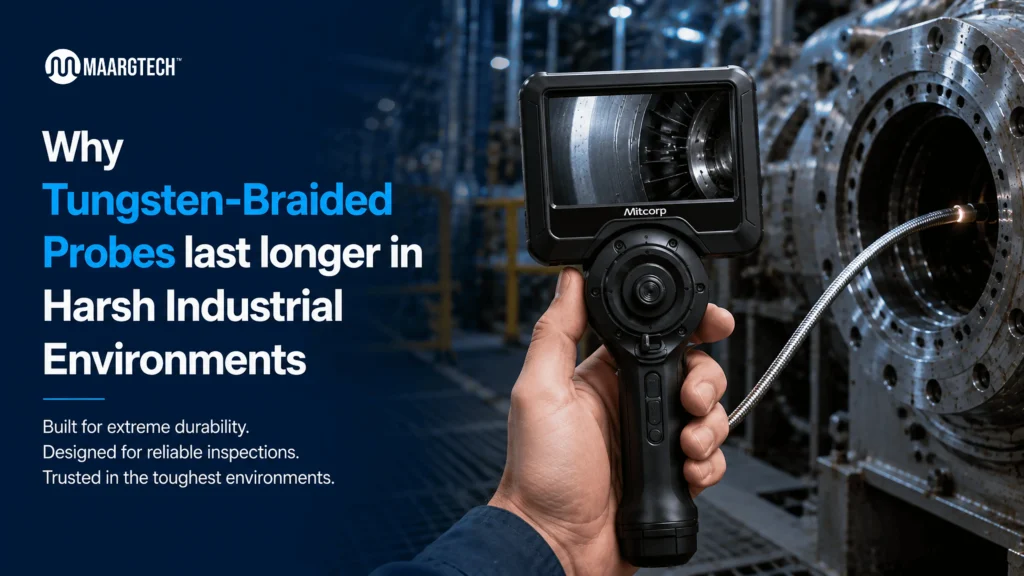
- Durable, waterproof, and oil-resistant construction for harsh environments.
These tools allow systematic inspection of tube interiors, documentation for compliance, and early intervention—often reducing downtime significantly.
Best Practices for Effective Tube Inspections
- Prepare the system: Isolate, drain, and clean entry points.
- Select the right probe diameter and length.
- Inspect systematically: Focus on welds, bends, inlets/outlets, and known problem areas.
- Document findings with timestamps, locations (e.g., clock positions), and measurements.
- Combine RVI with other NDT methods (e.g., eddy current or ultrasonic) for comprehensive assessment.
- Train operators on defect recognition and equipment handling.
Industries That Benefit Most
- Power Generation: Boiler and condenser tubes.
- Oil & Gas / Petrochemical: Heat exchangers and process lines.
- Automotive & Aerospace: Fuel lines, hydraulic tubes, and cooling channels.
- Manufacturing & Casting: Internal quality checks.
- Pharmaceuticals & Food: Sanitary tubing integrity.
How MAARGTECH Supports Your Tube Inspection Needs
At MAARGTECH, we provide advanced yet economical RVI solutions, genuine spares, training, and responsive after-sales support. Our Mitcorp videoborescopes are trusted by leading companies in automotive, power, aerospace, and more for reliable, high-quality tube inspections.
We help industries across India implement efficient inspection programs that enhance safety, reliability, and operational uptime.
Conclusion
Identifying common defects like corrosion, erosion, cracks, and blockages during tube inspections is essential for preventing failures and optimizing asset performance. Remote Visual Inspection with videoboscopes offers a fast, accurate, and non-invasive solution that delivers clear insights into internal conditions.
Investing in regular tube inspections with the right tools not only saves costs but also supports predictive maintenance strategies and regulatory compliance.
Ready to Strengthen Your Tube Inspections?
Get expert advice and advanced Mitcorp videoborescopes from MAARGTECH to detect defects early and boost reliability.
Frequently Asked Questions (FAQ'S )
What are the most common defects found during tube inspections?
The most common defects include corrosion and pitting, erosion/wear, cracks (fatigue or stress corrosion), deposits/scale/blockages, weld defects, mechanical damage (dents, bulges), and foreign object debris. These issues are frequently seen in heat exchanger tubes, boiler tubes, and process piping.
How can videoborescopes help detect defects in tubes?
Videoborescopes (like Mitcorp models from MAARGTECH) allow remote visual inspection (RVI) inside small-diameter tubes without disassembly. They provide high-definition images, 4-way articulation for bends, and recording features to identify corrosion, cracks, erosion, and blockages quickly and accurately.
What causes corrosion and pitting in heat exchanger tubes?
Corrosion and pitting are mainly caused by exposure to moisture, oxygen, aggressive chemicals, or process fluids. Poor water chemistry, high temperatures, and inadequate maintenance accelerate these defects, leading to wall thinning and potential leaks.
Why is regular tube inspection important?
Regular tube inspections help prevent unexpected failures, reduce costly downtime, improve heat transfer efficiency, and ensure safety. Early detection of defects like erosion, cracks, or blockages allows proactive maintenance instead of expensive emergency repairs.
Which industries benefit most from professional tube inspections?
Power generation (boilers & condensers), oil & gas, petrochemicals, automotive, aerospace, pharmaceuticals, and food processing industries benefit the most. These sectors rely on reliable tube integrity to maintain operations and comply with safety standards.