
Introduction
In industries where heat exchangers are critical—such as power plants, oil & gas, and chemical processing—ensuring tube integrity is vital for efficiency, safety, and reliability. Traditional inspection methods often involve shutdowns and dismantling, leading to high costs and downtime.
Borescope inspection in heat exchangers offers a modern, non-destructive solution that simplifies this process.
Why Heat Exchanger Tube Inspection Matters
Internal tube issues are invisible from the outside but devastating in impact:
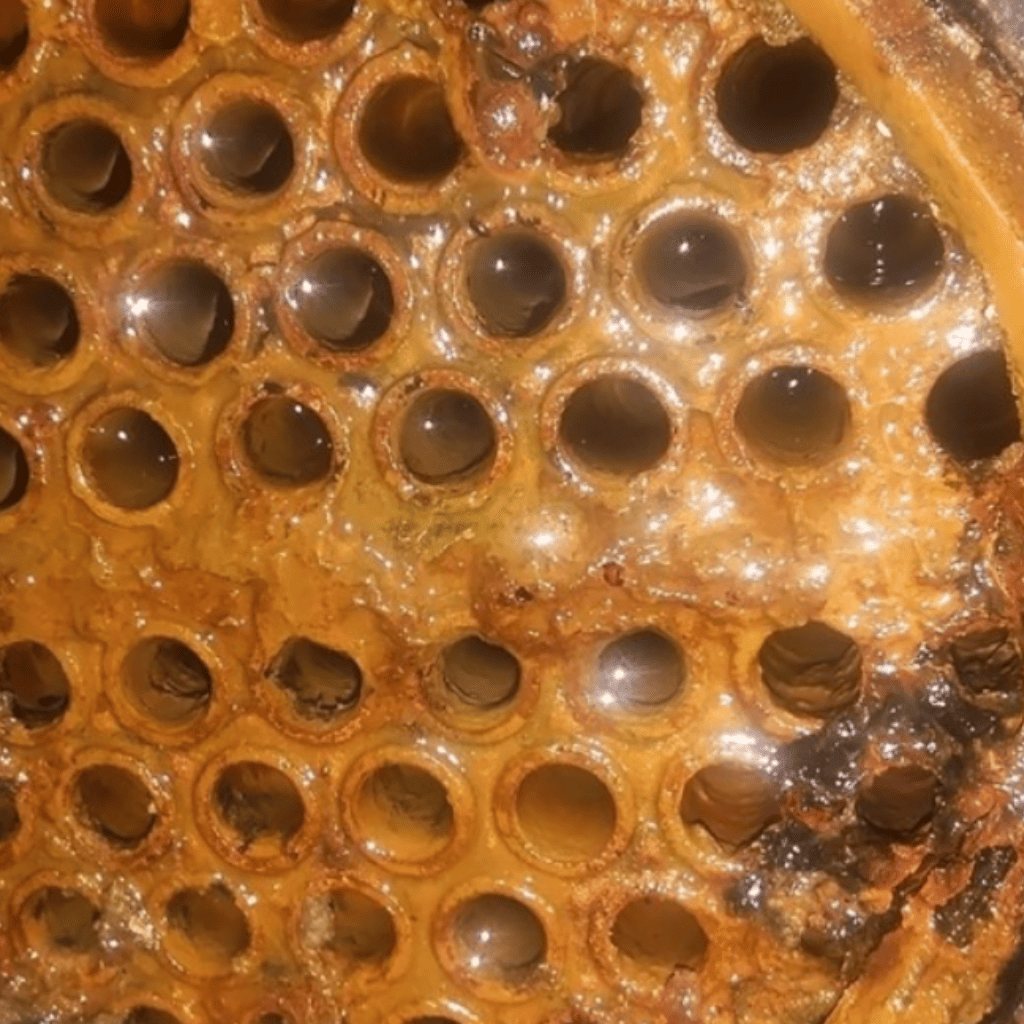
- Fouling & scaling reduce heat transfer by up to 30–50%.
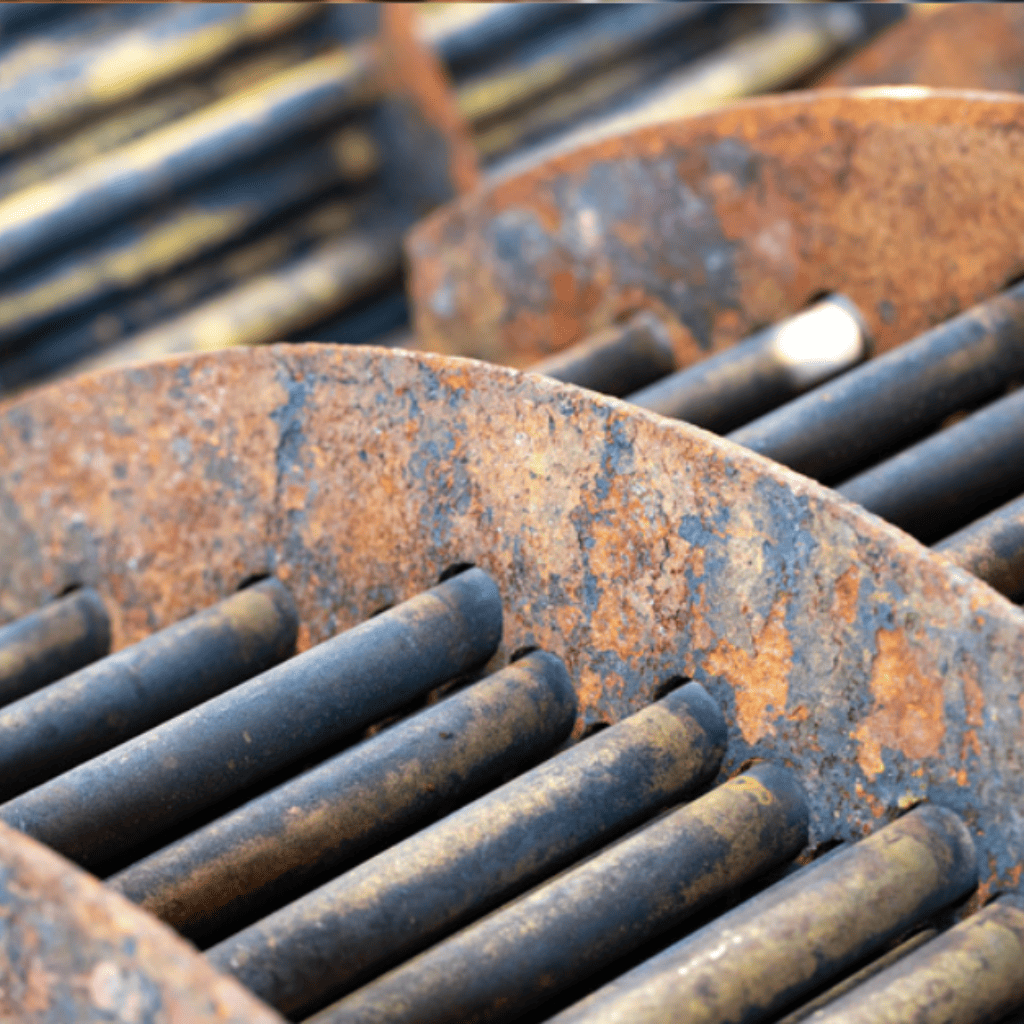
- Corrosion & pitting weaken tube walls, risking leaks.
- Blockages & debris increase pressure drops and energy costs.
- Cracks & erosion can lead to unplanned shutdowns costing lakhs in downtime.
Regular inspections help you catch problems early, plan targeted cleaning or repairs, comply with safety standards, and extend equipment life.
What Is Borescope Inspection (BSI)?
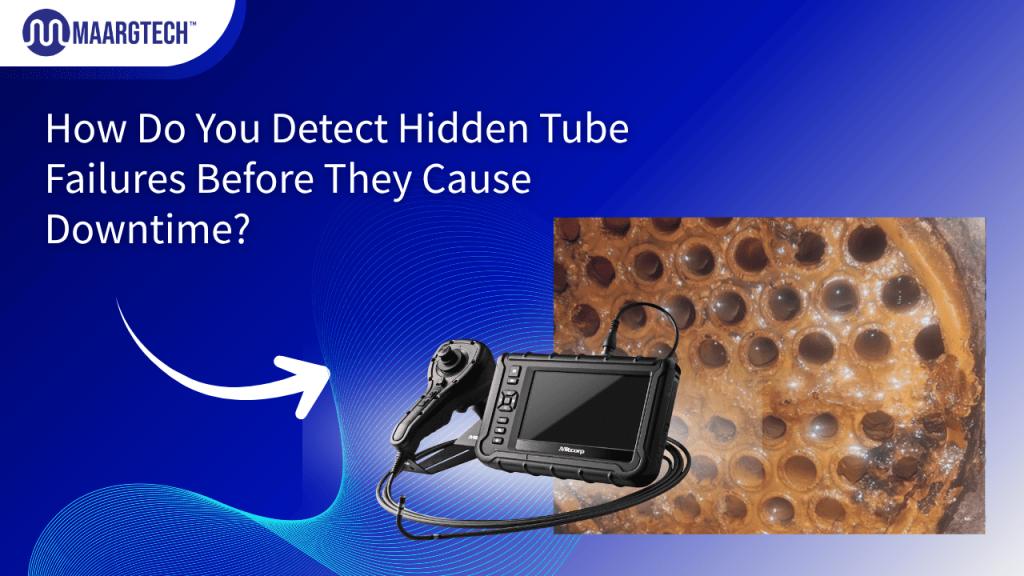
A borescope (also called a videoscope or inspection camera) is a flexible or semi-rigid probe with a high-resolution camera and bright LED lighting at the tip. You insert it into individual tubes from the tube sheet, view live HD video on a portable screen, record footage, add annotations, and generate professional reports — all without dismantling the heat exchanger.
Modern articulating videoboscopes can navigate bends and U-tubes with 360° control, making them perfect for shell-and-tube, plate, or finned exchangers.
Key Benefits of Borescope Tube Inspection
- Zero or minimal downtime — inspect during scheduled outages.
- Cost savings — avoid full disassembly (often 5–10x more expensive).
- Early defect detection — identify issues before they escalate.
- Safety first — no need to enter confined spaces.
- Documentation & compliance — photo/video evidence for audits and insurance.
- Precision — measure defects with 3D tools on advanced models.
How MAARGTECH Enhances Tube Inspection
At MAARGTECH, we provide advanced borescope solutions tailored for industrial applications. Our systems are designed to:
- Access narrow and complex tube geometries
- Deliver high-definition imaging for precise diagnostics
- Operate reliably in harsh environments
- Streamline inspection workflows
With MAARGTECH’S inspection technology, industries can improve reliability, extend equipment lifespan, and reduce maintenance costs through efficient “tube inspection” and advanced visual inspection solutions.
Flagship models like the MITCORP X2000HD and MITCORP X750 stand out for heat exchanger work:
- MITCORP X2000HD and MITCORP X750 Available Probe diameters: 2.8 mm, 3.9 mm & 6 mm — can fit easily into standard heat exchanger tubes (10–25 mm+).
- Lengths up to 10 metres is available in 6mm (Dual view) with/without Articulation – reach deep into long tube bundles.
- Full 360° articulation — navigate bends and U-tubes effortlessly.
- S-HD resolution (2560×1440) + bright adjustable LEDs — sharp images even on shiny, oily, or dark surfaces.
- IP67 waterproof & heat-resistant up to 100°C — perfect for industrial conditions.
- 7″ IP54 touchscreen, Wi-Fi, HDMI, USB-C, annotation tools, and report generation software.
Rugged military-grade build (1 m drop tested).
These tools have earned praise from customers across automotive, power, aerospace, and process industries for delivering “smarter, safer, faster inspections.
How to Perform a Borescope Inspection (BSI) in Heat Exchangers (Step-by-Step)
- Preparation — Isolate the heat exchanger, remove end covers if needed, and clean tube-sheet faces.
- Insert probe — Choose for keeping the probe in centre.
- Navigate & inspect — Use joystick for 360° articulation; pan every tube systematically.
- Document — Capture photos/videos, annotate defects (cracks, pitting, scale), and measure with 3D tools.
- Report —Using optional insight software reports can be generate.
- Action — Share findings with maintenance teams for targeted cleaning or tube plugging/replacement.
Industries That Rely on This Technology
Power plants, refineries, petrochemical units, pharmaceutical manufacturers, and large HVAC systems all use borescope inspection as standard preventive maintenance. Many have reduced unplanned outages by 40–60% after switching to regular RVI.
Conclusion
Borescope Inspection(BSI) in heat exchangers is transforming heat exchanger maintenance by offering a fast, accurate, and non-invasive method for internal inspection.
By adopting advanced solutions like MAARGTECH’S, businesses can move toward smarter maintenance strategies, improved efficiency, and long-term operational excellence.
Smarter Tube Inspection Starts Here!
Detect defects early and maximize equipment life with MAARGTECH’s advanced borescope solutions.
Frequently Asked Questions (FAQ'S )
Why use borescope instead of disassembly?
Quick, non-destructive visual check of tubes – saves 5–10x cost and time. MAARGTECH MITCORP gives HD clarity.
What are the most common defects or problems found during "heat exchanger tube inspection?"
Users often inquire about fouling/scaling, corrosion/pitting, erosion, cracks, blockages, or tube-to-tubesheet leaks — these reduce efficiency and cause failures.
What probe size/length needed?
2.8–6 mm diameter, 3–10 m length, 360° articulation – exactly what MITCORP provides.
Does it replace eddy current/UT?
No – complements them. Use borescope for visual screening, NDT for thickness/sub-surface.
How do I detect and monitor fouling, scaling, or corrosion in heat exchanger tubes during operation or inspection?
This is a top query — signs include pressure drop increase, reduced thermal performance, visual deposits/pitting via borescope, or performance trending.