
Introduction
In the world of remote visual inspection (RVI) and non-destructive testing (NDT), videoscopes have become essential tools for professionals across various industries. Often confused with traditional borescopes, videoscopes offer advanced digital imaging capabilities that make inspections more efficient, accurate, and documented. This blog post dives into what a videoscope is, how it functions, and its key industrial applications.
What Is a Videoscope?
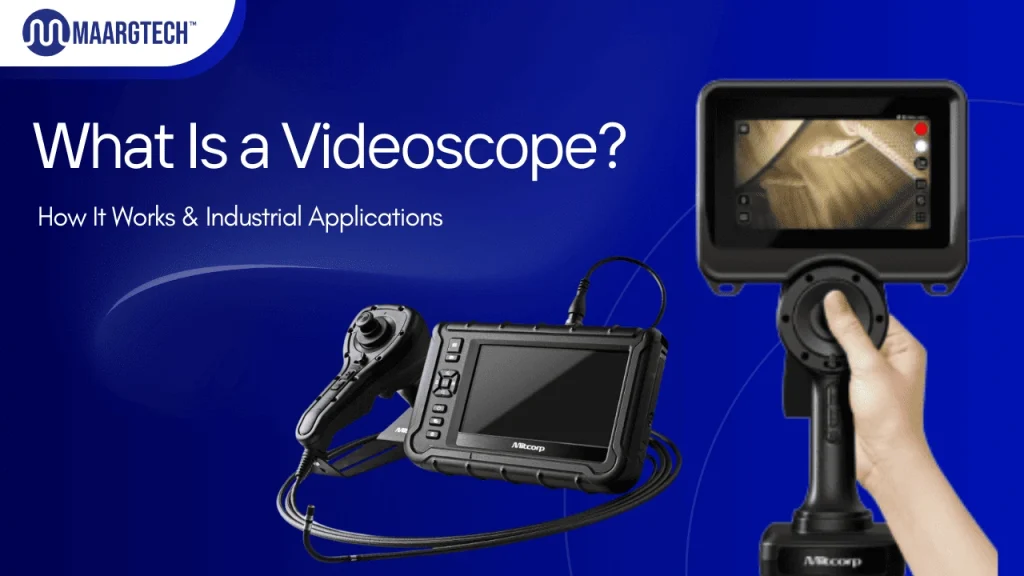
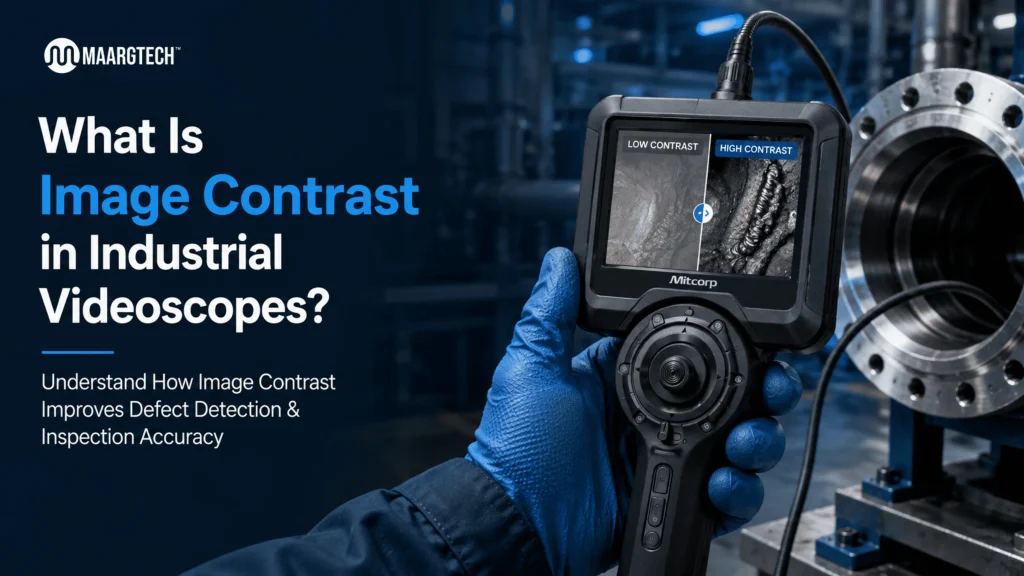
A videoscope, also known as a video borescope or industrial inspection camera, is a flexible optical instrument designed to visually inspect hard-to-reach or inaccessible areas without disassembly. It features a small digital camera sensor at the tip of a flexible insertion tube, which transmits real-time video and images to a display screen.
Unlike traditional borescopes that rely on optical lenses or fiber optics for direct viewing through an eyepiece, videoscopes use electronic image sensors (like CCD or CMOS) to capture high-resolution digital footage. This allows for recording, zooming, and sharing images/videos easily—features that make videoscopes superior for modern industrial needs.
At Maarg Tech, we are the authorized distributors of Mitcorp videoscopes in India, offering advanced yet economical solutions for RVI needs. Our flagship models include:
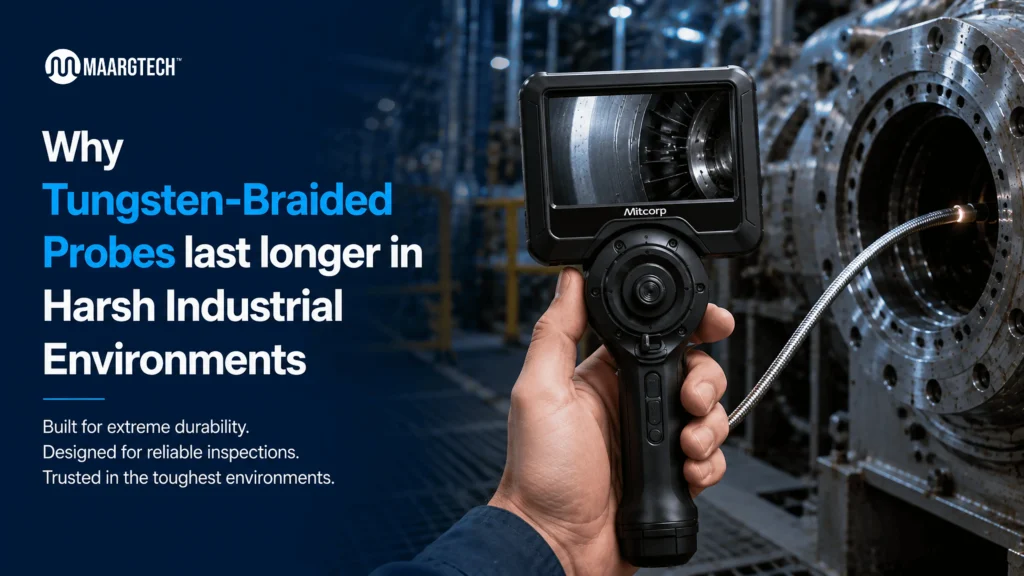
- X2000 HD Videoscope – Featuring super-resolution images (2560×1440), full HD video (1920×1080), 360° articulation, manual exposure control, and IP67-rated tungsten-braided probes for harsh environments. Ideal for high-precision inspections.
- X750 HD Videoscope – A lightweight, mobile option with HD imaging, multi-connection (HDMI, USB-C, Wi-Fi), and durable probes that withstand heat up to 100°C. Perfect for on-the-go industrial applications.
- X Series (MX1000/MX500) – Compact and versatile portable videoscopes with interchangeable probes for various diameters and lengths.
Common features include:
- Articulating tips (2-way or 4-way) for precise navigation.
- Built-in LED lighting for illumination in dark spaces.
- Waterproof and durable insertion tubes (often tungsten-braided).
- High-resolution displays with recording capabilities.
How Does a Videoscope Work?
The operation of a videoscope is straightforward yet relies on advanced technology:
- Insertion: The flexible probe (insertion tube) is guided into the inspection area, such as a pipe, engine, or turbine.
- Illumination: Powerful LEDs at the tip light up the dark environment.
- Image Capture: An objective lens focuses light reflected from the target onto a miniature image sensor (camera chip) at the distal end.
- Signal Transmission: The sensor converts light into electrical signals, which are transmitted digitally through the probe to the control unit.
- Display and Processing: The signals are processed into high-quality video or still images on the handheld monitor or external screen. Advanced models support features like digital zoom, image enhancement, and measurement tools.
Industrial Applications of Videoscopes
Videoscopes are indispensable in industries where safety, efficiency, and minimal downtime are critical. They enable non-destructive inspections, reducing costs and risks associated with equipment teardown.
1. Aviation and Aerospace
Videoscopes are used for routine turbine engine inspections, checking combustion chambers, blades, and compressors for cracks, corrosion, or foreign object damage (FOD).
2. Automotive
Mechanics inspect engine cylinders, valves, pistons, and fuel systems without disassembly, diagnosing issues like carbon buildup or wear.
3. Power Generation and Energy
Inspecting turbines, boilers, heat exchangers, and pipelines for erosion, deposits, or defects in oil/gas and renewable energy plants.
4. Manufacturing and Quality Control
Examining welds, castings, gearboxes, and internal components for defects during production or maintenance.
5. Oil & Gas / Petrochemical
Detecting corrosion, leaks, or blockages in pipelines, wells, and valves in hazardous environments.
Other uses include plumbing (pipe blockages), HVAC (ducts), and even security (hidden contraband detection).
Benefits of Using Videoscopes
- Safety: Inspect hazardous areas remotely.
- Efficiency: Reduce downtime with quick, non-invasive checks.
- Documentation: Record inspections for compliance and analysis.
- Versatility: Interchangeable probes for various diameters and lengths.
As technology advances, videoscopes continue to evolve with higher resolutions (up to 4K), longer probes, and AI-enhanced defect detection.
Conclusion
Videoscopes represent a significant advancement in remote visual inspection technology, bridging the gap between traditional optical tools and modern digital needs. By providing clear, recordable images from inaccessible areas, they not only enhance inspection accuracy but also contribute to safer, more cost-effective maintenance across industries. Whether you’re in aviation, automotive, or energy, investing in a quality videoscope can prevent costly failures and extend equipment life. As industries demand higher precision and documentation, videoscopes will remain at the forefront of non-destructive testing.
If you’re considering a videoscope for your industrial needs, explore options tailored to your applications. Stay tuned for more guides on choosing and maintaining these powerful tools!
Ready to Elevate Your Industrial Inspections?
Contact Maarg Tech for expert guidance, demos, or quotes on Mitcorp videoscopes.
Email: sales@maargtech.com
Frequently Asked Questions (FAQ'S )
What is the difference between a videoscope and a borescope?
A traditional borescope uses optical lenses or fiber optics for direct viewing through an eyepiece, while a videoscope employs a digital camera sensor to display real-time video on a screen, allowing recording and easier sharing.
Can videoscopes record videos and images?
Yes, most modern videoscopes have built-in recording capabilities, storing footage on SD cards, USB drives, or via wireless transfer.
Are videoscopes waterproof?
Many industrial videoscopes feature waterproof insertion tubes (often IP67-rated) and durable designs to withstand harsh environments like oil, water, or chemicals.
What probe lengths and diameters are available?
Probe lengths range from 1 meter to over 30 meters, with diameters as small as 2mm for tight spaces up to 8mm or more for broader applications.
How do I choose the right videoscope for my industry?
Consider factors like articulation needs, resolution, probe diameter/length, lighting, and durability. For specific advice, refer to our guide on choosing borescopes or contact our experts.